




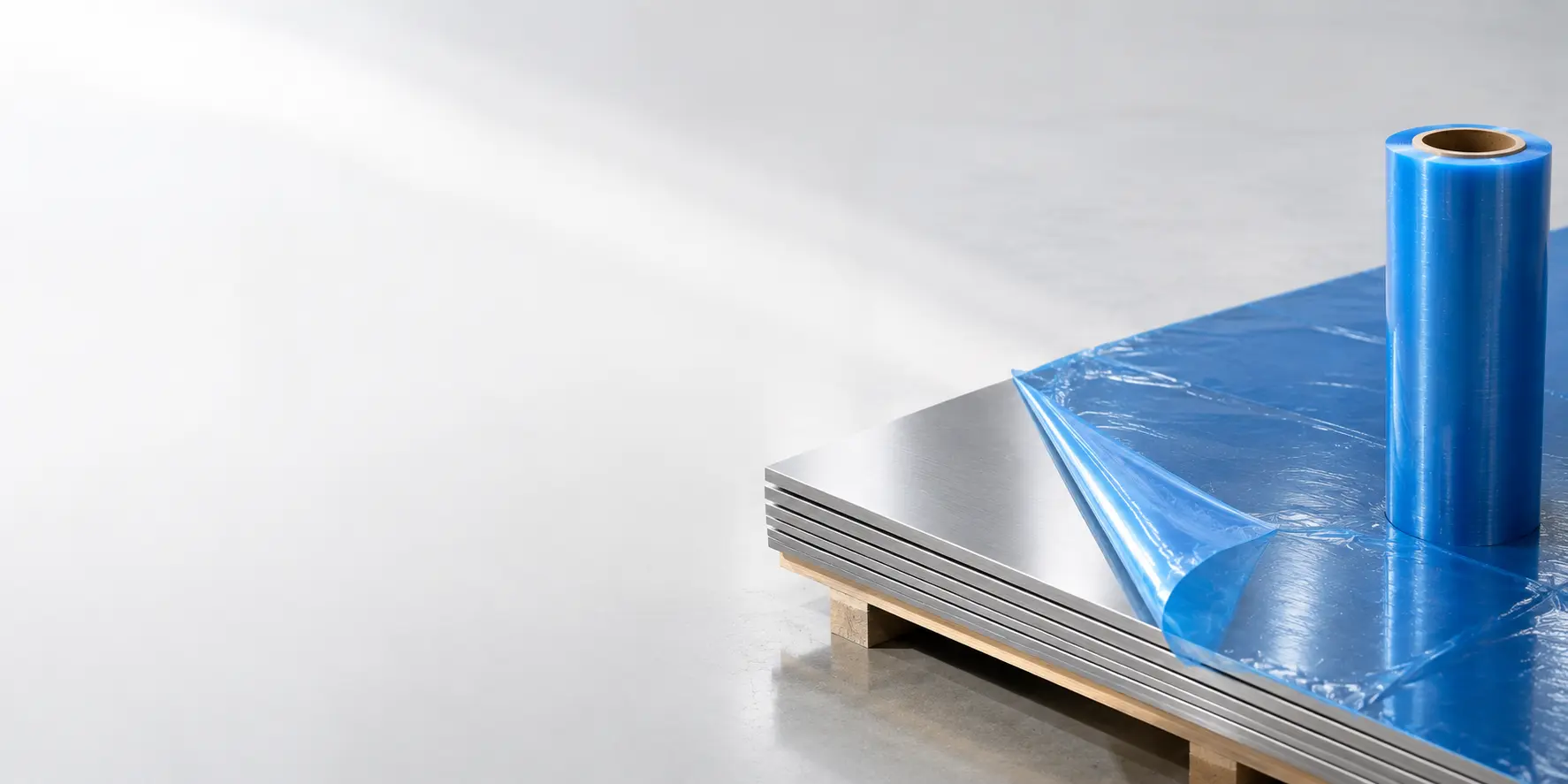
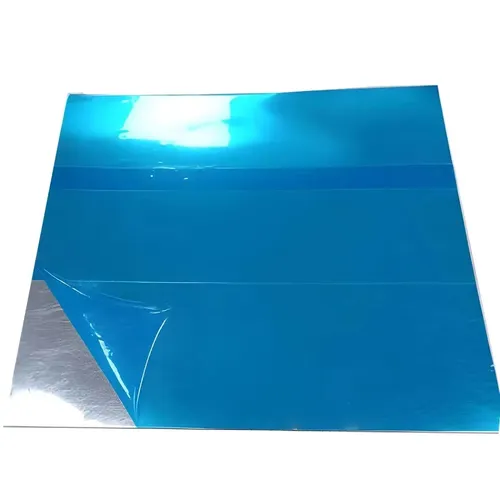
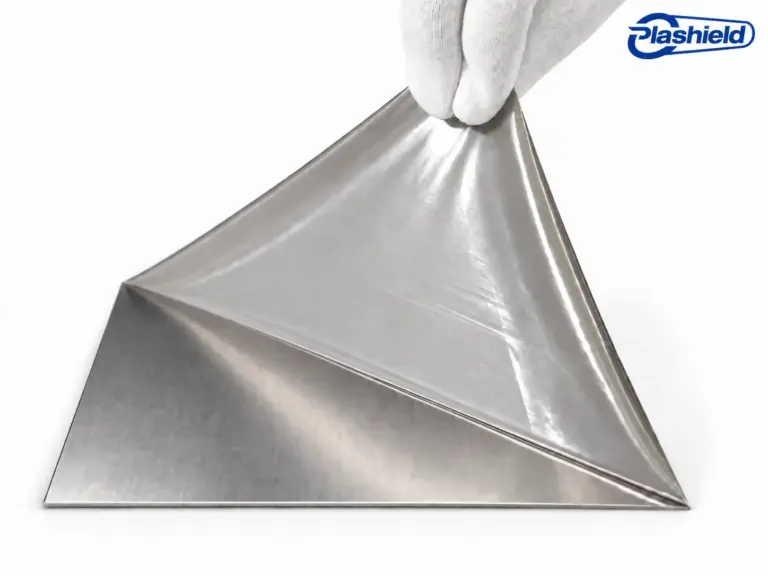
Why Contractors and Distributors Choose Plashield
Brushed and textured stainless surfaces do not give the adhesive the same contact area as a smooth sheet. Plashield matches the water-based acrylic adhesion level to the finish, handling route and required dwell, then checks the sample on the actual surface before fixing the production specification.
Time and temperature can change removal behavior. Plashield defines the intended application, storage and removal conditions before selecting the construction. The standard TDS includes a controlled removal check after 48 hours at 60°C, followed by 30 minutes at room temperature and uniform peeling.
Surface protection can fail before lamination if the roll contains particles, waviness, edge damage or excessive telescoping. Plashield’s product criteria cover film smoothness, foreign particles, flat edges, adhesive ooze and telescoping, with a referenced limit of no more than 1 mm.
Bending, punching and drilling place different loads on the backing and adhesive. Plashield uses thickness, MD/TD tensile strength and elongation as the technical starting point, then checks the real tool path and part geometry before approving the film for production.
Configure A Standard Water-Based Acrylic Stainless Steel Protective Film
| Specification | Standard configuration direction |
| Backing | Polyethylene (PE) |
| Adhesive | Water-based acrylic pressure-sensitive adhesive |
| Thickness | Customizable |
| Adhesion | Configured for the surface and process |
| Reference MD / TD tensile strength | ≥25 / ≥20 N/25 mm |
| Reference MD / TD elongation | ≥320% / ≥450% |
| Color | Blue or black and white, subject to selected specification |
| Reference jumbo-roll width | 1240 mm total, 1200 mm effective |
| Roll length | 100 to 3600 m |
| Core | 77 mm internal diameter; PE core available on request |
| Converting | Custom slitting width available |
| Shelf life | 12 months under the stated storage conditions |
Where Standard Stainless Steel Protective Film is Used
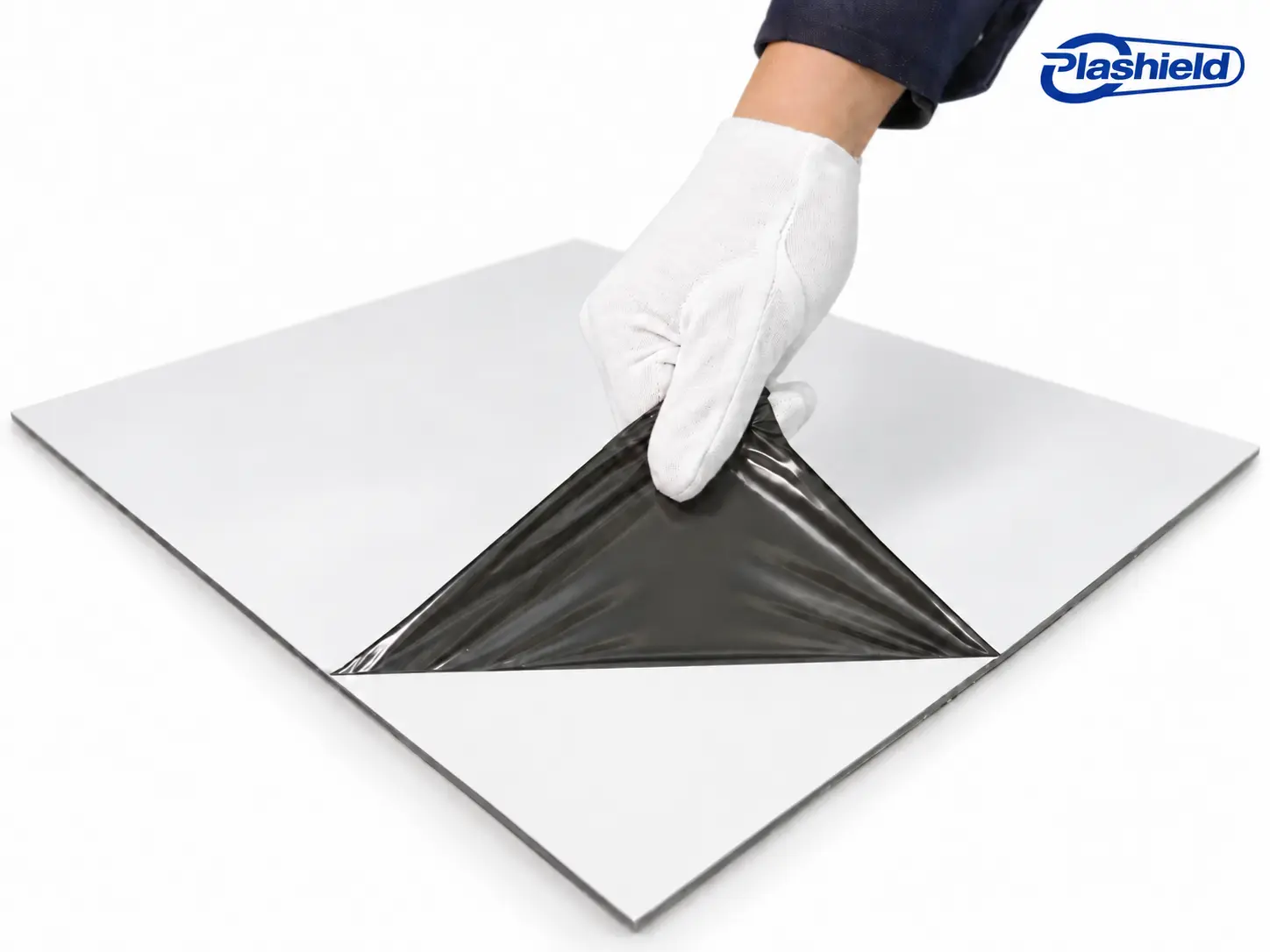
Stainless steel mills and service centers
Film protects sheet and coil surfaces during finishing, slitting, storage and delivery to downstream processors. Long roll formats and custom slit widths help match coating and lamination equipment. Removal normally takes place after the next fabricator completes the surface-sensitive operations.
Elevator and decorative panels
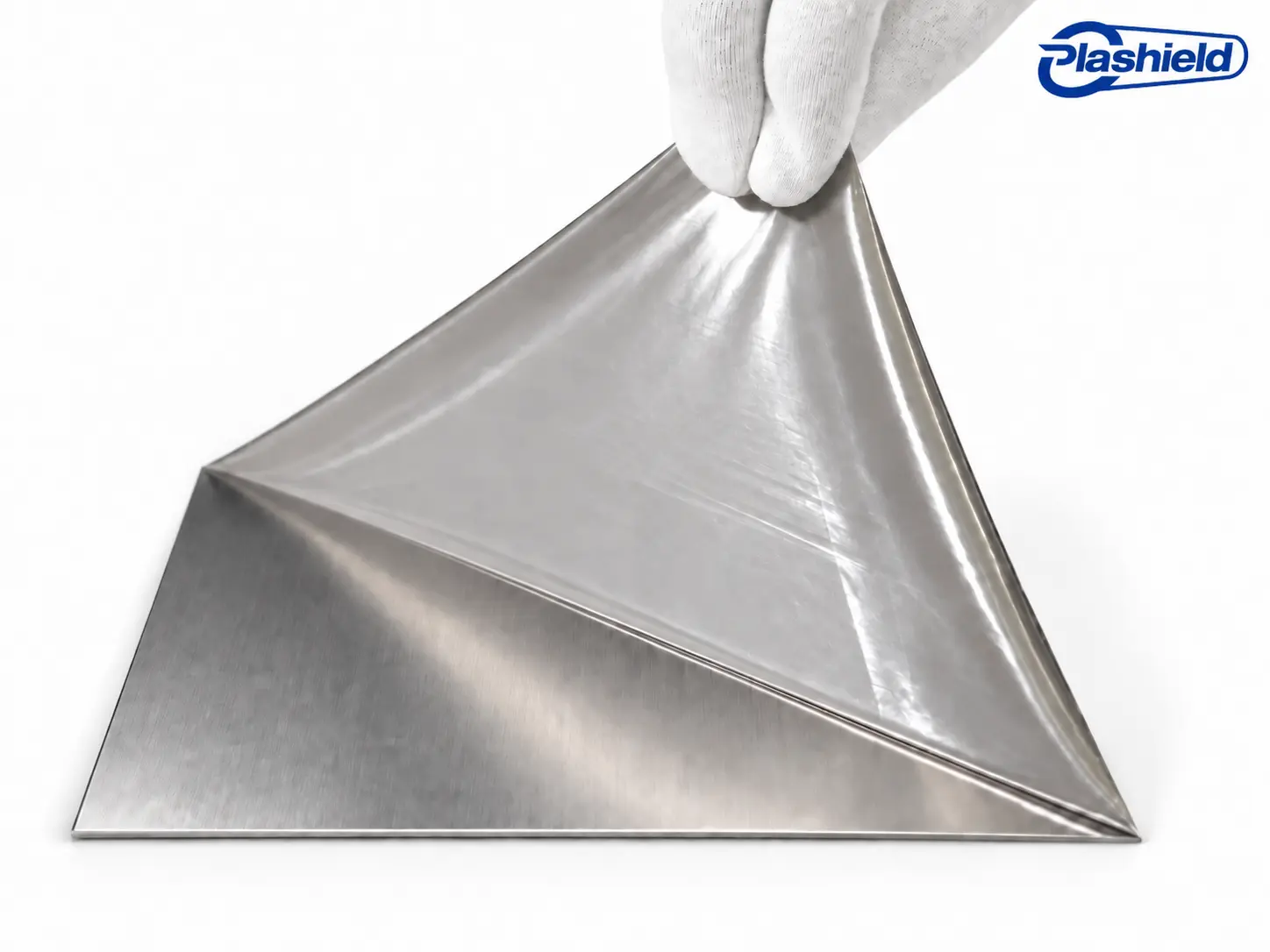
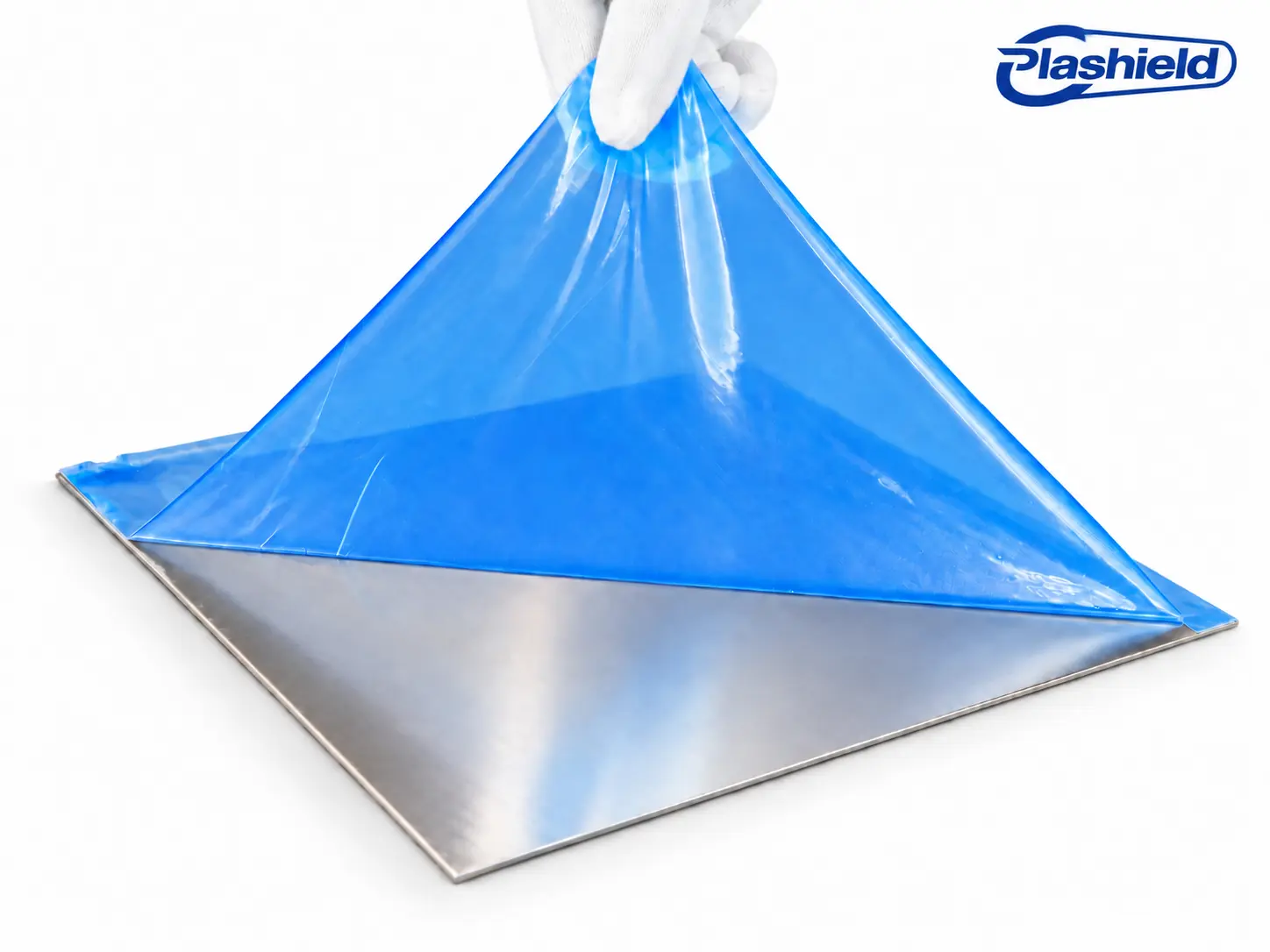
Mirror, hairline, No.4, embossed and PVD panels can show small particles, wrinkles and handling marks. The film stays on through cutting to size, bending, panel preparation, transport and installation as required by the approved route, then peels from the visible face at the defined stage.
Appliances and commercial kitchens
Refrigerator panels, dishwasher fronts, cooker panels, worktops and equipment skins pass through punching, drilling, bending, assembly and factory handling. The protective film must hold across these steps without hiding surface defects that should have been caught before shipment.
Fabricated enclosures and equipment panels
Control cabinets, machine covers and stainless housings are handled repeatedly between fabrication and final assembly. A process-matched film reduces direct contact with the finished face while parts move between workstations, are stacked for assembly or travel to the installation site.
Across these applications, the workpiece, finish and removal point change. The film specification must change with them rather than treating every stainless surface as one application.
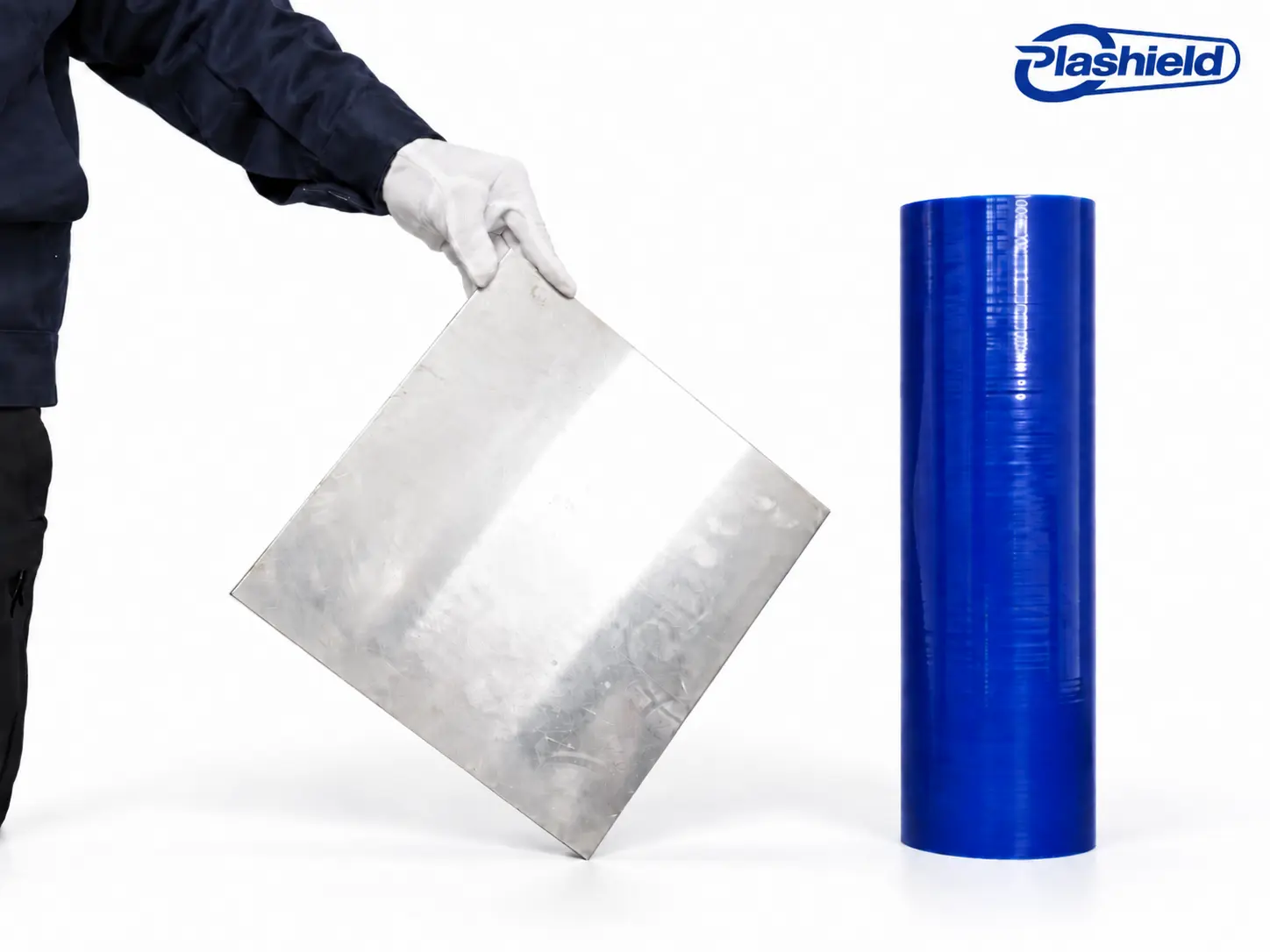
Protective Film for Different Stainless Steel Finishes
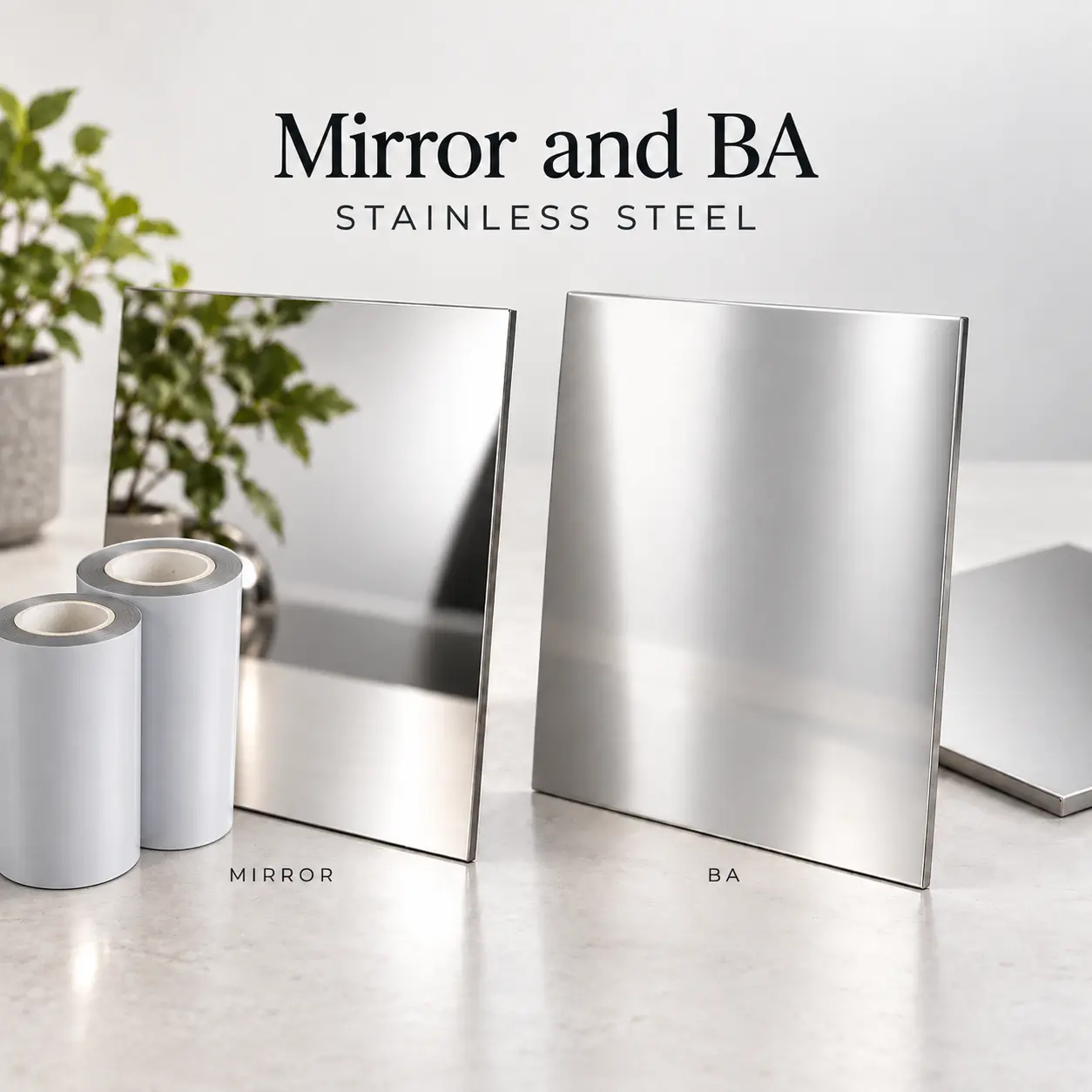
Highly reflective finishes make dust, trapped particles, wrinkles and uneven peel marks easy to see. Film selection starts with a clean lamination trial and controlled removal check on the finished surface. The sample must preserve appearance without creating local impressions or adhesive marks.
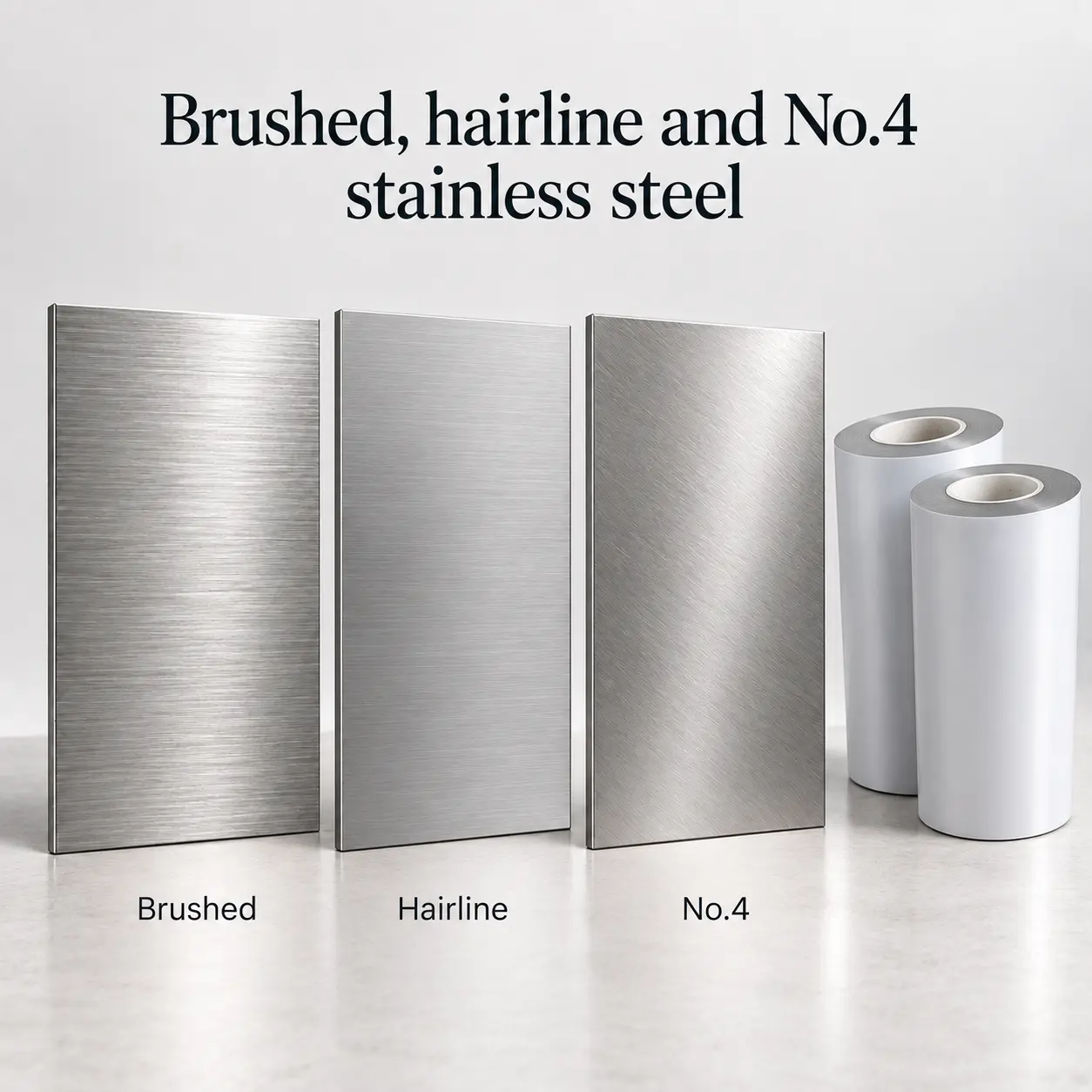
Directional texture changes the contact between the adhesive and the metal. Too little contact can allow an edge to lift during handling, while an unsuitable construction may become difficult to remove from the grooves. The sample should follow the real brushing direction, dwell and fabrication sequence.
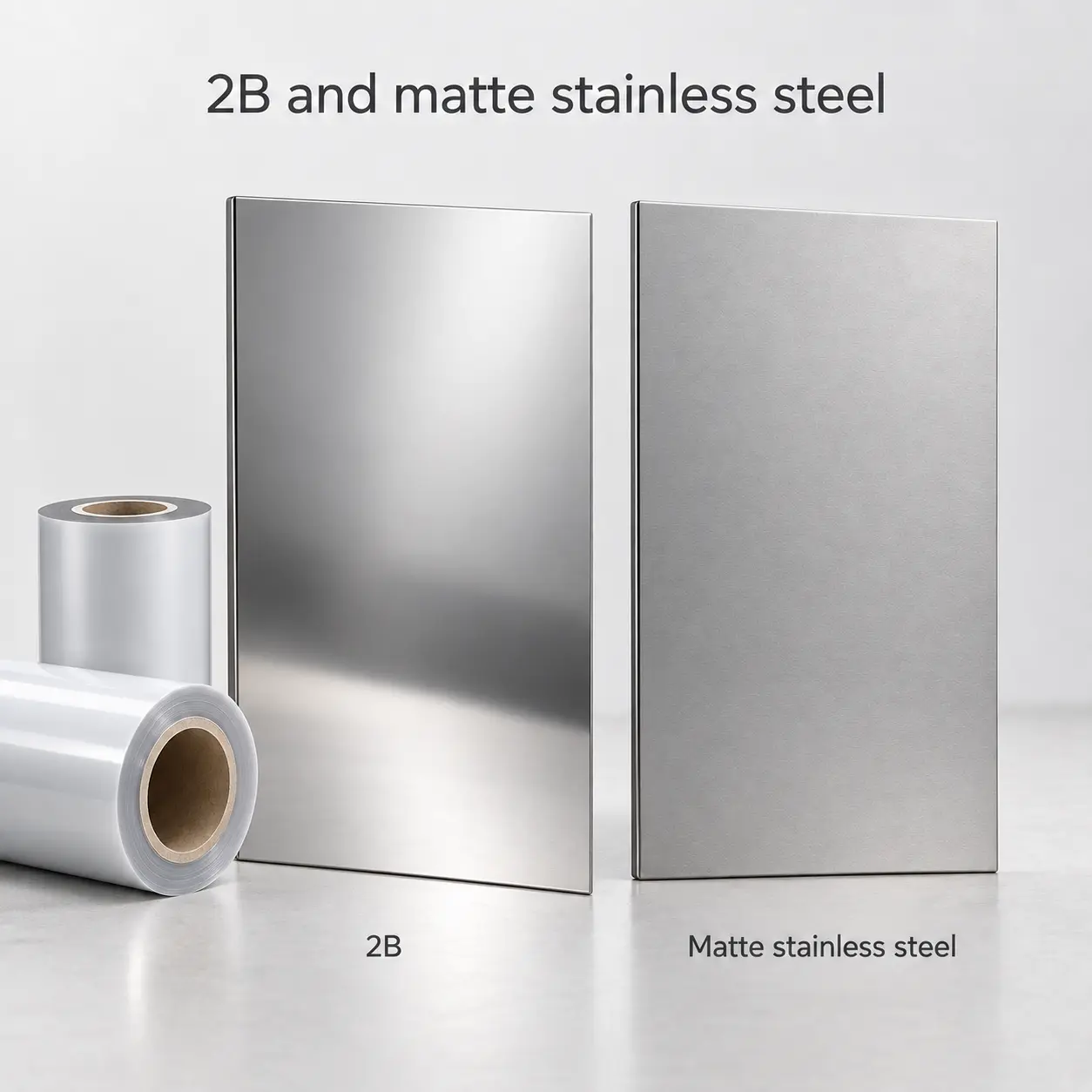
These surfaces are common in fabricated panels, equipment housings and appliances. Selection should account for stacking, punching, drilling, bending and the point at which the film will be removed. A balanced construction must remain attached through the planned route and peel under the approved condition.
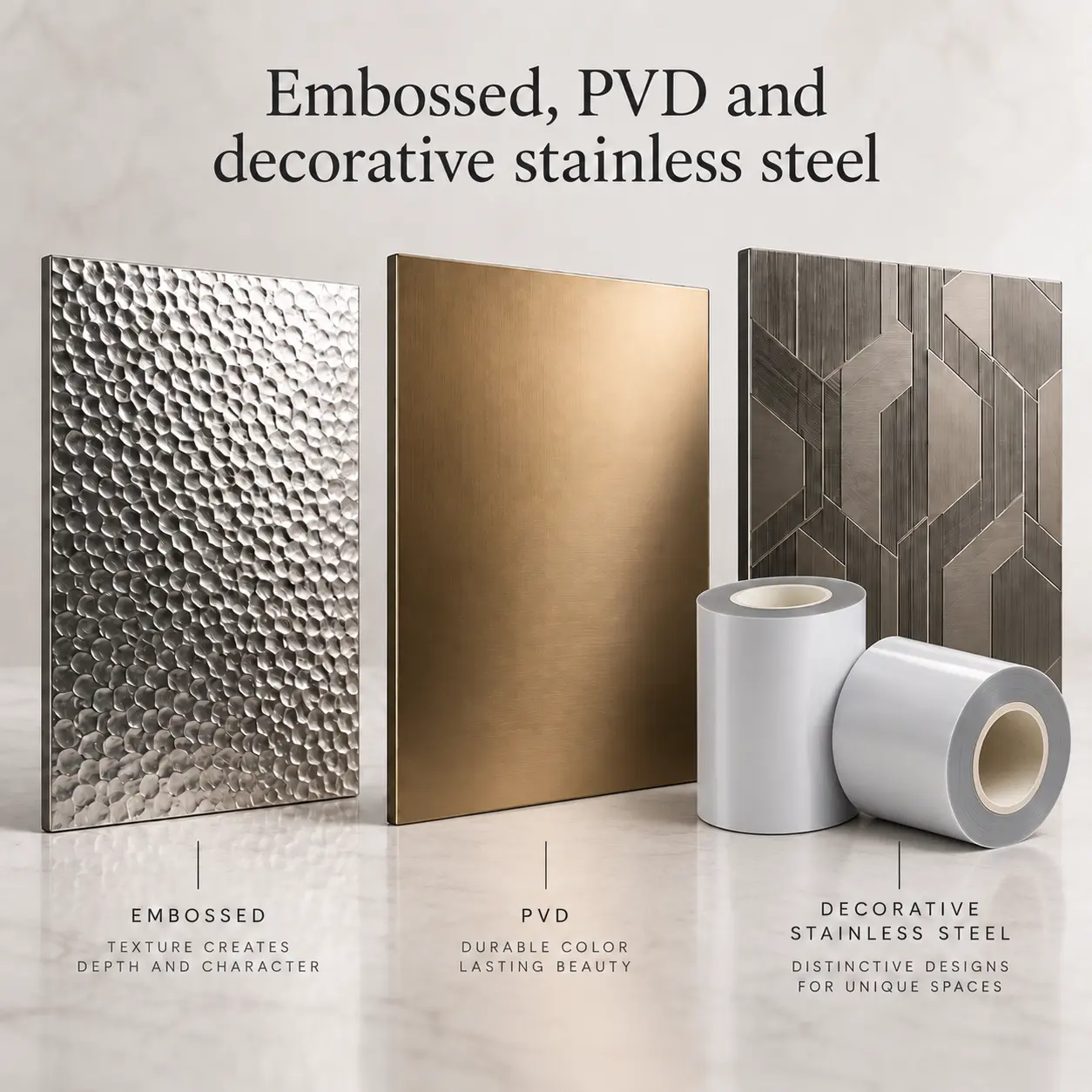
Surface topography and decorative coatings vary widely, even when two sheets have a similar visual name. Adhesion should never be assigned from the finish label alone. Plashield checks the actual coated or embossed sample, including edge contact and the appearance after removal, before setting the specification.
Not sure which film fits your panel?
Protective Film Manufacturing Built Around the Approved Specification
Plashield has manufactured protective films since 2005 and operates its own production facilities. Its stainless steel program connects film construction, converting and product checks to the specification approved during sampling.
PE film and adhesive parameters are developed for industrial surface protection rather than treated as a generic packaging roll. Production remains tied to the surface, process and removal conditions defined for the order.
Plashield can adjust water-based acrylic adhesion and film thickness, then convert the material to the required width, length, color and core format. Custom slitting supports sheet and coil lamination setups.
Product controls cover adhesion, tensile strength, elongation, smoothness, foreign particles, edge condition, adhesive ooze, telescoping and defined removal testing. These checks give the approved specification measurable acceptance points instead of relying on a general quality description.
Real customer projects cover custom film construction, slitting, printing, packaging and sample-to-production control across industrial surfaces. Results remain project specific, while the working method supports new stainless steel trials.

Plashield Company Strength
20+ years in polymer protection, advanced R&D labs, patented adhesive systems, peel-strength testing, UV aging simulation.
8+ integrated production lines, 200 million m² annual capacity, ±0.5% coating precision, ±1mm slitting accuracy.
ISO 9001 certified, multi-step testing (tensile, adhesion, UV, appearance), traceable batch QC, 100% virgin materials.
7×24 support, custom adhesion matching, OEM printing, export packaging, tailored roll sizes (18mm–1600mm).
Trusted by panel factories, construction companies, and distributors in 60+ countries.
How We Serve You

Share your surface, process, and usage conditions
Free samples shipped within 3–5 days.
Adjust tack level, thickness, color, or printing.
Fast lead time: 7–15 days.
Export-ready packaging + documentation.
Customer Cases
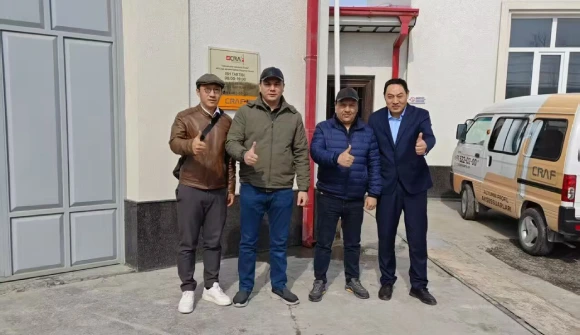
Aluminum profile manufacturers have film requirements that differ fundamentally from distributors: roll width must match the profile cross-section exactly, roll length must fit the laminating machine’s reel-change cycle, and adhesive must perform reliably across both smooth-polished and sand-finished anodized surfaces. This Uzbekistani aluminum manufacturer began working with Plashield in June 2022, with initial specifications covering three narrow slit widths (40mm / 52mm / 68mm), 500m coreless rolls, and custom printing — at an annual purchase volume of approximately USD 100,000. The most recent order, completed in February 2026, was 300,000 m² delivered within a 20-day production window.
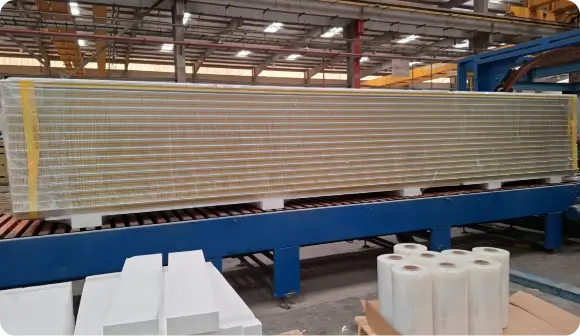
A Saudi Arabian metal sandwich panel manufacturer faced two interconnected production problems: first, standard 50μm PE film caused self-adhesion difficulties during 3000m extra-long roll production, with frequent roll breaks generating line downtime. Second, a multi-supplier import procurement model created high sourcing management overhead, with batch-to-batch performance variation wasting line calibration time. Plashield developed a custom 25μm ultra-thin PE protective film (3000m roll length) and simultaneously consolidated multi-category film supply into a single-source arrangement. Cooperation since March 2024, with annual purchase volume exceeding USD 200,000.
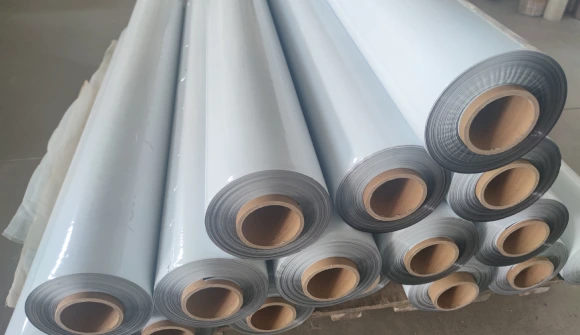
An Israeli importer of aluminum profiles and building materials was losing end-customer confidence to a problem they couldn’t resolve at their level: their PE film supplier was shipping batches with inconsistent adhesion and occasional residue on powder-coated aluminum surfaces. The switch to Plashield began as a small verification order in August 2025. By the end of the trial, it had been confirmed as a long-term supply arrangement.
Testimonials
Packing & Shipping
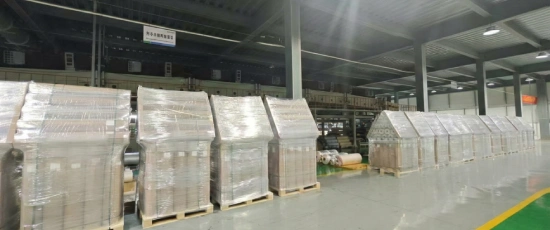
- Corrugated cartons + transparent wrapping
- Palletized export packing
- Roll labels with lot number and production date
- Suitable for FCL & LCL shipments
- High protection for long-distance transportation
Comparison Table
| Feature | Plashield | Regular Films |
| Virgin PE | √ | × Mixed |
| Adhesive Stability | High | Medium |
| UV Resistance | 12 months | 3–6 months |
| Clean Removal | Excellent | Inconsistent |
| Customization | Full | Limited |
| Industrial QC | ISO-certified | Basic |
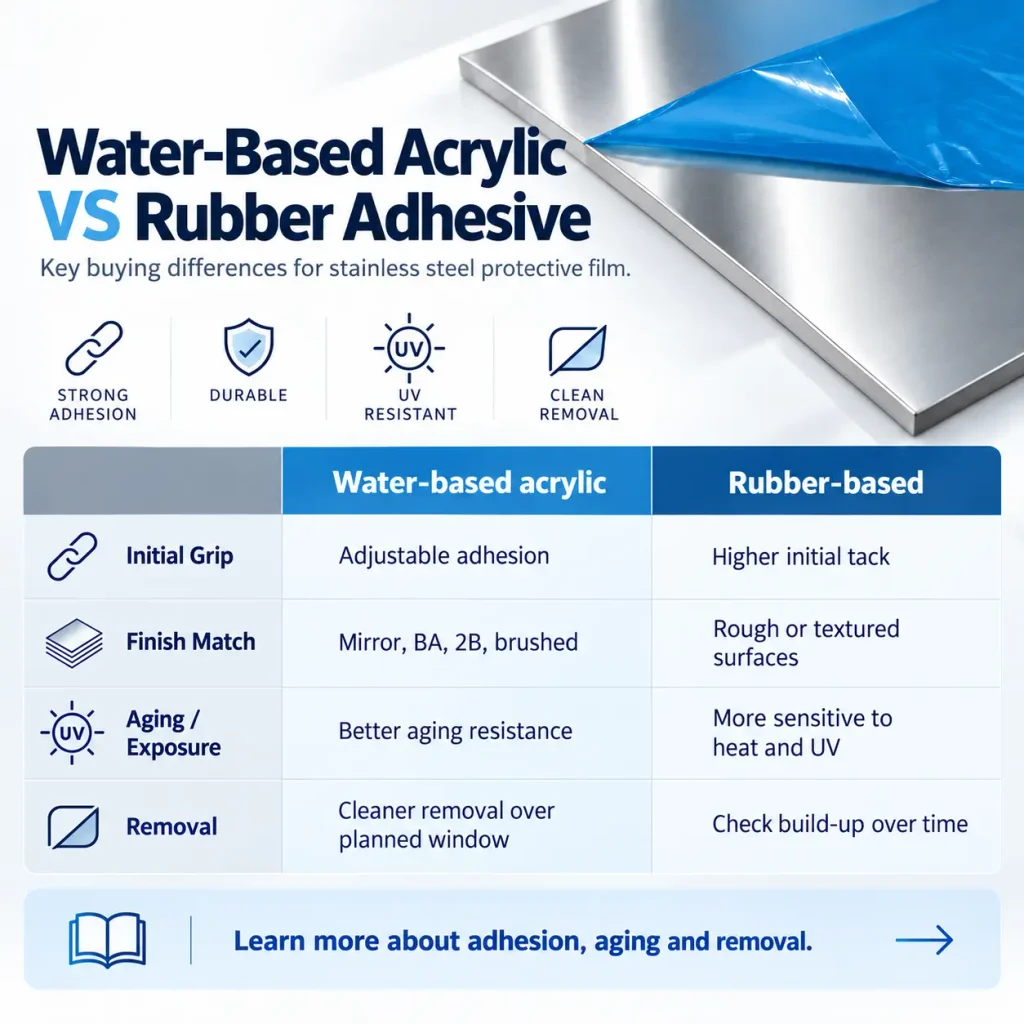
Water-Based Acrylic vs Rubber Adhesive
| Buying consideration | Water-based acrylic | Rubber-based |
| Initial grip | Adjustable adhesion for surface-specific matching | Typically higher initial tack for quick attachment |
| Stainless steel finish | Options for mirror, BA, 2B and brushed finishes | Options for rough or textured surfaces needing stronger initial grip |
| Aging and exposure | Generally better aging resistance; outdoor use requires a UV-rated construction | Typically more sensitive to heat and UV; favor approved short-term applications |
| Removal | Match peel strength to the finish and planned removal time | Check adhesion build-up over time and remove within the tested window |
For a closer look at adhesion, aging and removal, read our water-based vs rubber-based protective film comparison.
Stainless Steel Protective Film FAQ
What type of protective film is used on stainless steel sheets?
PE film coated with pressure-sensitive adhesive is commonly used for temporary stainless steel surface protection. Plashield uses water-based acrylic PSA for this page’s standard film. Thickness, adhesion and roll format are configured around the surface finish, fabrication route, dwell and removal conditions.
Can the same protective film be used on mirror and brushed stainless steel?
Only after it passes tests on both finishes. Mirror steel makes particles and peel marks easier to see, while brushed steel changes adhesive contact through its directional texture. A film approved for one finish should not be assigned to the other from the finish name alone.
Can standard PE protective film remain on stainless steel during bending?
It can remain during bending when the selected backing and adhesive pass a trial on the real part. Film thickness, tensile strength, elongation, bend radius, tooling contact and removal point all affect the result. Reference TDS values do not replace a production trial.
What is the difference between water-based acrylic and rubber adhesive protective film?
They use different pressure-sensitive adhesive chemistries. Tack, aging, temperature response and removal depend on the full formulation, backing and use conditions, not the chemistry name alone. Plashield’s standard stainless steel film on this page uses water-based acrylic PSA; rubber film is only a comparison category.
Under what condition was clean removal evaluated in the Plashield TDS?
The referenced TDS places the protective film for 48 hours at 60°C, then conditions it for 30 minutes at room temperature. The film is removed at a uniform speed and the protected surface is checked for residual adhesive. This result applies to that defined procedure.