



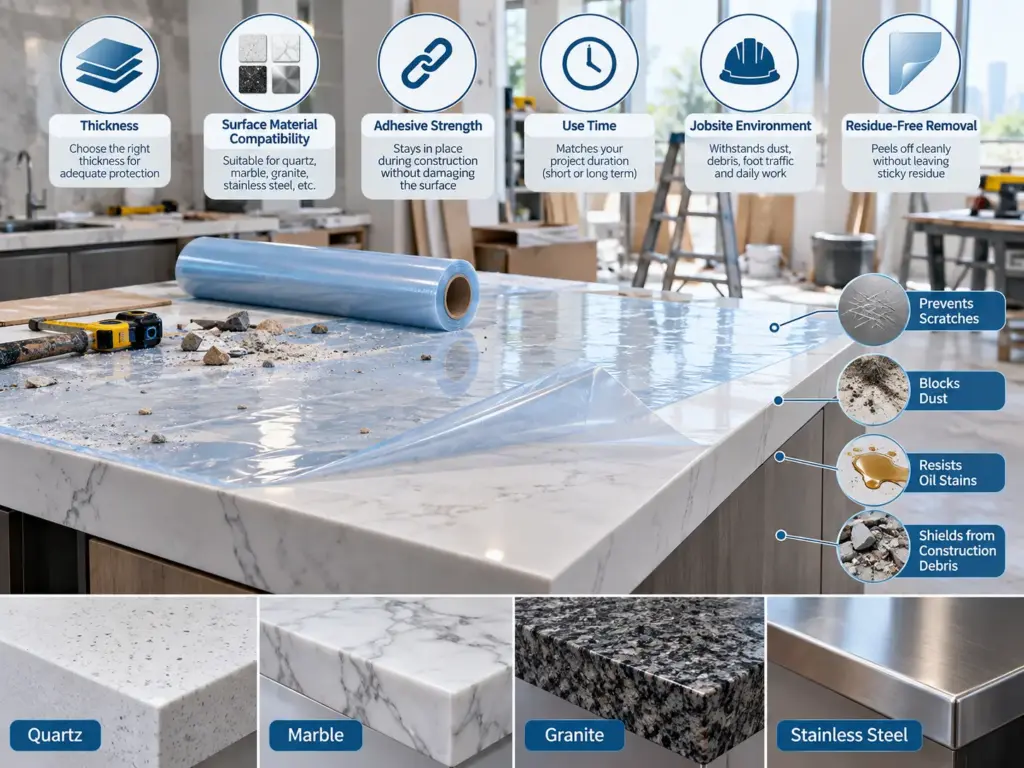
In the process of processing, transportation, installation and renovation, the countertop is easily affected by scratches, dust, oil stains and other construction pollution. For quartz stone, marble, granite, stainless steel and other surfaces, once there is obvious damage, it will not only affect the appearance, but also increase the cost of subsequent cleaning and rework. Countertop protection film is a solution for temporary surface protection, which can effectively reduce the surface damage caused by daily handling and construction. When choosing a suitable protective film, you should not only look at the thickness of the film, but also consider the material and surface treatment of the countertop, adhesive strength, use time, construction environment and the risk of adhesive residue after removal.
This article will introduce how to choose the appropriate countertop protection film according to the actual application to help you make better decisions.
What Is Countertop Protection Film?
Countertop protection film is a kind of self-adhesive protective film used for temporary protection of the countertop surface, which is usually consists of PE film and pressure-sensitive adhesive layer. It can cover the surface of the countertop and form a removable protective layer during processing, transportation, installation, renovation or storage, reducing dust, stains, minor scratches and construction pollution in direct contact with the countertop.
Unlike permanent surface coating, the main purpose of countertop protection film is not to change the appearance or performance of the countertop, but to provide phased surface protection for the countertop. The protective film can be peeled off directly after use, which is especially suitable for application scenarios that need to keep the countertop clean and complete at different stages of production or construction.
What Types of Countertop Can Be Protected with Film?
Most countertops can be protected with temporary protective film. Common applications include quartz stone, granite, marble, solid surface, stainless steel and laminate countertops. These materials are susceptible to dust, stains and slight scratches during processing, handling, installation and renovation, and the protective film can reduce these pollution and scratches. However, there are differences in the surface texture, coating and surface of different countertops, so not all protective films are suitable for all countertops. When choosing a protective film, it needs to be considered according to the specific situation.
What Should You Consider When Choosing Countertop Protection Film?
When choosing a countertop protective film, you should not make decisions based on the thickness or price of the film alone. The material of the countertop, the surface condition, the duration of use and the installation environment will all affect the actual performance of the protective film, so you should consider many factors comprehensively.
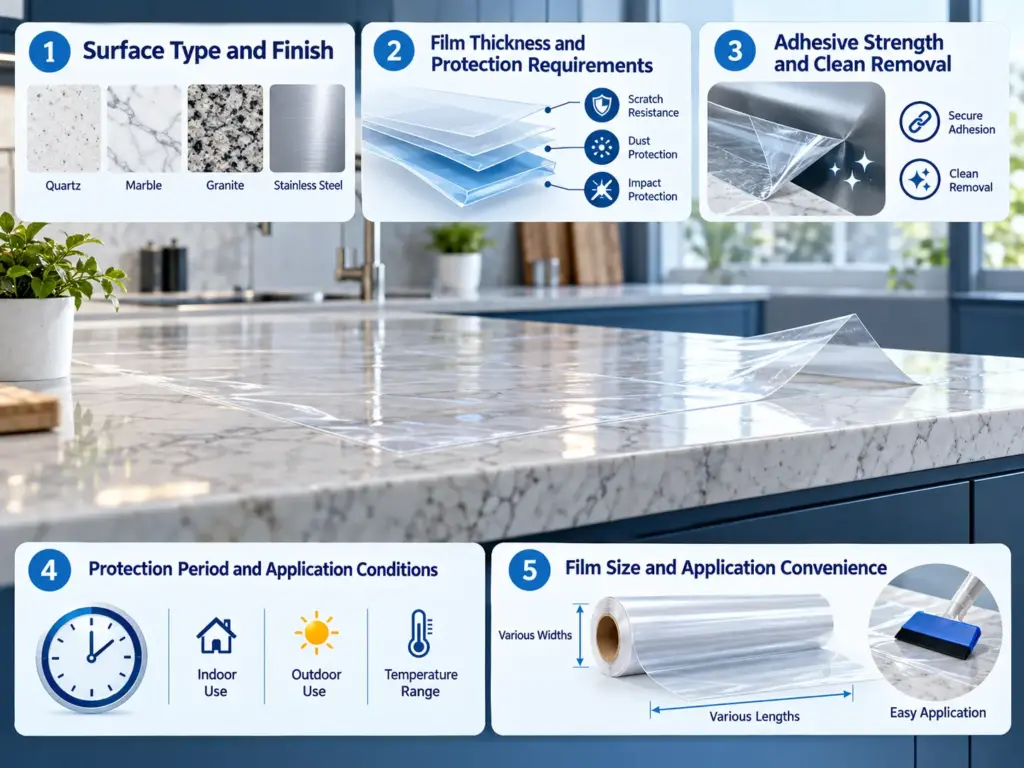
Surface Type and Finish
Table faces of different materials have different requirements for the strength of adhesives. Smooth surfaces are usually easier to apply to, but special attention should be paid to the problem of residual adhesive after removal. For countertops with obvious texture or special surface treatment, it is necessary to ensure that the protective film is in full contact with the surface and maintains stable adhesion. For special or sensitive surfaces, compatibility tests should be carried out before official use.
Film Thickness and Protection Requirements
The thickness of the film will affect the tear resistance, puncture resistance and overall mechanical protection ability of the protective film. Short-term indoor installation usually does not require a thick protective film, but in the case of processing, frequent handling or complex construction environment, products with higher mechanical strength can be considered. However, the thicker the film does not necessarily mean that it is more suitable. The appropriate thickness should be selected according to the actual risk and usage method to avoid unnecessary material costs.
Adhesive Strength and Clean Removal
The adhesive strength directly affects whether the protective film can remain stable during use, and also determines whether it is easy to tear off in the future. The low-tack protective film is suitable for smooth surfaces that are sensitive to adhesive residue, while surfaces with obvious textures may require stronger adhesion. It should be noted that the adhesive force is not the higher the better. Excessive adhesion may increase the difficulty of tearing the film and the risk of residual. A balance should be achieved between stable adhesion and clean removal.
Protection Period and Application Conditions
Short-term installation protection, renovation protection, and production and storage protection may have different requirements for membrane materials and adhesives. At the same time, factors such as temperature, humidity, sunlight and indoor and outdoor environment should also be considered. The protective film should be removed within the recommended period of use of the product to avoid changes in the performance of the adhesive layer caused by long-term use.
Film Size and Application Convenience
The width, length and construction method of the membrane will also affect the actual efficiency of use. For large countertops, the appropriate film width can reduce splicing and seams. For batch processing or production applications, it is necessary to consider roll specifications, unrolling efficiency, and the ease of manual application. Choosing specifications that match the countertop size and installation process can reduce material waste and improve application efficiency.
Common Problems with Countertop Protection Film
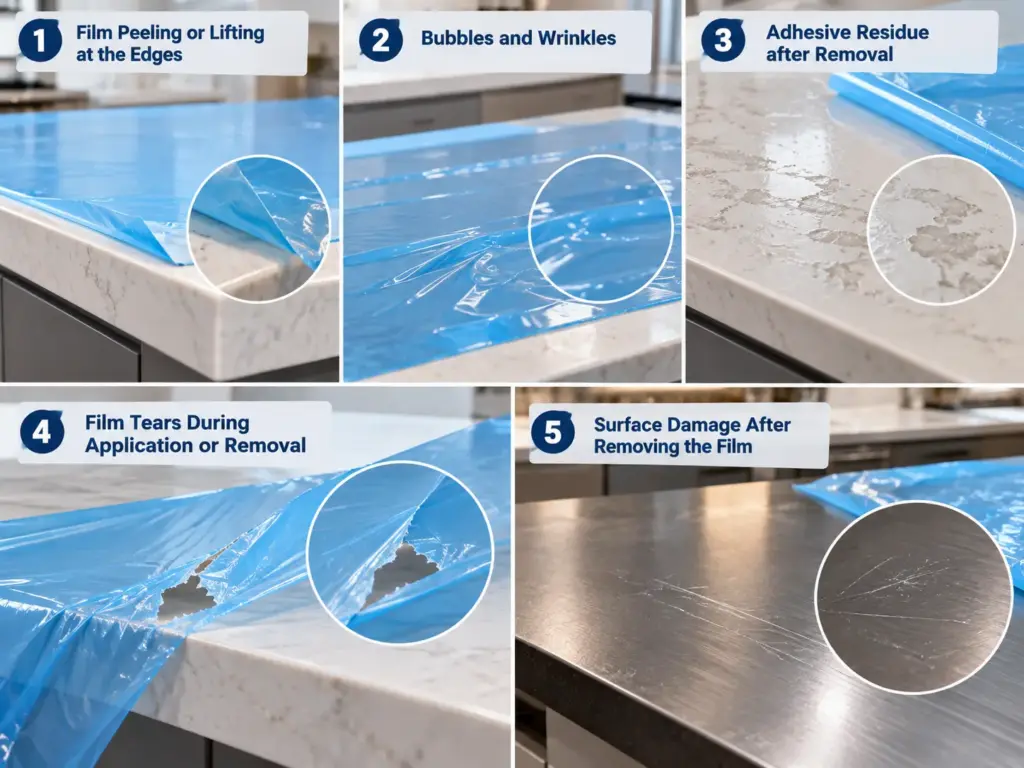
Film Peeling or Lifting at the Edges
If the protective film begins to peel at the edges or detach in spots during use, this is typically due to dust, grease, or moisture on the surface of the countertop, or it may be that the adhesive strength does not match the surface texture. If the surface of the countertop is rough or there is obvious texture, it is also necessary to ensure that the protective film can fully fit the surface.
Bubbles and Wrinkles
Bubbles, , wrinkles or local unevenness appear after applying the film, which may be caused by air or dust trapped during installation, or from uneven tension applied. Keep the surface clean and dry before applying the film, and gradually fit from one side.
Adhesive Residue After Removal
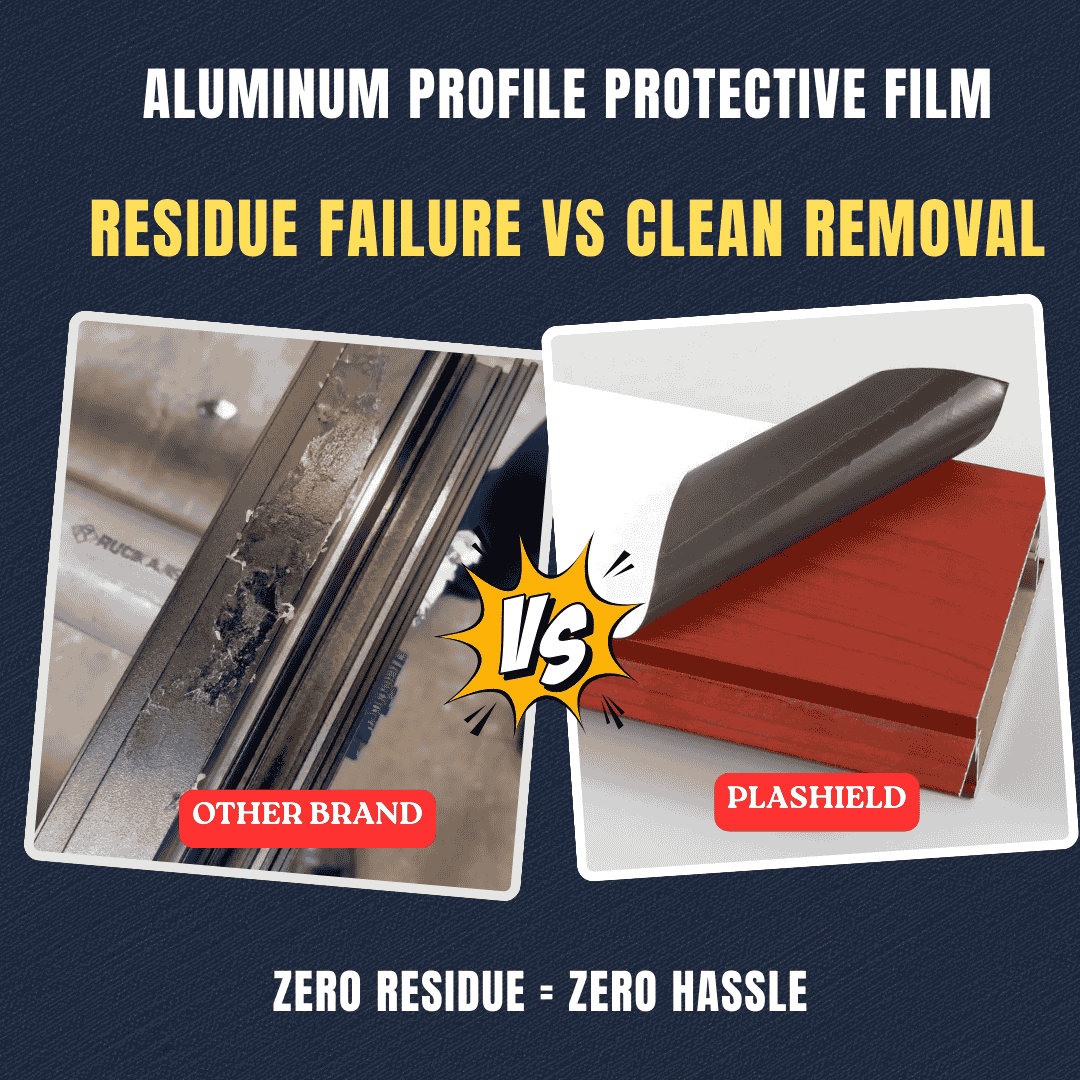
Prolonged use, high temperature, long exposure to sunlight, or mismatch of adhesive performance between the protective film and the countertop may increase the risk of adhesive residue. For smooth or sensitive countertops or those sensitive to surface conditions, you should give priority to a adhesive system with good clean-removal performance, and use it according to the recommended time.
Film Tears During Application or Removal
If the protective film is easy to tear during the process of applying, handling or removal, it may be related to insufficient film thickness, inadequate mechanical strength or improper tearing method. For countertops that require frequent handling or complex construction environments, a protective film with sufficient tear resistance should be selected.
Surface Damage After Removing the Film
After tearing the film, it is found that there are abnormal traces on the surface, which is not necessarily entirely caused by the protective film itself, but may be related to the original coating, surface contaminants or adhesive compatibility of the countertop. For special coatings, natural stone or other sensitive surfaces, it is recommended to conduct a small-area test before full-scale use, and confirm that the protective film can be safely removed within the specified use time.
Why Choose Plashield Countertop Protection Film
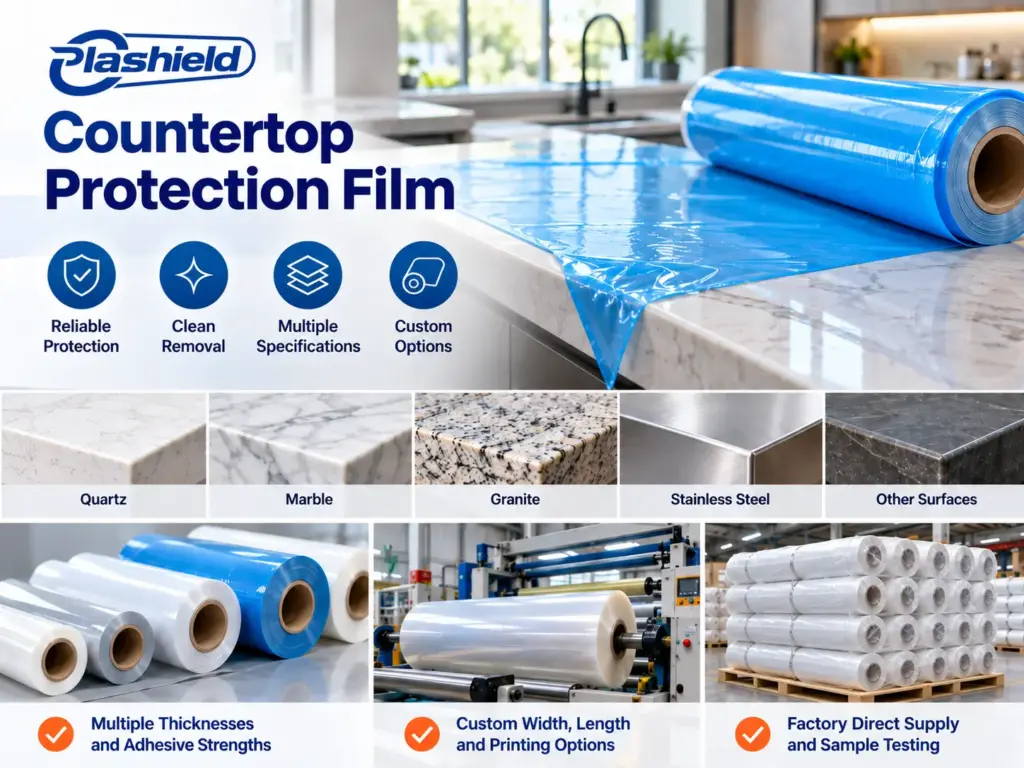
As a PE protective film manufacturer with more than 20 years of manufacturing experience, Plashield is committed to providing customers with high-quality and reliable countertop protection film, and providing matching protection solutions for different countertop surfaces and conditions of use. You can select from a range of film thicknesses, adhesive strengths, and roll specifications according to the specific application. For countertop manufacturers, fabricators, and installation companies that need to purchase in bulk, Plashield can also provide customized specifications according to the countertop size, protection cycle and production process, including film width, roll length and printing options. As a manufacturer of protective film directly supplied by the factory, Plashield supports sample testing to reduce the risk of selection.
If you are looking for a countertop protection film suitable for specific countertops and application scenarios, please contact Plashield to obtain product specifications and samples to further confirm the appropriate protection solution.
FAQs
- If adhesive residue is inadvertently discovered after film removal, how can it be safely eliminated without damaging the countertop?
Never use metal blades, sharp tools, or harsh acidic/alkaline solvents, as they can permanently scratch or etch the finish. It is recommended to perform a spot test on an inconspicuous area using mild Isopropyl Alcohol or a neutral dedicated adhesive remover. Once compatibility is confirmed, apply the solution with a microfiber cloth to soften the residue before gently wiping it away. For natural stone, consult the film supplier or stone care professionals first.
- What are the fundamental differences in adhesive requirements for different countertop materials, such as natural marble versus quartz stone?
Natural marble is porous and may contain micro-capillary structures, making it prone to chemical migration, stain absorption, or residue left by adhesives. Conversely, quartz stone is dense and chemically resistant, tolerating slightly higher peel adhesion. Therefore, sensitive surfaces like natural stone require specialized low-tack adhesive systems with high compatibility and clean removability, rather than selecting a film based solely on surface smoothness.
- What risks arise if protection film is used on countertops installed outdoors or near windows exposed to direct sunlight?
Ultraviolet radiation and elevated temperatures accelerate the breakdown and aging of pressure-sensitive adhesive layers. This can cause adhesive transfer or render the film brittle and difficult to peel off cleanly. For sun-exposed or high-temperature environments, weather-resistant films with UV stabilizers must be selected and removed strictly within the recommended application timeframe.
- What causes edge peeling or lifting after the protection film has been applied?
Edge lifting is usually triggered by three factors: surface contaminants along the edges prior to application; uneven edge profiles that reduce surface contact area; or insufficient initial tack of the adhesive. Thoroughly cleaning and drying the edges and applying adequate pressure along the borders during installation are critical preventive measures.
- How do the “tack” and “peel force” of protection film change over time, and why does it become harder to peel off later?
Protection films undergo a phenomenon known as “Adhesion Build-up.” Driven by temperature, humidity, and contact pressure, pressure-sensitive adhesive polymer chains gradually flow into the surface’s microscopic voids over time, increasing the contact area and significantly raising the peel force. If left past the recommended protection window, thermal aging or cross-linking degradation of the adhesive layer will occur, causing adhesive-film separation and massive residue.