



If you are preparing to move the equipment over the completed carpet, or let the construction team enter the property with high-value carpets, the most realistic question is: can you afford the cost of a break, a stain, or even a whole carpet replacement? Heavy duty carpet film is a low-cost solution, which can protect the carpet from damage caused by paint splashes during decoration, wear and stains caused by carrying heavy furniture, and foot traffic.
This guide will explain what heavy carpet protective film is, its relevant technical parameters and how to use it. After reading it, you will be more confident in choosing suitable products for renovation, handling, exhibition or facility maintenance, ensuring the investment is worth the money.
What Is Heavy Duty Carpet Film
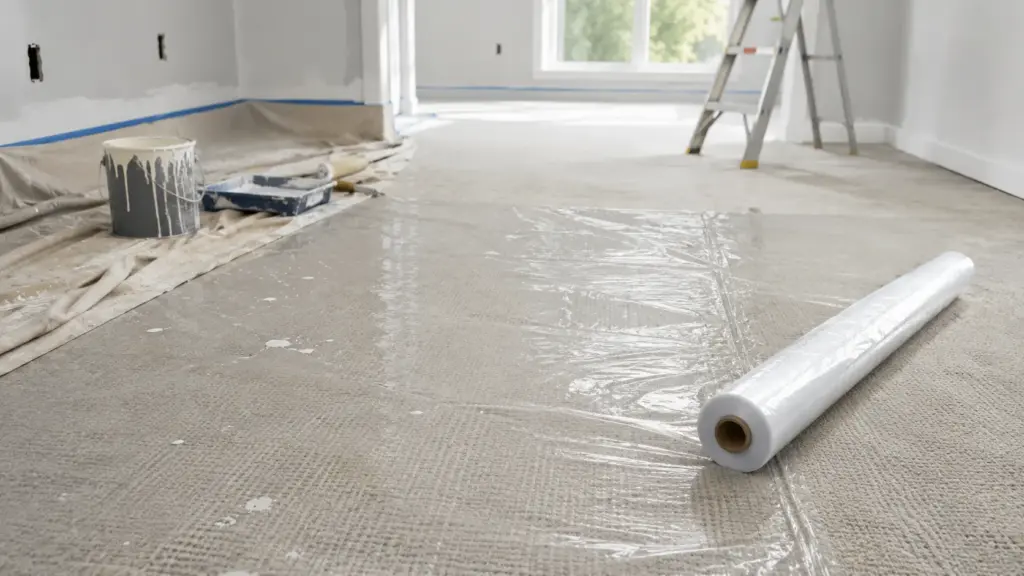
Heavy duty carpet film is a high-performance reverse winding polyethylene film, which is suitable for contractors, moving companies, property managers, model house layout companies and dealers who purchase professional surface protection materials. It can protect carpets during decoration, painting, moving and construction. Compared with standard lightweight films, heavy duty carpet film has stronger trampling resistance and puncture resistance. At the same time, it has enough viscosity to firmly adhere to the textured fiber surface of synthetic and natural carpets without shifting, and can be peeled off cleanly after use.
Comparing Heavy Duty Carpet Film with Common Protective Materials
| Protection Solution | Best Applications | Advantages | Limitations |
| Heavy Duty Carpet Protection Film | Construction, renovation, painting, high-traffic areas | Self-adhesive, easy installation, waterproof, dustproof, prevents movement | Requires proper carpet compatibility and timely removal |
| Carpet Masking Paper | Short-term protection, light renovation | Low cost, breathable, easy to cut | Can shift, absorb liquids, and tear easily |
| Canvas Drop Cloth | Painting and reusable protection | Durable, reusable, good paint absorption | Requires cleaning, storage, and may move during use |
| Plastic Sheeting | General dust protection | Affordable, waterproof, covers large areas | No adhesive, easy to slip, limited foot traffic protection |
| Reusable Carpet Mat | Long-term corridors and entrances | Durable, reusable, suitable for repeated traffic | Higher cost and limited flexibility |
| Floor Protection Board | Hard floors and heavy equipment areas | Strong impact resistance | Not suitable for carpet protection |
When Does Heavy Duty Carpet Film Have More Advantages?
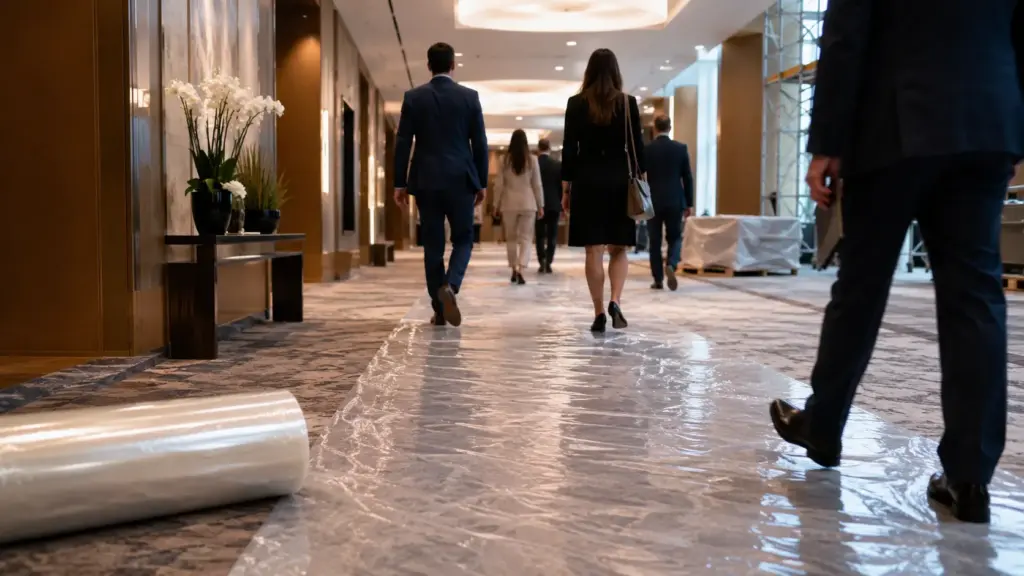
Heavy duty carpet protective film is especially suitable for projects with high requirements for installation speed, protection performance and high flow of people. Compared with traditional protective materials, this product adopts a self-adhesive solution, which can be firmly fixed on the surface without frequent adjustment. It is especially applicable to the following situations:
- Long corridor and large carpet area
- Commercial renovation project
- Furniture handling or home appliance distribution
- Construction sites with a large flow of workers
When Are Alternative Materials More Suitable?
Although heavy duty carpet film can provide efficient and stable protection for carpets, different application scenarios have different requirements for protective materials. In some short-term, low-intensity use environments, other protection schemes may be more economical and practical. For example, for short-term projects that only need to prevent dust and slight pollution, carpet protective paper or ordinary covering materials are more cost-effective; for projects that need to be used repeatedly and pay attention to durability, canvas protective cloth may be a more suitable choice. Therefore, when choosing carpet protection materials, the construction cycle, personnel flow, protection needs and budget should be comprehensively considered, and the appropriate protection plan should be selected according to actual needs.
Factors to Consider While Selecting Heavy Duty Carpet Film
Thickness
The thickness is related to the performance of the carpet protective film. Different thicknesses of carpet protective film are suitable for different application scenarios. The thicker carpet protective film is more suitable for construction sites, heavy tools and machine-intensive places that require higher tear resistance and durability. Although the thinner film is not as durable as the thick film, it has sufficient flexibility and fit, which is suitable for use in home environments with small flow of people, such as temporary protection during small gatherings, or when carpets need to be protected when painting walls.
Adhesiveness
When choosing carpet protective film, appropriate adhesion is one of the most important factors to consider. An overly sticky film may leave residue when removed and damage the fabric of the carpet. Insufficient adhesion or uneven bonding may cause the film to not fit evenly, producing bubbles, warping edges, causing the carpet to be exposed, and causing the danger of falling. Usually, low-fluff carpets can be used well with standard adhesive films, while high-fluff or textured carpets may need to use specially formulated adhesives to obtain better bonding performance. For renovation and construction projects that require long-term protection, it is recommended to choose a heavy carpet protective film with stable adhesion.
Width and Roll Length
Heavy duty carpet film usually provides a variety of widths and roll length specifications, which can be selected according to different construction areas and protection needs. The wider protective film can cover a larger carpet area, improve laying efficiency, and reduce the risk of dust, water stains or debris entering the seams. The narrower protective film is more suitable for stairs and corridors. In addition, the choice of roll length will also affect the convenience of construction. Longer rolls are suitable for continuous laying in a large area, which can reduce frequent replacement and improve work efficiency. Short rolls are more suitable for retail, DIY and small contractors.
Carpet Safety and Compatibility
Different types of carpets have different fiber structures and surface characteristics, so it is very important to choose a carpet protective film with good compatibility. This protective film is usually suitable for a variety of carpet types, including short pile carpets, long pile carpets, office commercial carpets and carpets used in public areas such as hotels. When choosing products, you should focus on the adhesive formula, and give priority to low-residual glue or residue-free protective film to avoid leaving glue marks, damaging carpet fibers or affecting the surface appearance after removal. Before formal use in a large area, it is recommended to test in a small area to confirm the adaptability of the protective film and the carpet material.
How to Properly Install Heavy Duty Carpet Film
- Before installation, you should check the surface condition of the carpet to make sure that the floor is clean and dry. At the same time, it is necessary to measure the required coverage area in advance according to the length and width of the construction area, and plan the laying direction reasonably.
- During the installation process, the protective film roll should be placed at the beginning of the construction, so that the adhesive side faces the surface of the carpet, and the protective film is slowly unfolded. When laying, it is recommended to maintain uniform force, and gently press the film surface while laying, ensuring the protective film fits the carpet fully, and reduce the entry of air to form bubbles or folds. If the construction area is large and multiple rolls of protective film are needed for splicing, it should be ensured that the seam position is flat and properly overlapped and fixed to avoid dust, moisture or debris entering through the gap. For corridors, entrances and other high-flow areas, edge fixation should also be strengthened to prevent frequent trampling by personnel from causing the membrane edge to warp.
- During use, it is necessary to check the status of the protective film regularly, especially in work environments with heavy foot traffic or frequent movement of equipment. If the protective film is found to be damaged or the edge falls off, it should be replaced or re-fixed in time to maintain the protective effect.
- After the construction, when removing the protective film, it should be removed steadily and slowly from the edge position to avoid sudden tearing and pulling caused damage to the carpet fibers.
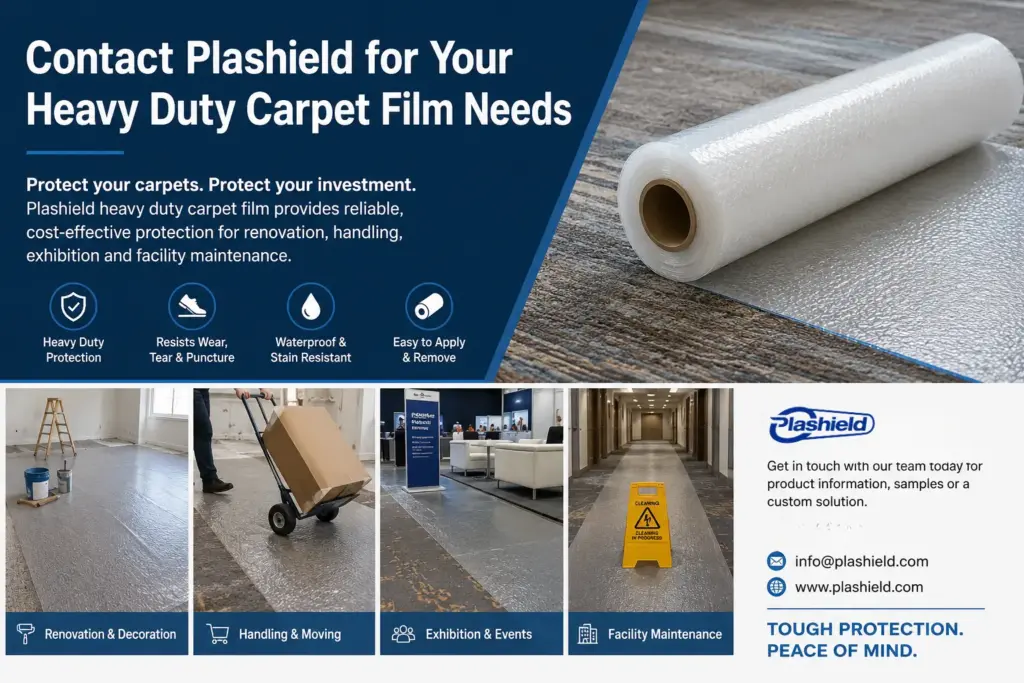
Contact Plashield for Your Heavy Duty Carpet Film Needs
If you are looking for a suitable heavy duty carpet film, Plashield can answer all your questions. Plashield is an experienced PE protective film manufacturer with more than 20 years of production and export experience. We focus on providing carpet, floor, glass, metal and building surface protection solutions for global distributors, wholesalers, contractors and industrial buyers. Plashield’s heavy duty carpet film has high adhesion, tear-proof and anti-puncture performance, which can effectively prevent dust, stains, paint, heavy foot traffic and other factors from damaging the carpet, and leaving no residual glue after tearing. Our heavy duty carpet film adopts a reverse winding design, which is quick and easy to install. At the same time, we provide flexible customization services with a variety of widths and lengths to choose from to meet the needs of your construction site. In addition, we also support customized colors, logo printing and packaging forms.
Featuring stable quality, flexible customized services and green production commitment, Plashield is committed to becoming a reliable plastic protection partner in the field of building materials. Contact us immediately, and we will provide you with a detailed inspection report and necessary guidance.
FAQs
- What types of carpets is heavy duty carpet film suitable for?
Heavy duty carpet protection film is suitable for a wide variety of carpet types, including short-pile carpets, long-pile carpets, office carpets, commercial carpets, and carpets used in public areas such as hotels. However, since different carpets vary in fiber structure, surface texture, and material, it is recommended to conduct a small-scale test before installing the film over a large area to ensure the adhesive strength is appropriate and to avoid issues such as adhesive residue or damage to the carpet fibers.
- How long can heavy duty carpet film remain installed?
The actual service life of heavy duty carpet protection film depends on several factors, including adhesive strength, carpet type, installation environment, and foot traffic frequency. For projects requiring long-term protection, such as renovation projects and commercial installations, heavy-duty protection film with stable adhesion should be selected. Additionally, when used in high-traffic areas, the condition of the protection film should be checked regularly; if the edges are curling up or the film surface is damaged, it should be re-secured or replaced promptly.
- What factors should be considered when purchasing heavy duty carpet film in bulk?
For contractors, distributors, and project buyers, key considerations when selecting heavy-duty carpet protective film include film thickness, adhesion performance, roll width, length specifications, carpet compatibility, and customization capabilities. Wider protective film reduces the number of seams and improves installation efficiency, while longer rolls are suitable for continuous installation over large areas. In addition, professional manufacturers typically offer OEM customization services, such as size adjustments, color customization, logo printing, and more.
- What is the correct way to install heavy duty carpet film to achieve the best protection?
Before installation, ensure the carpet surface is clean and dry. Measure the area to be covered in advance and plan the direction of installation. During installation, place the adhesive side of the protective film against the carpet surface, unroll it slowly, and press down evenly to ensure the film adheres fully, minimizing air bubbles and wrinkles. For large-scale installations, properly handle the seams to prevent dust, moisture, and construction debris from entering. In high-traffic areas such as hallways and entrances, reinforce the edges to prevent them from curling due to prolonged foot traffic.
- Why should businesses choose heavy duty carpet film instead of general protective coverings?
While standard protective materials such as plastic sheeting and carpet protection paper can provide basic protection against dust and moisture, they typically lack secure fastening capabilities and cannot effectively withstand frequent foot traffic or the movement of equipment. Heavy-duty carpet protection film combines the advantages of waterproofing, dustproofing, abrasion resistance, tear resistance, and quick installation. It effectively protects carpets from dust, paint, stains, and construction damage, making it particularly suitable for construction companies, property management firms, moving companies, and industrial procurement clients.