



Aluminum is a widely used material. Almost all walks of life rely on aluminum, covering transportation, architecture and construction, product design, household appliances and leisure and entertainment. However, aluminum is very vulnerable to damage during production, transportation or installation, which may lead to rework, waste and many inconveniences. This is exactly where aluminum protective film plays a role. It can provide temporary protection for aluminum and effectively resist scratches, residues, wear, ultraviolet irradiation and other kinds of damage. However, for many buyers, the challenge is not only how to choose the right protective film, but also how to find a high-quality and suitable temporary PE protective film for aluminum.
This guide will introduce you to the procurement channels of aluminum protective film, the key points to pay attention to when choosing, and how Plashield products meet the highest standards. After reading this article, you will be able to clearly understand which technical parameters should be specified, which suppliers should be contacted, and how to screen qualified suppliers for your next batch of orders.
Where to Purchase Temporary Adhesive Film for Aluminum
The procurement channel of aluminum protective film mainly depends on the purchase quantity, customized demand and product performance requirements. For aluminum plates, aluminum profiles, aluminum coils and other metal processing enterprises or OEM manufacturers, purchasing directly from protective film manufacturers is usually a more cost-effective choice. The manufacturer’s direct supply can not only provide a more stable supply capacity, but also customize the thickness, stickiness, color and printing content of the protective film according to different application needs. If you are purchasing in small quantities or have high requirements for delivery, it is more suitable for purchasing products through B2B platforms or regional dealers, but there may be differences in product quality, long-term supply stability and customization ability of such channels.
Comparing Sourcing Channels
| Channel | Best For | Advantage | Limitations |
| Direct Manufacturer Supply | Large orders, OEM projects, customized film | Lower cost, customization, technical support | MOQ requirement |
| B2B Marketplaces | Initial supplier search and price comparison | Easy comparison, wide supplier selection | Need to verify manufacturer capability |
| Local Distributors | Small quantities and urgent needs | Fast delivery, local service | Higher cost, limited customization |
For companies that pursue long-term cooperation, stable quality and customized services, choosing professional aluminum protective film suppliers is usually a more reliable solution. Plashield has more than 20 years of experience in the production of protective films. It can provide aluminum protective film sample testing, customized production and bulk export services to help customers choose a protection scheme that is more suitable for their own processing technology.
What Is Temporary Adhesive Film for Aluminum
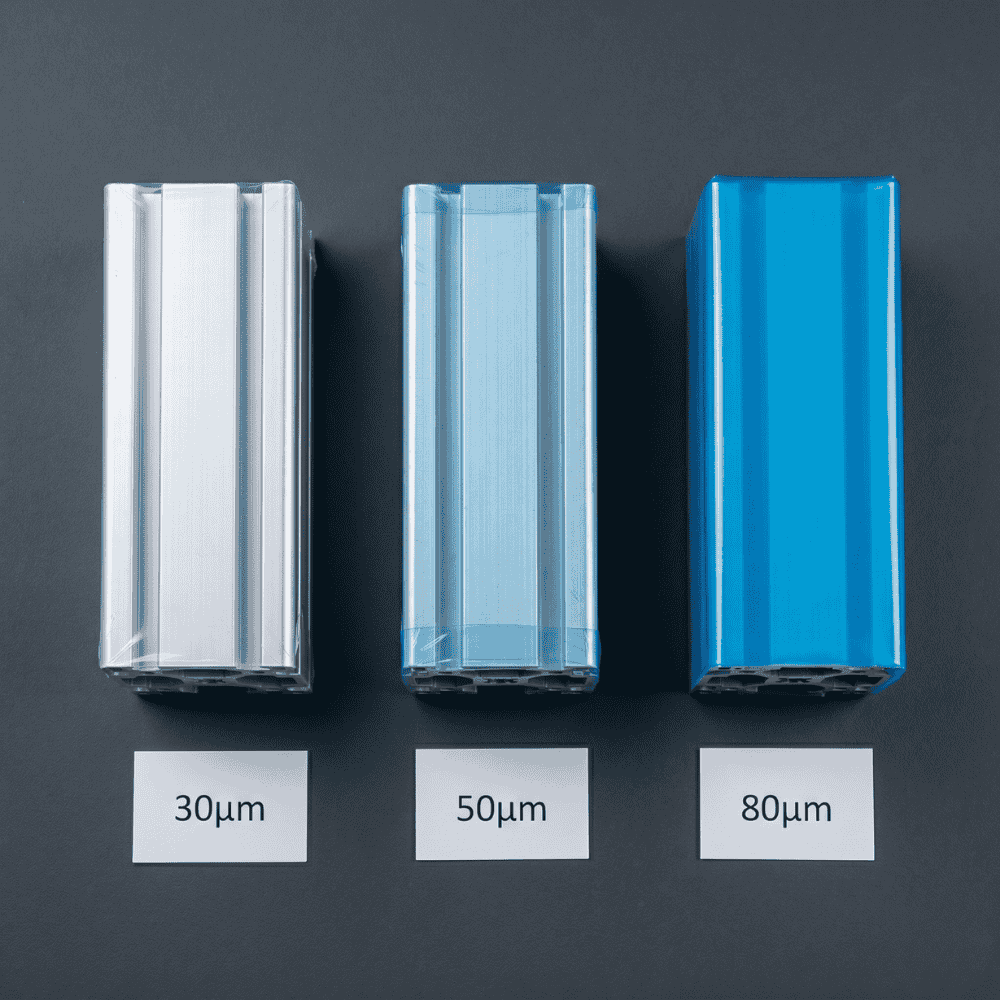
Aluminum temporary protective film is a surface protection material specially used in the production, processing and transportation of aluminum. Unlike ordinary DIY tape or simple masking film, it is an industrial-grade protection scheme designed according to the surface characteristics of aluminum. It can help companies reduce production losses, improve processing efficiency, and ensure that aluminum always maintains a good surface condition from production line to final installation.
Aluminum surface protection film is usually composed of PE substrate and special formula acrylic adhesive, which provides low-tack, medium-tack, high-tack and even ultra-high-tack levels through different adhesive layer formulas to meet the surface needs of different aluminum materials. In practical applications, aluminum surface protection film is mainly used on the production line of aluminum coils, aluminum plates, aluminum profiles and other products, such as coil coating, longitudinal shearing, extrusion and subsequent processing, to provide continuous protection for the surface of the material. For aluminum with a smooth, textured or matte surface, different adhesive protective films can be selected; for long-term outdoor aluminum plates, it is also necessary to have good weather resistance and UV resistance to ensure that the protective film remains stable during the service life.
How to Specify Aluminum Protection Film
When choosing PE protective film for aluminum, you should not only pay attention to the size of the adhesive force, but also consider the surface treatment method of aluminum, follow-up processing technology, storage environment and final peeling requirements. Anodizing, baking paint coating, mirror polishing, brushing texture and other different aluminum surfaces have different adhesive requirements for protective films: excessively high adhesion may lead to residual glue or surface damage, while insufficient adhesion is easy to cause film rise and shedding during processing and transportation.
Generally speaking, low-tack or medium-to-low-tack protective film should be selected for smooth aluminum surfaces with high appearance requirements to ensure that there is no residual glue and no haze remains after tearing. Aluminum that has been coated or needs to be stamped, bent and other deep processing requires a higher-tack protective film to ensure the stable fit of the film during processing. In addition, if aluminum needs to be stored outdoors for a long time, a protective film with UV stability should also be selected to avoid the curing of the adhesive layer or difficult to peel off due to aging.
Film Selector: Recommended Protective Film Type
| Aluminum Application / Surface Type | Recommended Adhesive Level | Recommended Film Specification | Why Choose This Film |
| Mirror finish aluminum, polished aluminum, high-gloss aluminum | Low adhesion (5–30 g/cm) | Thin PE protective film | Prevents residue and surface haze |
| Anodized aluminum | Low to medium adhesion (20–50 g/cm) | Standard PE protective film | Balanced adhesion and clean removal |
| Painted aluminum, PVDF-coated aluminum | Medium to high adhesion (30–70 g/cm) | Weather-resistant protective film | Strong bonding for coated surfaces |
| Aluminum coils, slitting and cutting applications | Medium adhesion (40–60 g/cm) | Durable PE protective film | Stable protection during processing |
| Stamping parts, bending parts, roll forming applications | Medium to high adhesion (50–80 g/cm) | High-adhesion protective film | Prevents peeling during forming |
| Brushed aluminum, textured aluminum | Medium to high adhesion (30–70 g/cm) | High-conformability PE film | Better adhesion on textured surfaces |
| Aluminum sheets and panels requiring stacking protection | Low adhesion (5–20 g/cm) | Easy-peel protective film | Scratch protection during stacking |
| Architectural panels, aluminum composite panels, curtain wall panels | Medium adhesion with UV resistance | UV-stabilized protective film | Suitable for outdoor exposure |
| Aluminum parts for appliances and precision stamping | Medium adhesion, printable | Custom printed protective film | Protection with product identification |
The above selection is for regular reference only. Due to the differences in different aluminum coating systems, processing processes and storage environments, Plashield can recommend matching adhesive systems according to the aluminum samples, surface treatment methods and usage conditions provided by customers, and provide sample tests to ensure that the protective film achieves the best protection effect in practical applications.
Why Buy Factory-Direct from Plashield
Choosing Plashield’s factory-direct protective film means getting more stable product quality, more flexible customization and more efficient supply support. As a PE protective film manufacturer with more than 20 years of research and development and production experience, Plashield has an in-depth understanding of the protection needs of different substrates such as aluminum profiles and aluminum plates, and can provide more accurate protective film solutions.
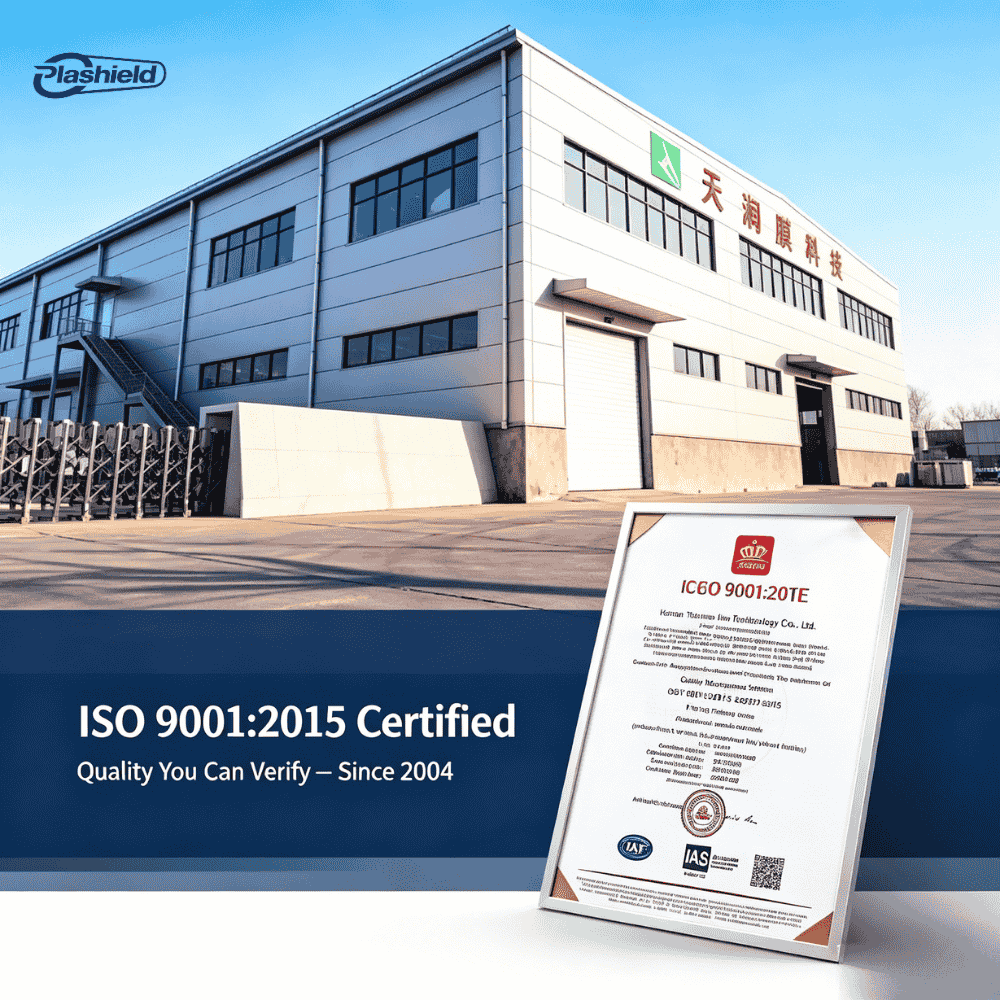
Plashield supports flexible MOQ, which is suitable for dealers, large processing enterprises and brand customers to purchase. We provide a complete service process from free sample testing, specification confirmation, stickiness and peeling performance verification to mass production to ensure that the protective film is highly matched with the customer’s actual application scenarios. In terms of quality management, it holds a number of international certifications and inspection reports such as ISO 9001, CE, CNAS, IEC-62321 and SGS to ensure the consistency of product quality and effectively provide reliable protection for aluminum in the process of processing, transportation and installation. After removal, there is no residual glue on the surface. Hold a good appearance. In addition, Plashield provides OEM customization services, including film color, size, printing Logo and packaging method, to help customers create exclusive product solutions.
With mature export experience and factory-direct supply model, Plashield is committed to providing global customers with a more transparent, efficient and reliable protective film supply chain. Contact us today to get your customized solution.
FAQs
- What is temporary adhesive film for aluminum, and why is it needed during aluminum processing?
Temporary adhesive film for aluminum is an industrial surface protection material designed to protect aluminum sheets, coils, and profiles during manufacturing, transportation, and installation. It typically consists of a PE substrate and acrylic adhesive layer, providing protection against scratches, dust, residue, wear, and UV exposure. By preventing surface damage during processing operations such as extrusion, slitting, cutting, and handling, protective film helps reduce rework costs and maintain the final appearance of aluminum products.
- Should aluminum processors buy protective film directly from manufacturers or through distributors?
For large-volume orders, OEM projects, or customers requiring customized specifications, purchasing directly from protective film manufacturers is usually more cost-effective. Factory-direct supply provides better customization options for film thickness, adhesion level, color, printing, and technical support. Distributors may be more suitable for small quantities or urgent orders that require faster local delivery.
- How can buyers verify whether an aluminum protective film supplier is reliable?
A reliable supplier should have proven manufacturing capabilities, quality management systems, technical support, and experience with similar applications. Buyers should evaluate whether the supplier can provide samples, conduct adhesion testing, support customization, and maintain consistent quality during mass production.
- Can aluminum protective film withstand outdoor storage and UV exposure?
Yes, but the protective film must be specifically designed for outdoor conditions. Standard films may experience adhesive aging during long-term exposure, making removal difficult. For aluminum stored outdoors, UV-stabilized protective films are recommended because they help maintain adhesive stability and prevent residue after removal.
- Is temporary protective film suitable for aluminum processing operations such as cutting, bending, and stamping?
Yes. Aluminum protective films are widely used during manufacturing processes including slitting, cutting, bending, stamping, and roll forming. However, processing conditions determine the required adhesion level. For example, aluminum parts undergoing bending or stamping usually need higher-adhesion films to prevent peeling during deformation.
- What is the difference between low-tack, medium-tack, and high-tack aluminum protective films?
The main difference lies in adhesive strength and application suitability. Low-tack films are typically used for smooth and high-gloss aluminum surfaces where clean removal is critical. Medium-tack films provide balanced adhesion for general processing applications, while high-tack films are designed for coated, textured, or mechanically processed aluminum where stronger bonding is needed to prevent lifting or peeling.