



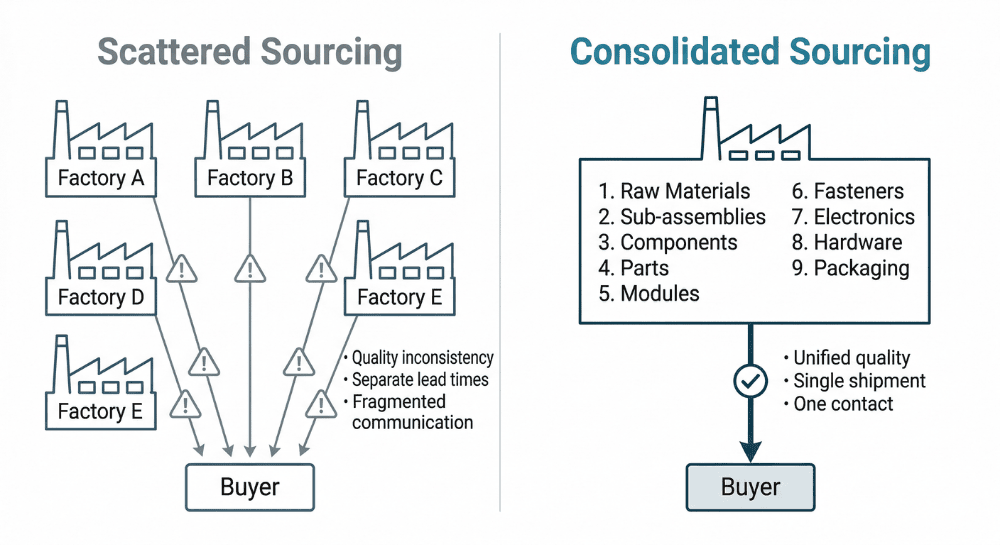
A building materials importer in Mexico used to manage five separate film suppliers — one for aluminum profiles, one for color-coated steel, one for marble, one for window glass, and one for carpet protection. Each reorder meant five lead times, five QC conversations, five freight calculations, and five points where a quality dispute could stall a shipment.
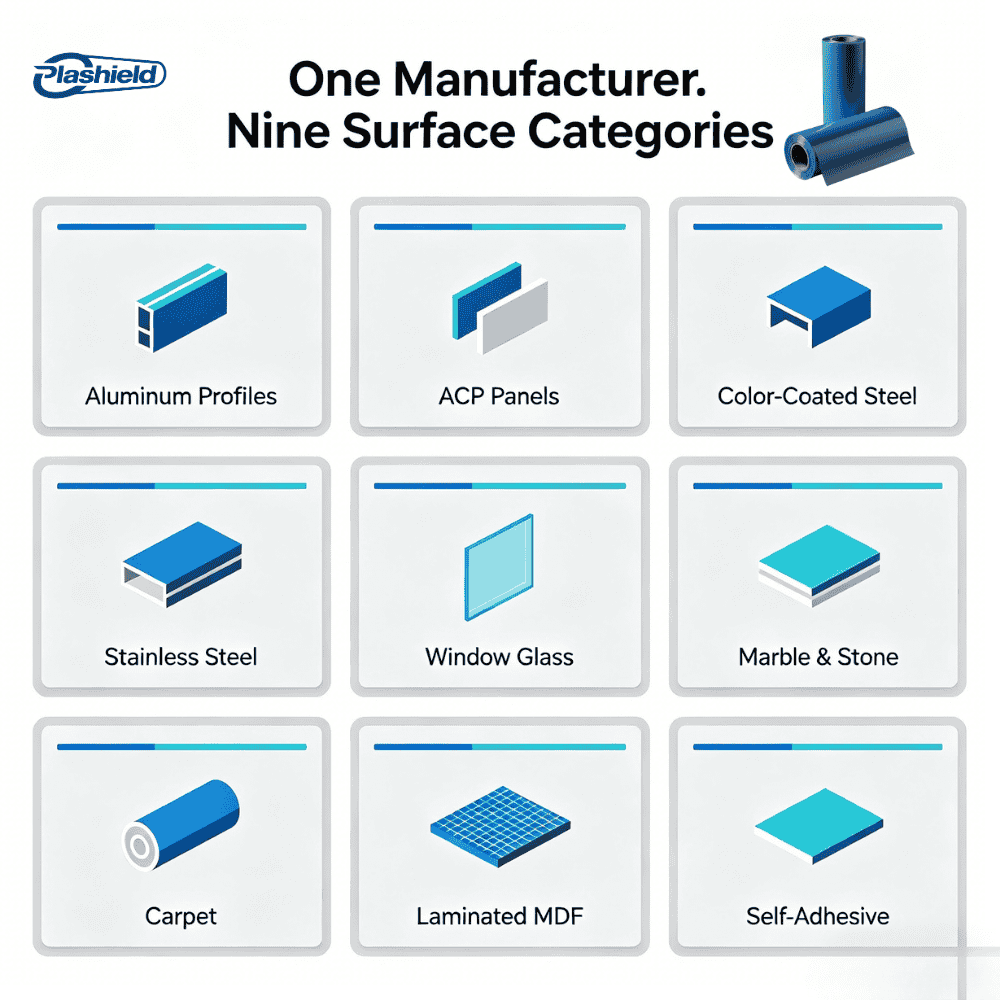
Plashield is a PE protective film manufacturer founded in 2004, The company operates 9 product lines covering protective film for aluminum profiles, ACP panels, color-coated steel, stainless steel, window glass, marble, carpet, laminated MDF, and self-adhesive applications. Plashield serves importers, distributors, and project procurement teams in 60+ countries under a unified ISO 9001 quality system. For buyers managing multiple substrate types, this structure changes the sourcing equation.
The Real Cost of Managing Multiple Film Suppliers
Most procurement managers calculate supplier risk in unit prices. However, the larger cost is invisible: it sits inside the coordination layer between suppliers.
The Hidden Friction in Multi-Supplier Sourcing
When a buyer sources PE film from four different factories, they encounter four different quality standards, four different packaging formats, and four different communication channels. As a result, a single project requiring aluminum profile film, color-coated steel film, and marble protection film may involve three separate shipments, three customs entries, and three sets of quality inspection records. This fragmentation is commonly observed in B2B sourcing practice for building materials distributors.
Furthermore, when a film performs below expectation on-site, each supplier points to the other’s specification as the root cause. Without a single accountable source, resolving quality disputes takes weeks. In project-critical supply chains — such as prefabricated building panels or high-end interior stone installation — these delays carry real downstream costs.
What Supplier Consolidation Actually Eliminates
Consolidating to a single source reduces the number of active supplier relationships a procurement team must manage. It also reduces freight consolidation complexity: one factory load means one set of export documents, one fumigation certificate, and one inland logistics coordination. For buyers who place combined orders across three or more film categories, the logistics simplification alone typically justifies the switch.
Plashield’s 9-Category One-Stop Capability — Specifics
Since 2004, Plashield has expanded its product range to cover the nine surface types most commonly required in building materials supply chains. This is not a catalog strategy. Each product line runs on dedicated production equipment matched to its substrate interaction requirements.
Category Coverage
Plashield manufactures PE protective film across the following nine product lines, all produced in-house at its Xinxiang facility:
- Aluminum Profile Protective Film — designed for extruded aluminum profiles in architectural applications
- ACP Protective Film — engineered for aluminum composite panels used in façade cladding
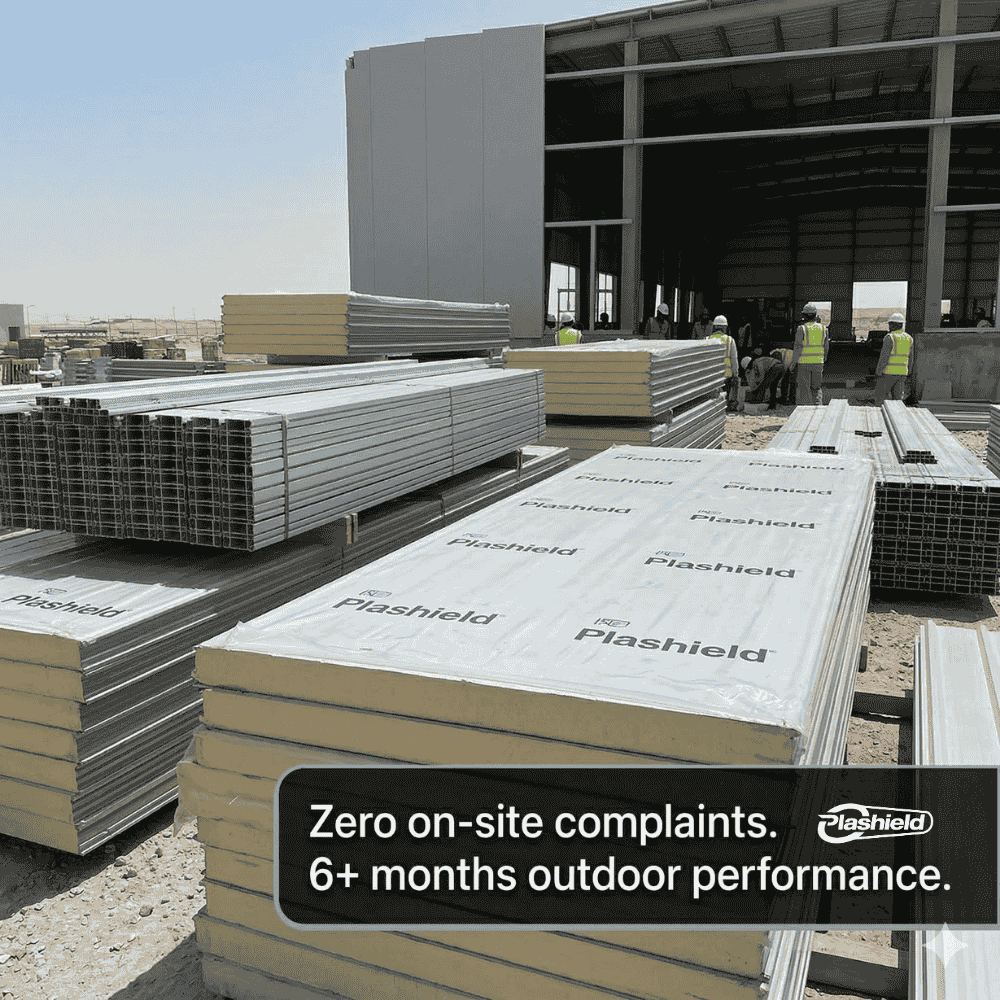
- Color-Coated Steel Film — designed for PPGI/PPGL panels, metal roofing, sandwich panels, and roll-forming lines
- Stainless Steel Protective Film — suited for decorative and structural stainless steel surfaces
- Window Glass Protective Film — designed for float glass, tempered glass, and coated glass panels
- Marble Protective Film — PE and TPH-based film for polished marble, granite, and quartz
- Carpet Protective Film — designed for carpet and hard floor protection during construction and renovation
- Laminated MDF Panel Film — for wood-based board surfaces in furniture and interior fitout
- Self-Adhesive Film — for general surface masking and protection applications
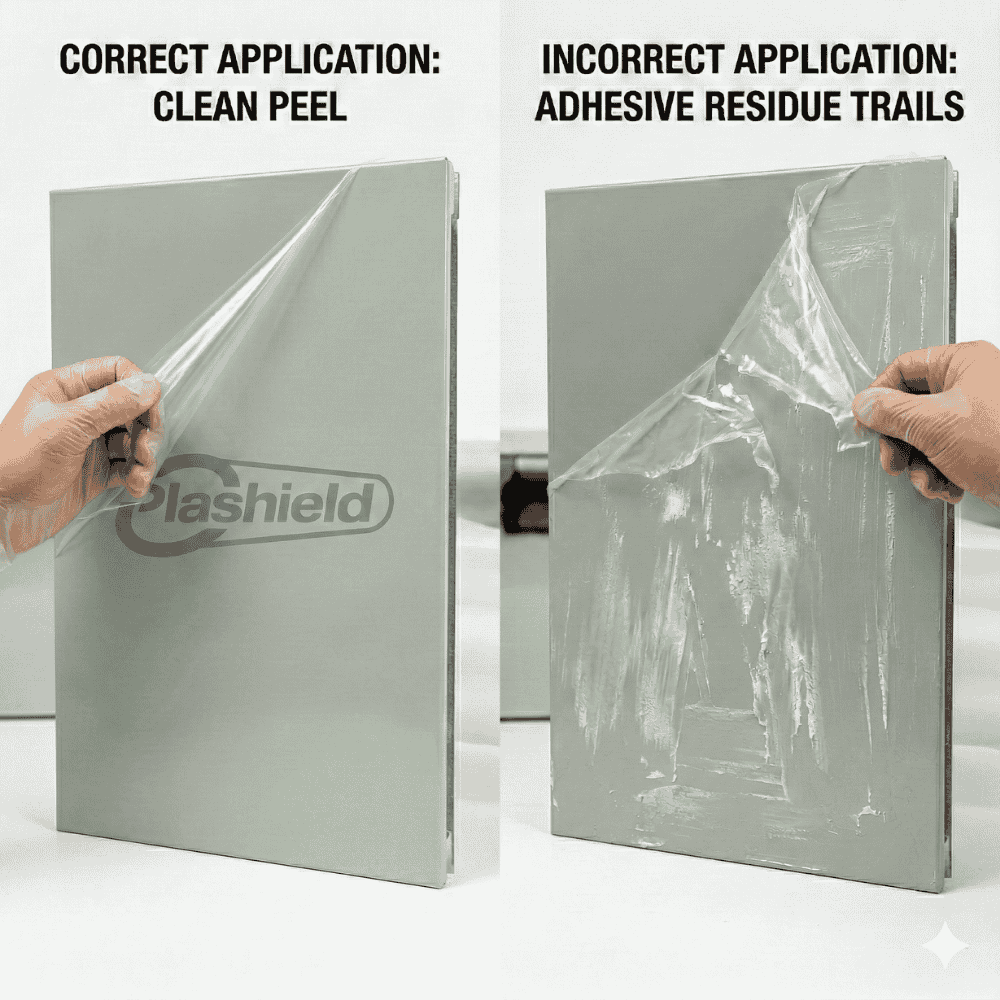
Each product line uses adhesive formulations selected for the specific surface energy and texture of its target substrate. Therefore, buyers receive a product designed for their material — not a generic film applied across all categories.
What a Unified Quality System Means in Practice
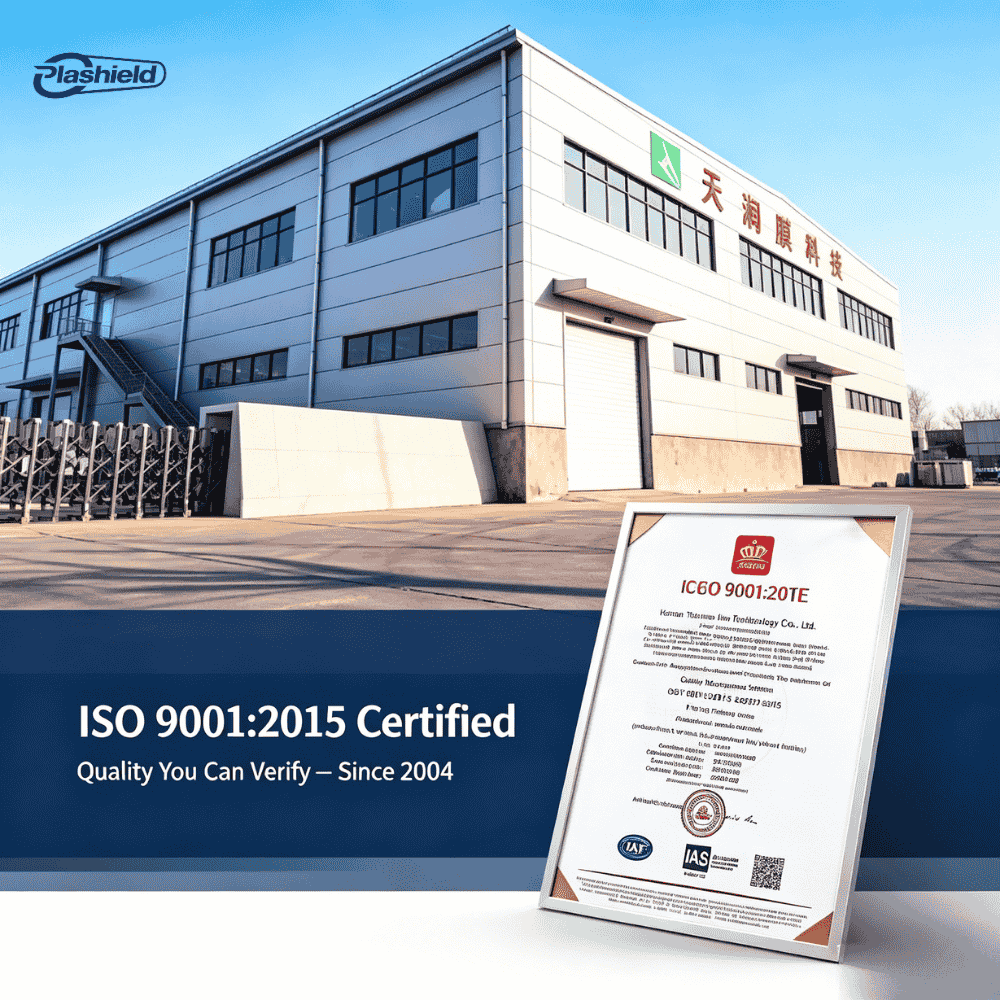
Plashield operates under a single ISO 9001 quality management system across all nine product lines. [Source: Plashield official] In practical terms, this means one set of incoming material specifications, one set of production parameter records, one inspection protocol, and one set of shipping documentation standards — regardless of which film category is being ordered.
For a procurement manager ordering aluminum profile film and marble film in the same container, this matters. The QC format is identical. The lot traceability documentation matches. A single audit of Plashield’s facility covers the entire product scope. In contrast, auditing four separate factories to the same standard requires four separate site visits, four separate corrective action processes, and four separate ongoing monitoring schedules.
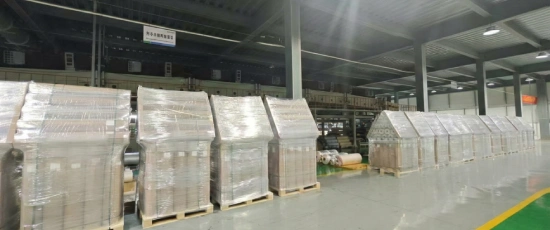
Furthermore, Plashield applies uniform export packaging standards across all product lines. [Source: Plashield official] Roll dimensions, moisture barriers, and carton labeling follow a consistent format. This reduces receiving and warehousing complexity for buyers who handle multiple film SKUs in the same distribution centre.
One-Stop vs. Scattered Sourcing — A Procurement Manager’s Comparison
The following table presents a direct structural comparison across five variables relevant to building materials procurement teams.
| Variable | One-Stop: Plashield | Scattered: Multiple Factories |
|---|---|---|
| Number of active suppliers | 1 factory, 1 contact | 3–5 factories, 3–5 contacts |
| Quality standard consistency | Unified ISO 9001 across all categories | Variable — each factory sets its own standard |
| Logistics & customs | Combined shipment, single set of export documents | Separate shipments, multiple customs entries |
| Responsibility when quality issues occur | Single accountable party, direct resolution | Each factory deflects to the next — disputes extend |
| Combined order cost structure | Volume aggregation may reduce unit cost and freight per m² | Each factory prices independently, no cross-category leverage |
The cost implications of the last row are significant for large-project procurement. However, the responsibility structure in row four is typically the deciding factor. When a film failure delays a façade installation or damages a shipment of polished stone panels, having a single accountable manufacturer — rather than a chain of deflecting sub-suppliers — changes the resolution timeline from weeks to days.
Real Case — Mexico Importer Multi-SKU Consolidated Sourcing
A building materials importer based in Mexico sourced protective film for aluminum profiles, color-coated steel panels, and carpet protection from three separate Chinese factories. Coordination across three suppliers meant three separate production schedules, three lead times to align, and inconsistent print quality on logo films across the three product types.
After consolidating to Plashield, the importer placed a single combined order covering all three film categories. [Source: Plashield official — Mexico customer case] The result was a unified print quality standard across all SKUs, a single export shipment, and one point of contact for reorders and specification changes.
The importer noted specifically: “The print quality is excellent. We really love it. Thank you for the good support.”
This case is representative of a pattern commonly observed among multi-material building products distributors: the initial switch to consolidated sourcing is driven by logistics frustration, and the long-term retention is driven by quality consistency. Plashield’s 9-category structure is designed to serve exactly this buyer profile.
FAQ — One-Stop Protective Film Sourcing with Plashield
Q1: Does Plashield manufacture all 9 film categories in its own factory, or does it source some from third-party suppliers?
All nine product lines are manufactured in-house at Plashield’s facility in Xinxiang, Henan, China. There is no outsourced production at any stage. Buyers who require factory audit verification can request a scheduled site visit directly.
Q2: Can buyers place a single combined order covering multiple film categories — for example, aluminum profile film and marble film in the same shipment?
Yes. Plashield regularly processes multi-category orders from distributors and project procurement teams. A single combined order means one production schedule coordination, one export documentation set, and one shipment. This is one of the practical advantages of sourcing from a manufacturer with integrated multi-category capability.
Q3: How does Plashield ensure quality consistency across different film types when each substrate has different surface requirements?
Each product line uses an adhesive formulation selected specifically for its target substrate. All product lines operate under the same ISO 9001 quality management system, which means incoming material specifications, production records, and inspection protocols follow a unified format across categories. A film designed for polished marble uses a different adhesion profile than a film for color-coated steel — but both go through the same documented quality control process.
Q4: What is Plashield’s minimum order quantity for multi-category combined orders?
MOQ varies by film category and specification. Buyers with multi-SKU requirements are encouraged to contact Plashield directly with their substrate list, required film thickness, and estimated annual volume per category. The team typically responds within one business day with a combined production feasibility and pricing indication.
Q5: Does consolidating to one supplier reduce a buyer’s negotiating position compared to using multiple factories?
This concern is common, but the trade-off is typically asymmetric. With Plashield, volume aggregation across multiple categories may improve unit pricing and reduce per-m² freight cost compared to smaller, fragmented orders across multiple factories. More importantly, a single accountable supplier reduces the cost of quality dispute resolution — which in building materials supply chains is often the larger variable cost. [Source: commonly observed in B2B sourcing practice]
One contact. Nine categories. One production standard.
If your sourcing currently involves multiple film suppliers for different substrate types, a consolidated review with Plashield typically takes one conversation. Send your substrate list, required film specifications, and estimated annual volumes to [email protected] or via WhatsApp at +86 198 3620 1567. The team will confirm product availability, MOQ, and a combined pricing indication within one business day. Browse the full product range here.