



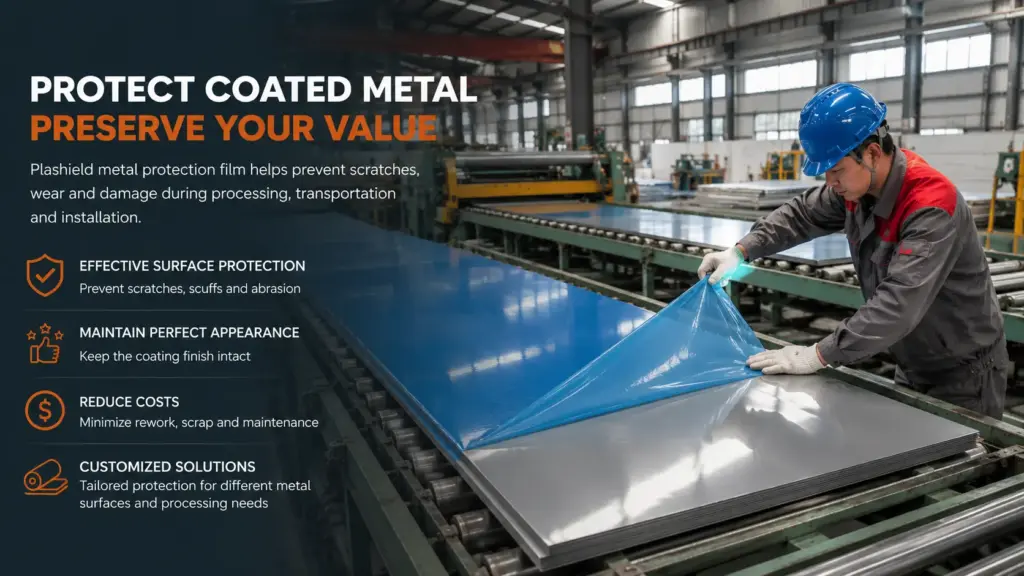
For manufacturers of pre-coated steel coils, metal plates and sandwich panels, maintaining perfect surface finish is a crucial challenge. During manufacturing, storage, transportation and installation, the coated metal surface is easily scratched, worn and damaged by handling. And this kind of damage will not only increase the cost of rework and scrapping, but also affect customer praise and brand credibility. As a temporary surface protection material, metal protection film can effectively reduce appearance damage during coil processing, transportation and installation. Choosing a suitable mental protection film can effectively protect the coating, maintain production efficiency and reduce subsequent maintenance costs.
This article will introduce how to choose a suitable protection film for different types of metal-plated surfaces, including factors such as coating system, surface glass and film release requirements, and help you understand how Plashield can provide customized protective film solutions.
What Is Metal Protection Film?
Metal protectionfilm is a kind of PE protective film used for painted metal surfaces. It is usually supplied in the form of coils. Through appropriate adhesion to the metal surface, it can form a protective barrier during the production, processing, transportation and installation of metal materials to reduce scratches, friction, dust and other external factors. Damage caused by the surface reduces the cost of follow-up maintenance. At the same time, coated metal protection film can be easily removed after use, leaving no residual glue. According to different application needs, metal protection films can provide different thicknesses, colors, widths and adhesion levels to adapt to different types of coating systems.
Where Is It Laminated: Coil Line & Panel Line
Metal protection film is mainly used in the process of metal coil processing and plate production. It is used to protect the metal surface after painting or surface treatment to avoid scratching, wear or pollution of the product in the subsequent processing, storage and transportation stages.
- On colored steel plates, PPGI and other coil production lines, metal protection films are usually composited on the surface of steel coils that have been painted or striped plates. Because the processing of steel coils requires multiple links, the surface is easily damaged. Therefore, the protective film usually fits after the coating is cured, providing temporary protection for the subsequent processing process and ensuring that the product maintains good appearance quality during molding, handling and installation.
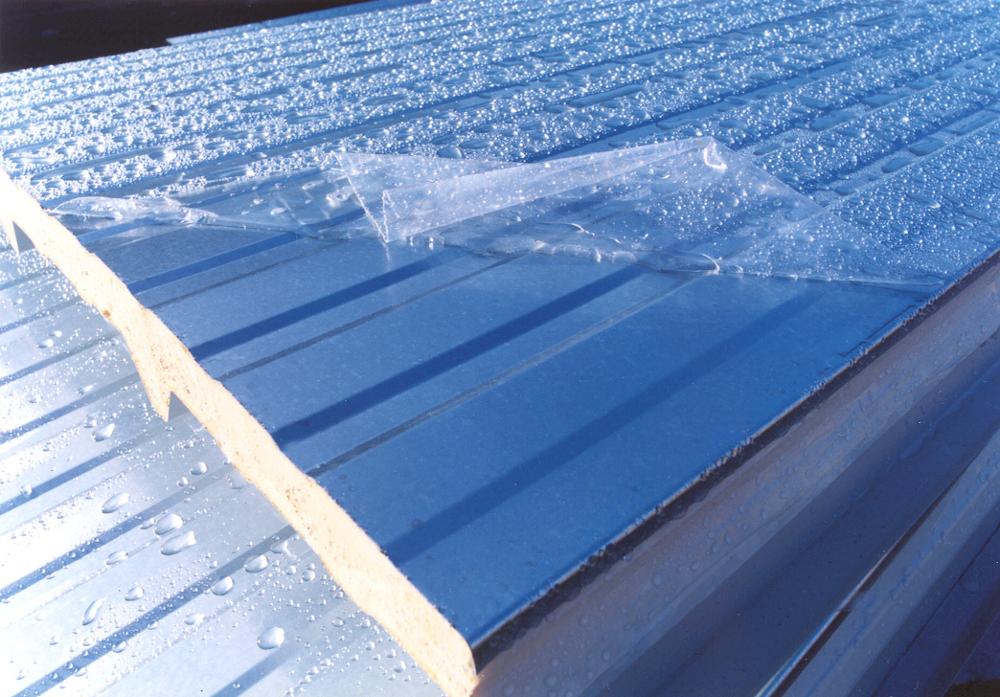
- For the sandwich panel production line, the protective film is mainly used for the decorative metal panel of the outer layer of the sandwich panel. Sandwich panels are widely used in clean rooms, cold storage, prefabricated buildings, industrial enclosure systems and other fields, and have high requirements for surface aesthetics and integrity. Sandwich panel surface protection film can effectively reduce surface damage during compounding, cutting, packaging and transportation, and ensure that the product is kept clean and flat when delivered.
It should be noted that industrial metal protection film is usually completed with automated compounding on the production line, rather than manually pasting at the construction site after the processing is completed. This online film method can not only improve production efficiency, but also ensure the uniformity of adhesion and achieve a more reliable surface protection effect.
Adhesion-Grade-by-Surface Comparison Table
Different coated metal surfaces have different adhesive requirements for protective films. A protective film with the appropriate viscosity must provide sufficient adhesion to ensure it does not peel off during production, transportation, and storage, while also allowing for residue-free removal at the end of its service life to prevent adhesive residue or scratches on the paint surface. It is important to note that the selection of the appropriate adhesion grade is typically based on the coating system and application scenario, rather than the metal substrate itself.
| Application | Typical Coating System | Key Risk | Recommended Adhesion | Suitable Film Type |
| Curtain walls, visible surfaces of doors and windows | High-gloss PE coating | Peel marks left by the film affect the appearance during inspection | Low–Medium | Standard short / mid-term film |
| Wall panels, frequent job-site handling | Matte PE coating | Film detachment and panel displacement during handling | Medium | Mid-term adhesion film |
| Roofing , long-term outdoor curtain wall | PVDF high-performance coating | Residue and adhesive aging after sun exposure | Low | UV-resistant film |
| Embossed , textured decorative panels | Textured coating | Curling at the edges and uneven adhesion | Medium–High | Strong-tack film |
| Sandwich panel on-site installation | Smooth decorative finish | Slow removal delaying installation | Low–Medium | Easy-peel film |
| Outdoor yard storage | Various coated steel , profiles | Schedule delays result in prolonged exposure | UV-resistant and optimal adhesion | Long-term weatherable film |
In a word, for surfaces that give priority to visual perception, such as curtain walls, doors and windows, low to medium viscosity should be carefully selected; for texture, relief and low surface energy materials, stronger adhesion is required; if the material is stored in the open air or the construction period is uncertain, UV resistance is just a need. Plashield can provide sample testing and stickiness confirmation support to help customers complete accurate verification before bulk purchase, and reduce the rework and after-sales costs caused by stickiness mismatch.
How to Choose the Right Metal Protection Film
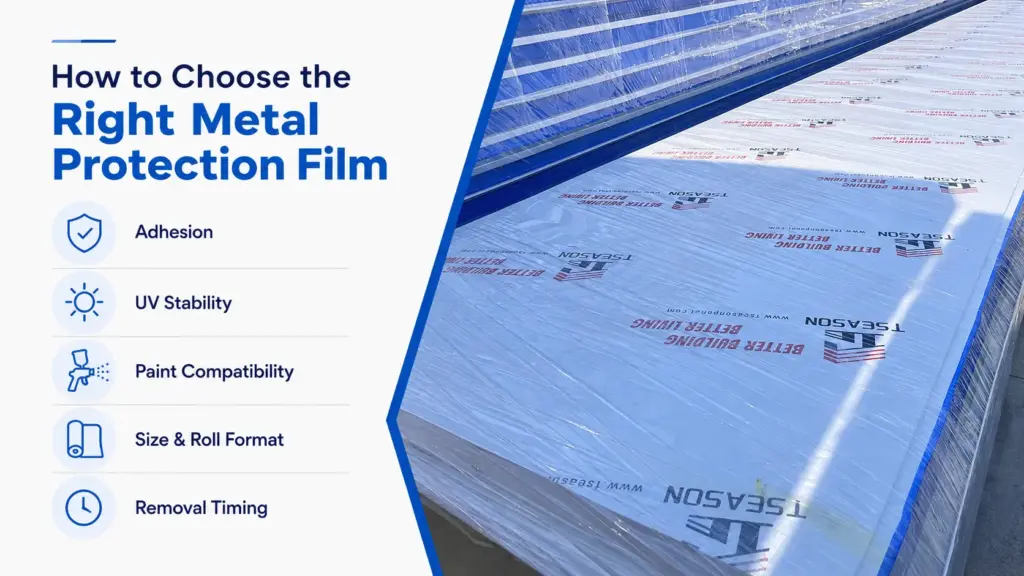
Adhesion
The stickiness of the metal protection film is not the higher the safer. In fact, the stickiness must match the surface characteristics of the substrate and the coating. If the viscosity is too low, it will lead to problems such as warping, early falling off, unstable adhesion and other problems during transportation and stacking, which will affect the protective effect; while if the stickiness is too high, it will leave residual glue in the peeling stage, or cause pressure marks on the coating surface, and even difficult to peel off. When choosing stickiness, it is necessary to choose according to the specific application scenario, substrate characteristics and retention cycle.
UV stability and storage environment
If steel coils, sheets, or sandwich panels are to be stored outdoors for an extended period or are subject to a lengthy logistics and transportation cycle, the anti-UV performance becomes crucial. If you have such needs, you can ask the supplier for the aging test data of the anti-UV film type and the corresponding storage condition suggestions to help you better evaluate and select.
Paint compatibility
There are many kinds of paint coatings for metal substrates, and different coating systems have different requirements for the adhesion mechanism and peeling performance of the protective film. Therefore, it is an essential step to verify the sample on the actual substrate before bulk purchase, which can effectively avoid compatibility problems with the whole batch of goods.
Width, thickness, and roll format
The width of the protective film needs to be determined comprehensively in combination with the actual width of the steel coil or panel and the structural parameters of the composite equipment, while the thickness should be matched according to the protection level and the subsequent molding difficulty. In addition, detailed parameters such as coil length, core specifications, and winding direction must also be clarified during the quotation phase, as the level of specification accuracy directly impacts production line efficiency and lamination speed.
removal timing
Whether the protective film can be easily removed without residue after use depends not only on the glue layer formula of the film itself, but also is closely related to the peeling time. If the retention time is too long, even if the membrane material is originally designed to be cleanly peeled off, there may be residual problems due to the aging of the glue layer. Therefore, in the process of selection and use, clarify the time from coating to peeling of the product, and select the matching adhesive strength level accordingly, which can better ensure the peeling effect without residual glue.
What Plashield Offers for Metal Protection Film
As a PE protective film manufacturer, Plashield has more than 20 years of industry experience, focusing on providing professional PE protective film solutions for various fields, including color steel protection film, PPGI protection film, and sandwich-panel surface protection film. As an experienced OEM protective film supplier, we support customized film width, thickness, specification, viscosity level, as well as anti-ultraviolet and anti-static options, which can match suitable solutions according to different needs. Plashield also serves as a private label protective film manufacturer, offering printing and private label film services to help distributors and manufacturers create their own product brands. From production line supply to adhesive testing assistance, Plashield provides reliable solutions to improve the reliability of protective films, reduce rework and material waste, ensure more thorough removal, and help customers achieve more stable product quality in the global market.
Choosing the right metal protection film is crucial to maintain surface quality and reduce production losses. Plashield welcomes your inquiry. We will provide professional advice according to your coating type, production process and application needs. We can provide customized solutions, including sample films for testing, to help you evaluate their adhesion, surface protection and ease of removal before mass production. Contact Plashield now to discuss your metal protection film needs and find a reliable solution for your application.
FAQs
- At what stage is metal protection film applied in the production process of coated steel and sandwich panels?
Metal protection film is typically applied during the manufacturing process rather than after the products are completed. For coated steel coils and sheets, the film is generally laminated after the coating system has cured, before further processing, storage, or transportation. For sandwich panels, protective film is applied on the decorative metal facing during the continuous panel production line. In-line lamination ensures consistent adhesion, stable protection performance, and higher production efficiency compared with manual application.
- How do coating systems affect the selection of metal protection film?
The coating system is one of the most important factors when selecting protective film. Different coatings, such as PE coatings, PVDF coatings, matte finishes, and textured surfaces, have different surface energies and adhesion requirements. A protective film with unsuitable adhesion may cause problems such as edge lifting, unstable bonding, adhesive residue, or surface damage during removal. Therefore, protective film selection should be based on the actual coating characteristics rather than only the metal substrate type.
- How can manufacturers avoid adhesive residue when removing metal protection film?
Preventing adhesive residue requires proper matching between the protective film adhesive system and the coated metal surface. Key factors include adhesive strength, coating compatibility, exposure duration, storage temperature, and UV exposure. Conducting peel tests on actual coated materials before mass production is an effective way to verify clean removal performance and reduce quality risks.
- Why should manufacturers test protective film samples before bulk purchasing?
Sample testing helps confirm compatibility between the protective film and the actual coated surface before large-scale production. Testing can evaluate adhesion stability, peel strength, residue risk, surface protection performance, and storage behavior. This step is especially important for manufacturers processing different coating systems or exporting products under strict quality requirements.
- How does metal protection film improve manufacturing efficiency for steel and sandwich panel producers?
By protecting finished surfaces throughout production, transportation, and installation, metal protection film reduces the need for repair, cleaning, or replacement caused by surface damage. Properly selected protective film also improves production consistency, reduces waste, and helps manufacturers deliver coated metal products with better appearance quality and fewer after-sales issues.