



Choosing the right materials for a building can effectively protect its value. TPO and EPDM are the two most commonly used single-ply roofing membranes for low-slope commercial roofs. They are widely used in buildings such as warehouses, retail malls, schools, hospitals, logistics centers, office buildings, and manufacturing facilities. Choosing between these two materials is not just a matter of personal preference; it is a decision that involves cost, performance, installation methods, service life, and roof durability. Before making a choice, it is typically necessary to consider your specific needs and strike a balance among these various factors.
This guide compares TPO and EPDM roofing based on key decision factors to help you more clearly determine which roofing membrane is best suited for your building, budget, and performance goals.
TPO vs EPDM: Key Takeaways
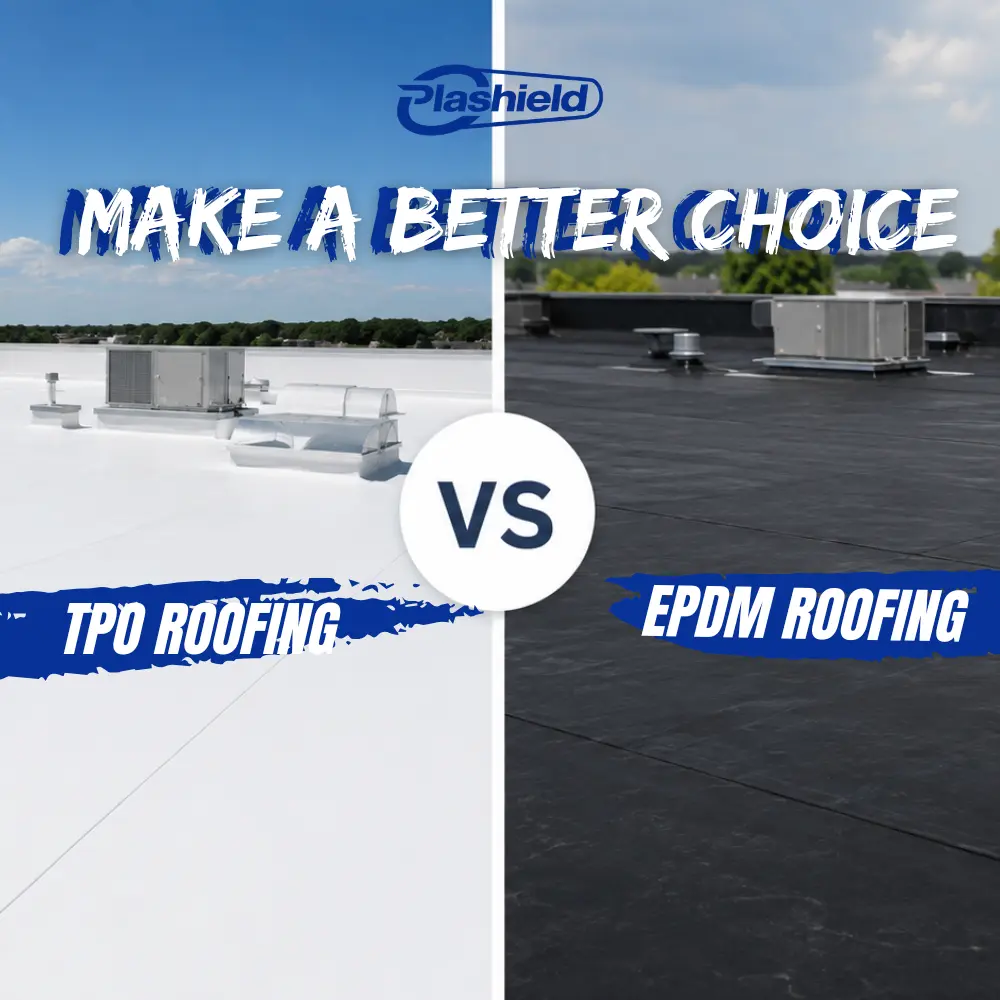
Both TPO and EPDM are single-ply waterproofing membranes used for flat roofs and low-slope commercial roofs, but they differ significantly in terms of material, performance, and suitable applications. Comparing these two roofing materials can help you identify the solution best suited to your building’s specific needs. Their main differences are as follows:
- Energy Efficiency
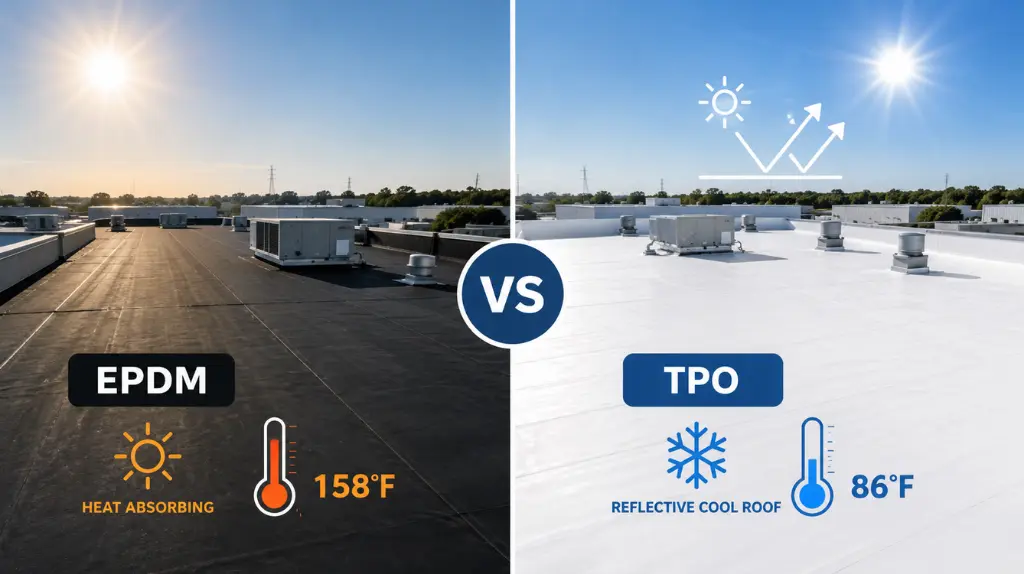
TPO is primarily white in color and has a high reflectivity, which effectively reduces roof temperature and cooling costs; EPDM is primarily black and has lower reflectivity than TPO, but its high heat absorption helps reduce heating costs in cold regions. White EPDM is also available, but it is more expensive.
- Longevity
A well-maintained EPDM roof typically lasts 20 to 25 years, while a TPO system typically lasts 15 to 20 years, although newer TPO formulations are steadily narrowing this gap.
- installation
TPO seams are joined using a hot-melt welding process, which results in strength several times greater than that of EPDM adhesive seams, but also requires higher installation expertise; EPDM seams, on the other hand, are secured using specialized adhesives or tape, making installation relatively simple, but requiring greater care during long-term maintenance.
- Cost
EPDM typically has a lower cost per square foot, and because it does not require hot-air welding equipment—it can be installed using adhesives or a lap-seam method—labor costs are also lower. TPO, on the other hand, often has a higher upfront cost but typically features a more robust seam system. Furthermore, when considering long-term energy consumption in hot climates, TPO may offer a lower total cost of ownership.
- History of Development
EPDM is a time-tested, established material that was introduced in the 1960s and has been in use for over 60 years. TPO, on the other hand, is a relatively new contender; there is a gap of about 30 years between their respective histories of use. This makes EPDM’s service life records more reliable, while TPO’s service life estimates are based more on projections. EPDM has a greater body of reliable data.
Side-by-Side Comparison
| Feature | TPO | EPDM |
| Material type | Thermoplastic polyolefin | Synthetic rubber |
| Surface color | White or light-colored | Black is the most common; white EPDM is also available. |
| Energy Efficiency | Higher, reflective surface | Black EPDM helps reduce heating costs in winter |
| Seam type | Heat-welded | Adhesive or tape |
| Typical lifespan | 15 to 20 years | 20 to 30 years |
| Introduced | 1990s | 1960s |
| Fire Resistance | Meets FM/UL standards | Meets FM/UL standards (varies by assembly) |
| Cost | Low manufacturing, quick installation, relatively low labor costs | Lower upfront, lower installation costs |
| Maintenance | Fewer joints, high strength, relatively low maintenance requirements | Easy to repair, but the bonded seams require extra attention; poor resistance to solvents and oils |
| Best Use Cases | Reflective Roofing, Energy-Saving Projects like warehouses or retail centers where energy efficiency matters | Locations with high durability requirements, such as schools, Industrial Buildings, and facilities in cold climates |
What Is TPO Roofing?
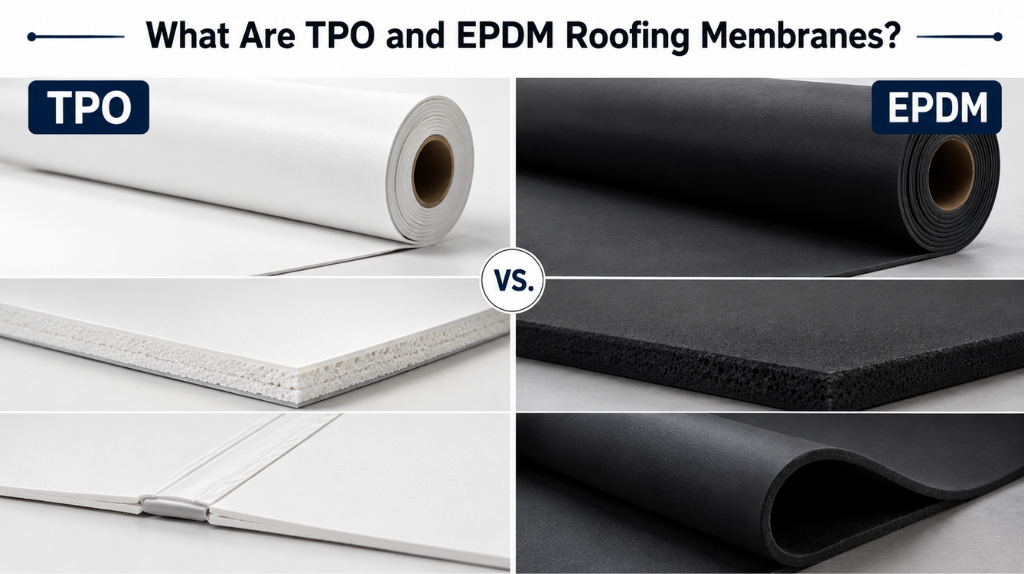
TPO is a single-ply membrane made from a blend of heat-weldable polypropylene and ethylene propylene diene monomer. It typically features a white or light-colored surface that is both stylish and attractive, with extremely high reflectivity that helps reduce energy costs. The seams are heat-welded, resulting in high strength and relatively low maintenance requirements. Although TPO has a shorter history than EPDM, it is now widely used on commercial low-slope roofs.
Pros of TPO Roofing
- TPO is a cost-effective roofing solution with low installation costs.
- It offers excellent reflectivity, which reduces cooling costs in hot climates.
- TPO seams are heat-welded to form a strong, watertight bond; proper installation prevents leaks and delamination.
Cons of TPO Roofing
- TPO is a relatively new single-ply membrane material, which means its formulation is still being refined. As a result, the quality of TPO products available on the market may vary.
- Although TPO has extremely high reflectivity, the film material itself has limited resistance to sustained high temperatures. When the surface temperature of the film exceeds approximately 160°F for an extended period, it may lead to localized degradation and cracking of the film surface.
Best Applications for TPO Roofing
TPO is commonly used in roofing systems that cover large areas, are mechanically fastened, and require high installation efficiency and reflective insulation, such as:
- Factory buildings and warehouses
- Commercial buildings such as shopping malls and office buildings
- Educational and municipal buildings
What Is EPDM Roofing?
EPDM is a synthetic rubber membrane that was first introduced in the 1960s and is one of the most classic single-ply membrane materials used for commercial low-slope roofs. EPDM is primarily black and has high heat absorption, making it suitable for cold climates and helping to reduce winter heating costs. It has a long service life and, with proper installation and maintenance, can last 25–40 years or even longer. The material itself is inexpensive and offers flexible installation options.
Pros of EPDM Roofing
- Extremely durable; with proper maintenance, EPDM roofs typically last 25–30 years or more, even in extreme weather conditions.
- The material is cost-effective, and installation costs are low. EPDM is typically the single-ply roofing material option with the lowest upfront cost.
- EPDM roofs can be easily repaired with patches or adhesives, thereby extending their service life at a low cost.
Cons of EPDM Roofing
- The seams in an EPDM roofing system must be treated with a specialized adhesive or tape. Over time, the adhesive at the seams of an EPDM roofing system will gradually dry out, crack, and fail. Tiny gaps will form at the seams, allowing water to seep into the roof structure.
- EPDM has poor resistance to oils and chemical solvents and is not well-suited for environments requiring long-term exposure to oil or chemicals.
Best Applications for EPDM Roofing
EPDM is better suited for roofing applications that require durability, strong weather resistance, or stable performance in low-temperature environments, such as:
- Residential roofing
- Buildings in regions with extreme temperature fluctuations or cold climates
Durability Comparison
TPO: When formulated properly, TPO offers good resistance to UV radiation, heat, puncture, and chemical exposure. Long-term performance depends on thickness, formulation, installation, and maintenance.
EPDM: Offers excellent resistance to ozone, UV radiation, and natural aging. It has a proven track record of long-term performance in a variety of climatic conditions.
TPO or EPDM: Which Is Right for You?
The choice between TPO and EPDM ultimately depends on the specific conditions of your building and your budget. If you’re looking for energy efficiency and your building has HVAC equipment, vents, and areas where maintenance personnel frequently walk, then TPO’s energy efficiency, welded seams, and puncture resistance may be the ideal choice for you. EPDM, on the other hand, combines durability with the ability to withstand extreme weather fluctuations, while also being very cost-effective. Both materials provide excellent protection for flat roofs, so there is no single “right” answer for all commercial properties. You can make the choice that best suits your specific needs.
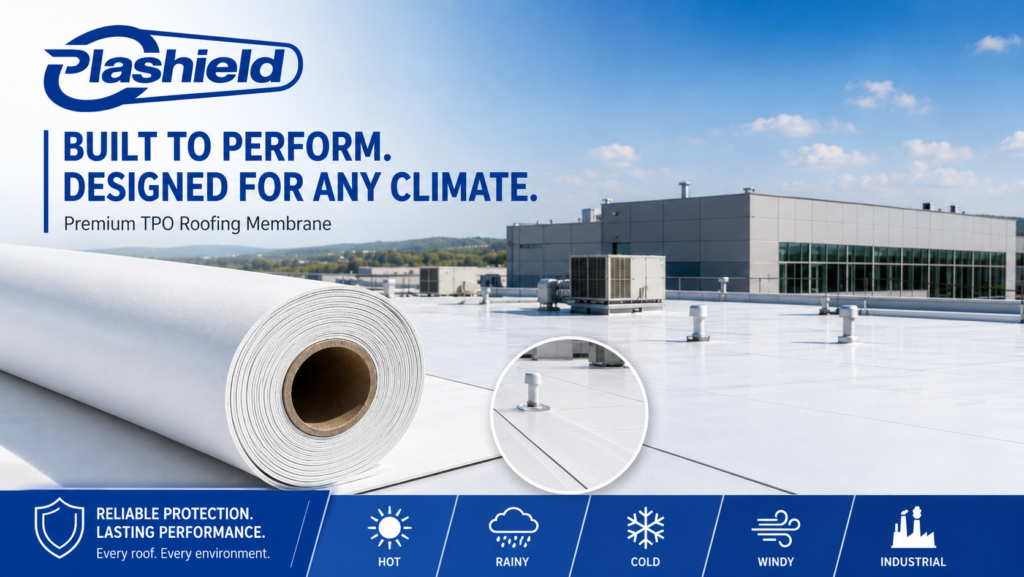
Reliable TPO Roofs From Plashield
Plashield’s TPO roofing membrane is specifically designed to adapt to a wide range of climatic conditions and installation environments, delivering consistent and reliable performance. In accelerated aging tests, the membrane maintains stable physical properties even after 10,000 hours of exposure; it does not crack when folded at temperatures as low as -50°C.
This membrane formulation is free of chlorine and plasticizers and does not release harmful substances during either production or use, ensuring exceptional environmental performance. Because the material contains no plasticizers that could gradually leach out, Plashield’s TPO membrane maintains excellent flexibility over the long term; its surface also effectively inhibits the growth of algae and mold and performs exceptionally well in highly acidic or alkaline environments.
For installation, seams are joined using a hot-air welding process. This flameless installation method not only enhances on-site safety but also ensures a strong and uniform bond between membrane sections. Plashield offers a wide range of waterproofing membrane products, including reinforced, backed, and self-adhesive types, to meet the needs of various substrate types and project requirements.
Our team takes pride in our craftsmanship and is dedicated to giving your home a fresh new look while providing you with peace of mind. We’ll carefully inspect every detail of your existing roof and recommend the best solution based on your specific needs.
If you’re ready to take the next step, we invite you to contact our team for a professional consultation. We’ll provide a comprehensive inspection and a clear quote to help you make an informed decision. To learn how we can help you achieve your goals, explore our roofing services—we’ll provide you with a comprehensive solution.
FAQs
1. What are the fundamental differences in material properties between TPO and EPDM roofing membranes?
TPO is a thermoplastic single-ply roofing membrane; seams are typically joined using hot-air welding to form a highly continuous waterproof layer. EPDM is a synthetic rubber roofing membrane; system installation relies on tape, adhesives, or mechanical fasteners. Both are used on flat and low-slope roofs, but TPO places greater emphasis on seam performance and reflective insulation, while EPDM emphasizes flexibility and long-term weather resistance.
2. What are the differences between TPO and EPDM in terms of installation methods?
TPO is typically installed using hot-air welding, which allows for efficient seam processing but requires strict quality control; EPDM, on the other hand, relies more on adhesive or tape systems, and its installation places greater emphasis on substrate preparation, lap joints, and detail finishing.
3. In terms of climatic conditions, for which environments are TPO and EPDM respectively better suited?
In regions with high temperatures, intense sunlight, and high cooling loads, TPO typically offers advantages because its reflective surface helps reduce heat absorption by the roof. EPDM, on the other hand, performs more consistently in cold regions and environments with significant temperature fluctuations, and is particularly well-suited for applications requiring long-term elasticity.
4. From a maintenance perspective, what is the difference between TPO and EPDM?
TPO systems are generally considered to have a simpler seam design and require relatively less maintenance over time; while EPDM is mature and reliable, it relies more heavily on installation quality and regular inspections at overlaps, tape joints, and flashings. If a project prioritizes long-term low-maintenance requirements, TPO is often viewed as the more modern choice.
What is the most critical factor in deciding between TPO and EPDM?
The key is not to focus solely on the material cost, but to make a comprehensive assessment that takes into account the building type, roof slope, climatic conditions, construction methods, expected maintenance needs, and energy efficiency goals. For large-area commercial and industrial roofs, TPO is often the better choice; for residential roofs, renovation projects, and roofs with complex details, EPDM is generally the safer option.