



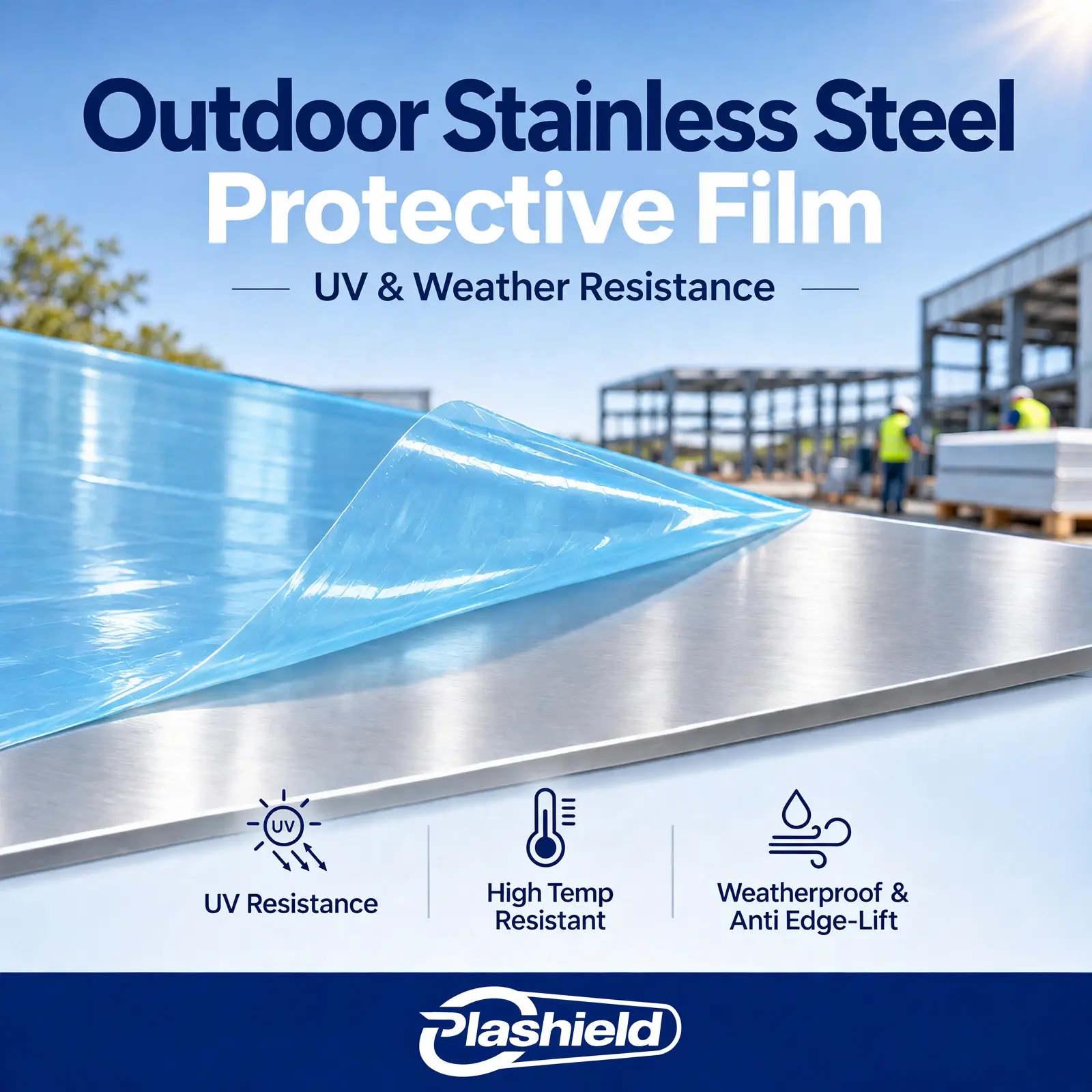
Not all protective films can resist sunlight in the same way. If you are looking for outdoor stainless steel protective film, construction sites or hot climates, pay attention to its UV resistance and weather resistance. This is not optional. It determines whether the protective film can be easily removed without leaving adhesive residue, or whether you’ll face costly cleanup expenses.
Therefore, when choosing outdoor stainless steel protective film, it is necessary to comprehensively consider the weather resistance of the substrate, the temperature resistance of the adhesive and the removability after long-term use. This article will introduce how to choose stainless steel protective film suitable for different outdoor projects from the aspects of outdoor environmental challenges, material formulas and application scenarios.
Why Does Outdoor Stainless Steel Protective Film Require Special Formulation
The substrate and adhesive of standard indoor protective film may not be able to withstand outdoor conditions for a long time. Continuous high temperature may alter the adhesive properties of the adhesive layer, UV exposure may accelerate the aging of the PE substrate, and repeated temperature fluctuations may affect the stability of the film’s adhesion to the stainless steel surface. Stainless steel protective film specially designed for outdoor use is formulated to address actual environmental conditions, balancing the weather resistance of the PE substrate, the temperature stability of the adhesive and the removability of the film after outdoor exposure.
3 Major Challenges for Stainless Steel Protective Film in Outdoor Environments
High Temperatures and Direct Sunlight: Adhesive Aging and Residue
In hot weather, prolonged outdoor thermal exposure will accelerate the aging process of the adhesive, causing the adhesive layer to soften or altering its adhesive properties. There are differences in the performance of different adhesive systems in the hot environment. Some adhesive layers may tend to soften and leave residue, while others may experience a decline in adhesion due to aging or changes in performance.
UV Exposure: Film Embrittlement and Performance Degradation
Long-term exposure to UV radiation in sunlight may trigger the photooxidation reaction of the polymer molecular chain, resulting in the gradual degradation of the material. For PE protective film, this aging manifests as discoloration, loss of surface gloss, reduced flexibility and embrittlement. At the same time, UV radiation may also affect the performance of the adhesive.
Temperature Fluctuations: Edge Lifting and Adhesion Instability
Temperature changes caused by diurnal variations and seasonal shifts result in thermal expansion and contraction of both the metal substrate and the PE protective film. If the flexibility of the protective film or the adhesion of the adhesive layer is insufficient, the edge of the film may lift or peel off.
4 Specifications to Demand in a UV-Resistant Stainless Steel Film
For stainless steel sheets that need to be stored outdoors or bonded for extended periods, they usually need to be adjusted in terms of stabilizer addition, PE material formula, adhesive system and film mechanical properties.
UV Stabilizers and Antioxidants for Improved Weather Resistance
UV radiation and oxygen are important factors that cause the aging of PE protective film. Adding appropriate UV stabilizers and antioxidants to the PE formula can help slow down the aging process and reduce the extent of damage. UV stabilizers are primarily used to reduce the damage caused by ultraviolet radiation to polymer materials. Antioxidants, on the other hand, are mainly used to inhibit or delay oxidation reactions, helping the material maintain relatively stable performance during processing and use.
PE Film Formulation for Better Outdoor Durability
Different types of polyethylene resins have distinct molecular structures and processing characteristics. Manufacturers can adjust the combination and proportions of different resins according to the processing requirements of the product and the use environment.
Heat-Resistant Adhesive Formulations for Stable Bonding
For outdoor stainless steel protective film, the adhesive needs to maintain appropriate adhesion performance in environments with high temperatures, low temperatures and repeated temperature fluctuations. Acrylic pressure-sensitive adhesive is one of the common adhesive systems in protective films. According to the specific application requirements, the heat resistance, cohesive strength, and adhesion stability of the adhesive layer can be improved by adjusting the polymer composition, cross-linking degree and formula structure. For applications requiring higher heat resistance, two-comment acrylic adhesives are another technical approach worth evaluating. By introducing an appropriate curing component, their cohesive strength and structural stability at high temperatures can be enhanced.
Film Thickness and Mechanical Properties for Outdoor Applications
The thickness of the film will affect the mechanical properties and actual protective ability of the outdoor stainless steel protective film, but it should be noted that increasing the thickness does not mean that the weather resistance must be better. Thicker films can usually provide better puncture resistance and a certain margin of mechanical protection, making them suitable for scenarios involving significant contact friction. However, if the protective film is mainly used for surface dust protection and light scratch resistance, there is no need to increase the thickness excessively. For outdoor projects, it is recommended to combine thickness selection with weather resistance test.
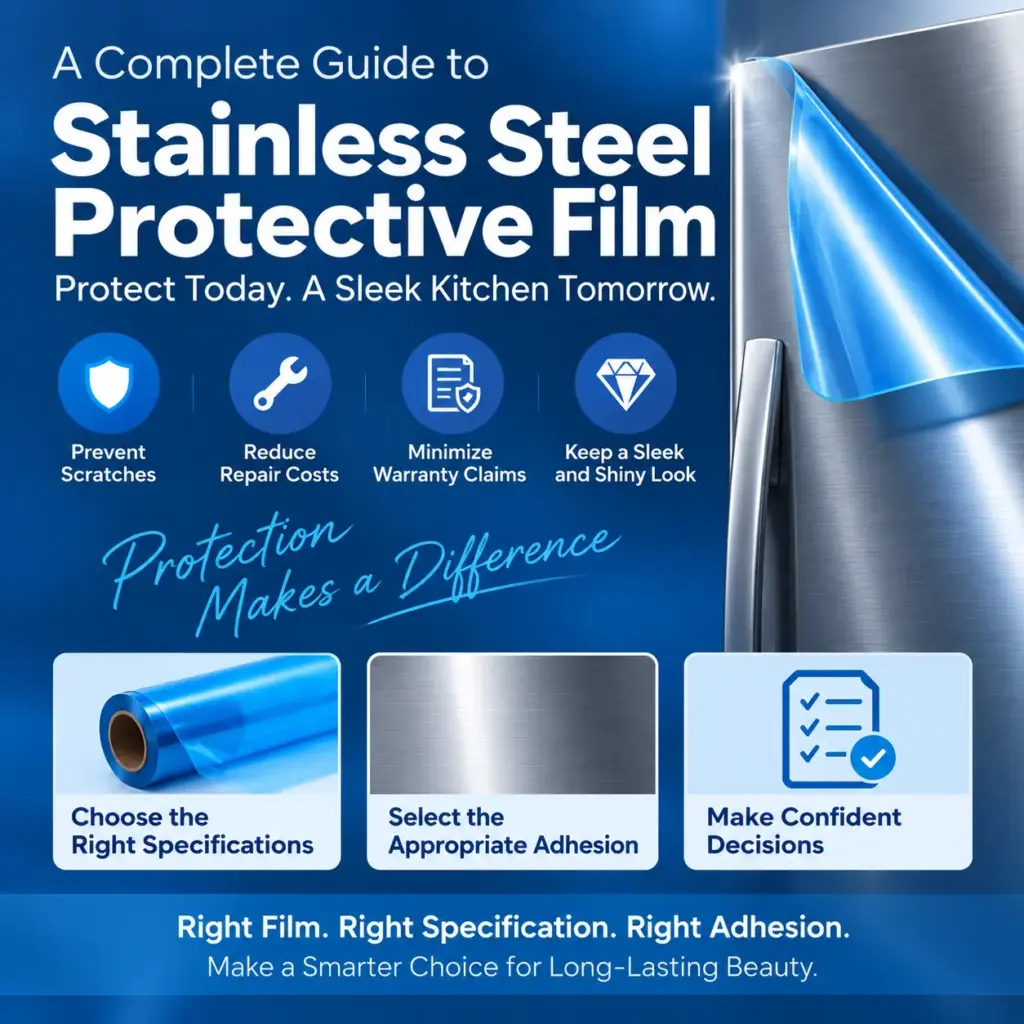
Match the Film to Your Exposure Windows
The selection of outdoor stainless steel protective film needs to consider the expected use cycle. The longer the protective film stays outdoors, the more likely the substrate and adhesive are to be affected by the environment. In addition to the use time, it is also necessary to comprehensively consider the local climate, the intensity of UV radiation, the surface temperature of the sheet, and whether there are frequent temperature fluctuations. The following sections outline selection guidelines based on different service life periods.
| Protection Period | Recommended Film | Key Selection Factors |
| Short-term (within 1 month) | Standard protective film, subject to outdoor suitability verification | Initial adhesion, clean removal, short-term temperature resistance |
| Medium-term (1–3 months) | Weather-tested protective film designed for outdoor applications | UV stability, adhesive stability, aging resistance |
| Long-term (over 3 months) | Customized high-weather-resistance protective film | Substrate aging resistance, adhesive thermal stability, long-term removability |
For outdoor projects with a short use cycle, such as short-distance transportation of stainless steel sheets, on-site installation and short-term construction protection, conventional stainless steel protective film can be considered, provided that the substrate and adhesive can withstand the actual outdoor environment.
For projects that are expected to need to stay outdoors for 1-3 months, such as stainless steel panels of building exterior walls, advertising signs and outdoor equipment enclosures, it is recommended to give priority to special protective films that have been verified for weather resistance.
For projects that need to stay outdoors for more than 3 months, such as large building curtain walls, stainless steel panels stored outdoors long-term, or outdoor metal components that have not been installed, it is more suitable to customize high-weather-resistant protective films according to the specific environment.
Why Choose Plashield Outdoor Stainless Steel Protective Film
Outdoor stainless steel protective film has higher requirements for substrate weather resistance, adhesive stability and long-term removability. Plashield is a PE protective film manufacturer with more than 20 years of experience. We can adjust the PE material formula according to the actual requirements of your outdoor use environment, stainless steel surface condition, expected use cycle, etc., and customize the outdoor weather-resistant formula in combination with anti-UV agent and anti-aging agent. This delays film aging under prolonged sun exposure and ensures that the film’s flexibility, adhesive stability, and temperature resistance are optimally suited to the actual application. At the same time, our stainless steel protective films strike a balance between affordability and superior performance. For similar outdoor projects, we recommend conducting actual application, environmental exposure, and peel tests prior to bulk procurement to verify adhesion stability and residue performance.
If you are looking for protective films suitable for outdoor stainless steel sheets or metal profiles, please provide Plashield with details regarding the specific application environment and protection period. We can offer customized solutions and sample testing support based on your project requirements.
FAQs
Can outdoor stainless steel protective film withstand rain and moisture?
The PE film itself provides a physical barrier against water, but moisture resistance also depends on edge sealing and application conditions. Water entering through lifted edges may affect the adhesive layer and reduce bonding stability. Proper application and edge inspection are therefore important for outdoor projects.
Should stainless steel protective film be removed before welding or other fabrication processes?
It depends on the fabrication process and whether the selected film is compatible with the heat involved. Conventional protective films should not be assumed to withstand welding temperatures. For welding, cutting, or other heat-intensive operations, buyers should confirm the film manufacturer’s process-specific recommendations before use.
Can outdoor stainless steel protective film be applied to curved or irregular metal surfaces?
Yes, provided that the film has sufficient flexibility and the adhesive is compatible with the surface geometry. Curved edges, corners, and irregular profiles may create additional stress during application and exposure. Testing on representative samples helps identify potential lifting or wrinkling issues.
How should stainless steel sheets be stored after applying outdoor protective film?
Stainless steel sheets should ideally be stored in a clean, dry, and well-ventilated area. When outdoor storage is unavoidable, avoid direct contact with standing water and ensure that stacked sheets are properly supported. Storage conditions should also allow adequate inspection of the protective film and its edges.
What information should buyers provide when requesting a customized outdoor protective film?
Buyers should provide the stainless steel grade and surface finish, sheet or profile dimensions, intended application, expected outdoor exposure conditions, and required protection period. Information about downstream processing and removal requirements is also useful for manufacturers when developing a suitable film specification.