



Carpet protective film is widely used in construction, interior decoration, transportation and property maintenance and other scenarios. However, the purchase of carpet protective film is not just about comparing product prices and adhesion. The material of the carpet, the protection cycle and the compatibility of the adhesive will all affect the final use effect. At the same time, it is also crucial to choose suppliers with stable production capacity and product customization ability.
From supplier selection, pre-order checklists to product application precautions, this guide will introduce the key matters that need to be paid attention to in the procurement and use of carpet protective film to help buyers reduce procurement risks.
What to Consider Before Buying Carpet Protection Film
Identify Your Carpet Protection Requirements
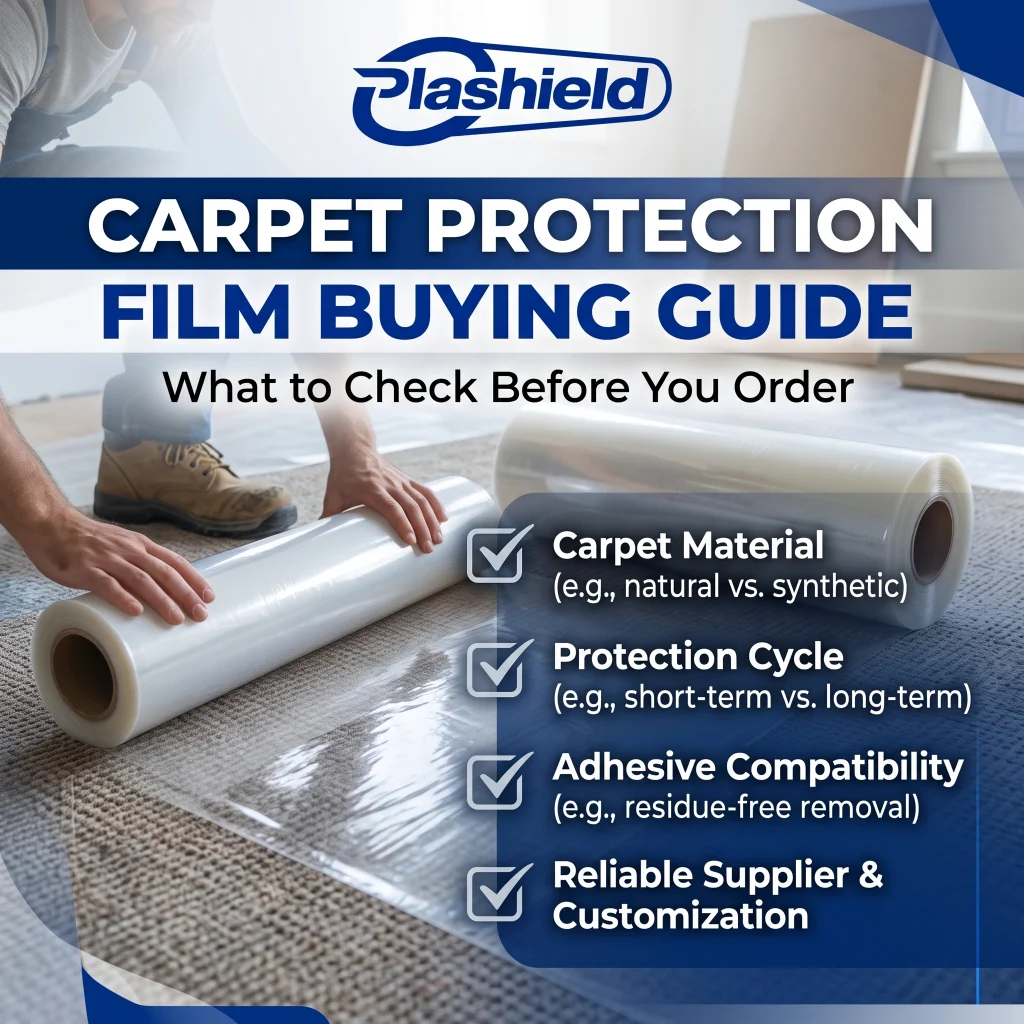
Before contacting a supplier, buyers should clearly define their carpet protection needs. Providing suppliers with accurate application information can help them recommend suitable products. It is recommended to focus on the following aspects:
Carpet Type: Identify the fiber material and surface structure of the carpet, such as nylon, polyester, wool or polypropylene, as well as the types like loop pile, cut pile, short pile, or long pile.
Application Environment: Specify the setting where the protective film will be used, such as residential renovations, commercial buildings, hotels, or construction sites.
Protection Duration: Estimate how long the carpet will need protection. Short-term interior renovation projects and construction projects that last for several weeks may have different requirements for the use of protective film.
Traffic Conditions: Consider the frequency of foot traffic during construction and the need to carry equipment, furniture or building materials in the protected area.
Environmental Conditions: Explain the temperature, humidity, direct sunlight and other special conditions in the actual use environment in advance.
How to Evaluate a Carpet Protection Film Supplier
Before placing an official order, buyers can evaluate suppliers based on the following criteria.
1.Manufacturing Capabilities
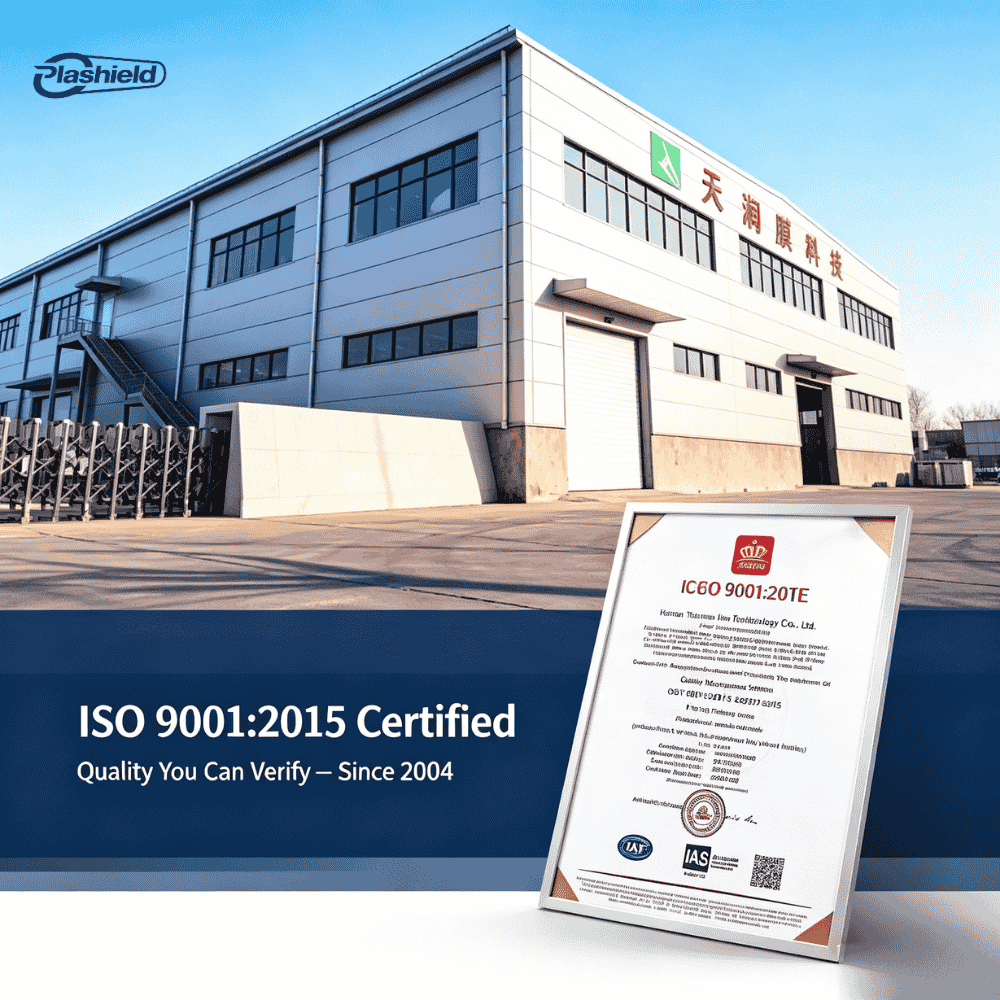
Confirm whether the supplier is an actual manufacturer or a trading company. Manufacturers with independent production facilities can usually control raw materials, production processes, product specifications and delivery arrangements more directly.
2.Adhesive Formulation and Product Development
Adhesive formulation is one of the important factors affecting the performance of carpet protective film. Compared with suppliers who can only provide fixed-specification products, manufacturers with formula development capabilities should be able to evaluate and adjust adhesive formulas according to different application requirements.
3.Previous Export Experience
Suppliers who are familiar with international orders usually have a better understanding of requirements related to export packaging, product labeling, relevant documentation, and shipping arrangements. Understanding the supplier’s previous export markets, common order patterns, and experience in handling customized requests from overseas customers can all aid in the evaluation.
Pre-Order Checklist for Carpet Protection Film
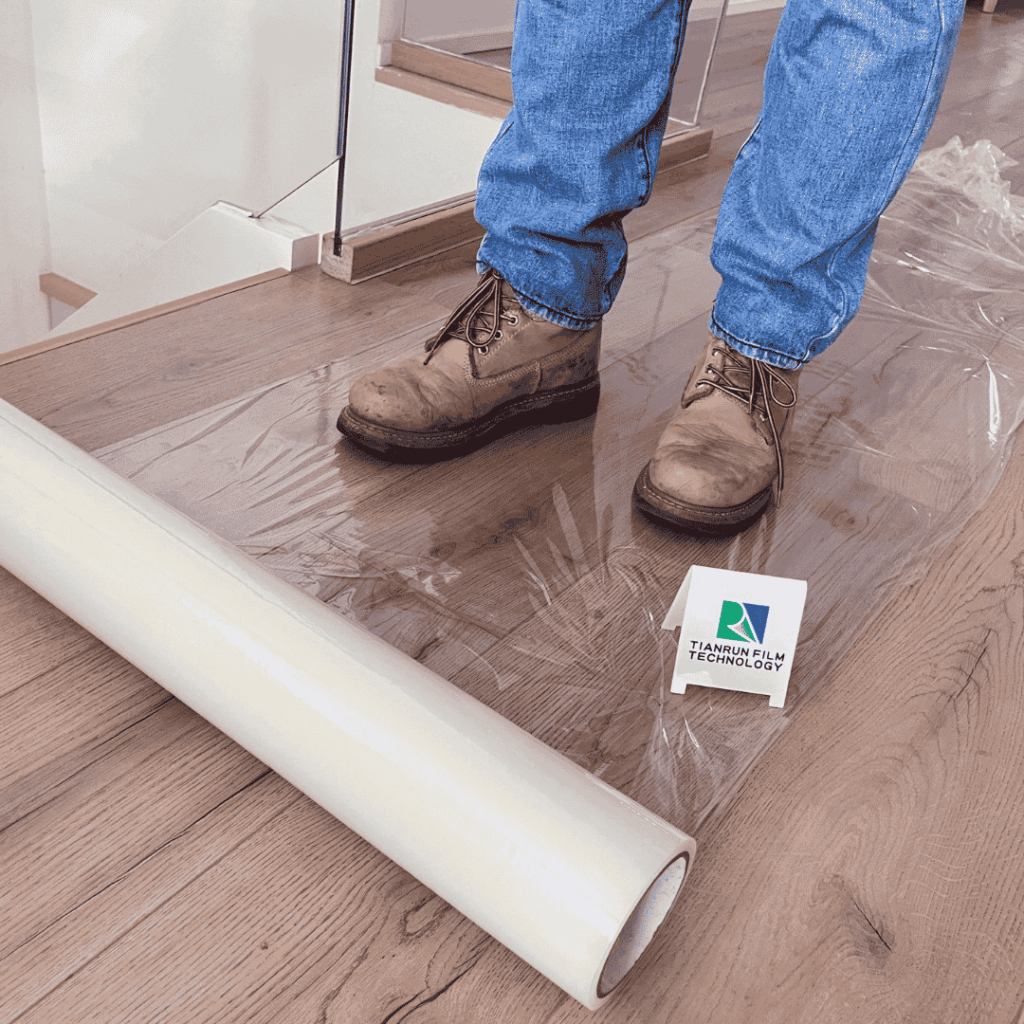
Before placing a formal bulk order, be sure to request samples from the supplier. Simulate the actual installation environment as closely as possible for testing. Document the condition of the carpet both before the film is applied and after it is removed. Check whether the film can be adhered as expected, whether the edges curl up, and whether there is visible adhesive residue, pulling fibers or changing the appearance of the carpet after removal. Compare the test area with the adjacent untreated area under similar lighting conditions. Don’t approve the extension of the film application period solely based on the success of short-term trials. It is recommended that each set of samples record the following information: supplier and product model, protective film specifications, carpet type, environment and traffic conditions during testing, installation and inspection dates, film removal results, and keep photographs of any abnormalities.
Comparing Supplier Quotes: Focus on Actual Delivery Costs
Supplier quotes can only be compared once the installation requirements and delivery terms have been clearly defined. It is recommended to calculate the actual delivery cost per square meter based on consistent product specifications and delivery conditions. At the same time, it is necessary to consider the actual usable coverage area of the protective film, especially when allow for overlap widths, trim edges, or handle irregular areas. Material waste can also affect the final cost.
What Information Is Required When Requesting Samples or a Quote
Before requesting samples or a quote, it is recommended to understand the carpet protective film product options provided by Plashield, and compile the relevant carpet information and project requirements, including the expected service life, on-site conditions, roll dimensions, quantity, and delivery destination.
When contacting the supplier, you can refer to the following request for quotation: “Please recommend the suitable carpet protective film according to our carpet type and actual use conditions, and let us know which samples and product specification documents are currently available. Additionally, please provide a quotation including the cost of shipping to the specified destination according to the roll dimensions and purchase quantity we need.”
Precautions for Use and How to Remove Residual Adhesive
Guidelines for Removing Residual Adhesive from Nylon/Polyester Carpets
First, use a vacuum cleaner to clean the area with residual adhesive, removing surface dust, loose debris, and other particles. Use a solvent-based cleaner (such as naphtha, alcohol, etc.) or 99% high-purity isopropyl alcohol to dissolve the residual adhesive. Please test the cleaner first on a small, inconspicuous area. Apply enough remover, leave it for 5-15 minutes, then scrub thoroughly with a stiff-bristled brush or a low-speed carpet cleaner fitted with a white scouring pad. When conditions permit, use hot water extraction or steam cleaning at approximately 90–100°C. For large areas, professional ride-on or portable extraction equipment yields the best results. Subsequently, use a neutral carpet cleaner to remove any residual solvent, extract again, and allow the area to dry thoroughly.
Storage and Handling of Carpet Protection Film
Store the carpet protective film in a clean, dry and relatively stable area. Inappropriate temperature or frequent temperature changes may affect the state of the film and adhesive. Do not leave the protective film inside the vehicle, near the heating equipment or other areas where high temperatures may occur for a long time.
Before use, keep the roll in its original packaging as much as possible to prevent moisture, dust, oil, and other contaminants from coming into contact with the film surface or the adhesive. Additionally, do not stack heavy objects on top of the roll, and avoid improper stacking that could cause the film to warp.
Before installation, allow the protective film to acclimate to suitable environmental conditions; it is best to leave it at room temperature for approximately 24 hours.
Important Precautions During Use
It is recommended that carpet protective film not be used continuously for more than 4 weeks. For projects requiring longer-term protection, remove the used protective film before installing a new one.
Avoid exposing the protective film to direct sunlight or high temperatures for extended periods. Prolonged exposure to high temperatures and intense sunlight may affect the performance of the film and adhesive, making it more difficult to remove later.
In high-traffic areas such as doorways, hallways, and construction site entrances, regularly inspect the condition of the protective film for any shifting, curled edges, or localized damage. If the film can no longer provide complete and effective coverage, it should be reapplied or replaced.
Do not install the protective film on a damp carpet surface. Residual moisture trapped within the carpet can affect the condition of the fibers and may even cause discoloration. Before installation, ensure the carpet is completely dry before proceeding with the protective film application.
Do not apply the protective film immediately to newly installed carpet using adhesive. Before installation, ventilate the area for up to 72 hours to allow volatile compounds to dissipate completely.
Do not use on hard surfaces such as tile, solid wood flooring, linoleum, vinyl flooring, or marble. Do not use on wool carpets, shag carpets, loosely installed carpet tiles, or worn carpets.
For best results, it is recommended to peel off the protective film slowly at a 180° angle, rather than pulling it straight up vertically.
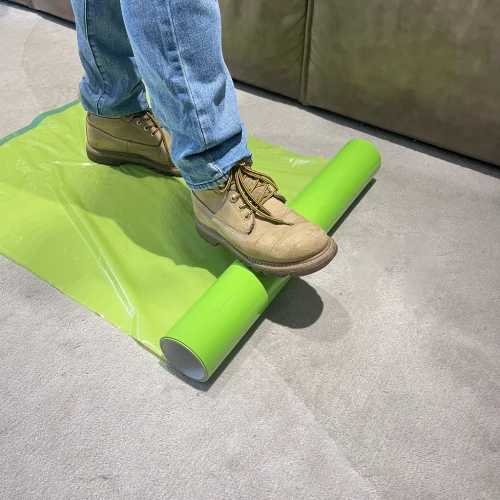
Why Choose Plashield Carpet Protection Film
Plashield is a professional PE protective film factory, focusing on the research and development and production of high-quality PE protective film products. As a manufacturer of protective film, Plashield can directly communicate with customers about product specifications, customization requirements and practical application conditions. Customers can provide the team with carpet type and project usage information to jointly confirm the suitable product configuration. We can develop adhesive formulations tailored to specific carpet protection needs, adjusting adhesion levels based on carpet characteristics and actual usage conditions. This ensures stable adhesion throughout the product’s service life while also optimizing clean-up performance after removal.Additionally, Plashield supports the customization of product specifications according to customers’ installation methods, application needs and procurement requirements to help customers find solutions that perfectly match their specific usage scenarios.
If you are looking for a protective film suitable for a specific carpet type or installation environment, please provide Plashield with details about the carpet, the expected service life, and the required roll specifications so we can further confirm the product solution and arrange for sample testing.
FAQs
What is the difference between carpet protection film and carpet protection paper?
Carpet protection film provides a continuous plastic barrier against dust, dirt, paint splashes, and liquid spills. Carpet protection paper is generally more suitable for dry debris and light surface protection. Film is often preferred when moisture resistance and full surface coverage are required.
What quality standards should buyers look for when purchasing carpet protection film?
Buyers should evaluate film thickness consistency, tensile strength, tear resistance, adhesive coating uniformity, and roll quality. Consistent manufacturing quality helps ensure predictable performance across different production batches.
How should buyers manage quality disputes with carpet protection film suppliers?
Buyers should establish written product specifications and retain approved samples before mass production. If quality issues occur, document the affected batch numbers, product condition, application process, and abnormal results. Photographs and retained samples can help both parties identify the source of the problem.
Can carpet protection film withstand contact with construction chemicals?
It depends on the chemical composition and exposure conditions. Common construction materials such as paint, plaster, cleaning agents, and solvents may interact differently with the film or adhesive. Buyers should identify the chemicals likely to be present and verify compatibility before selecting a product.
How should carpet protection film be selected for large-scale commercial projects?
For large commercial projects, buyers should consider not only individual roll specifications but also product consistency across different production batches. Consistent film dimensions, adhesive performance, packaging, and roll identification help simplify site distribution and quality management.