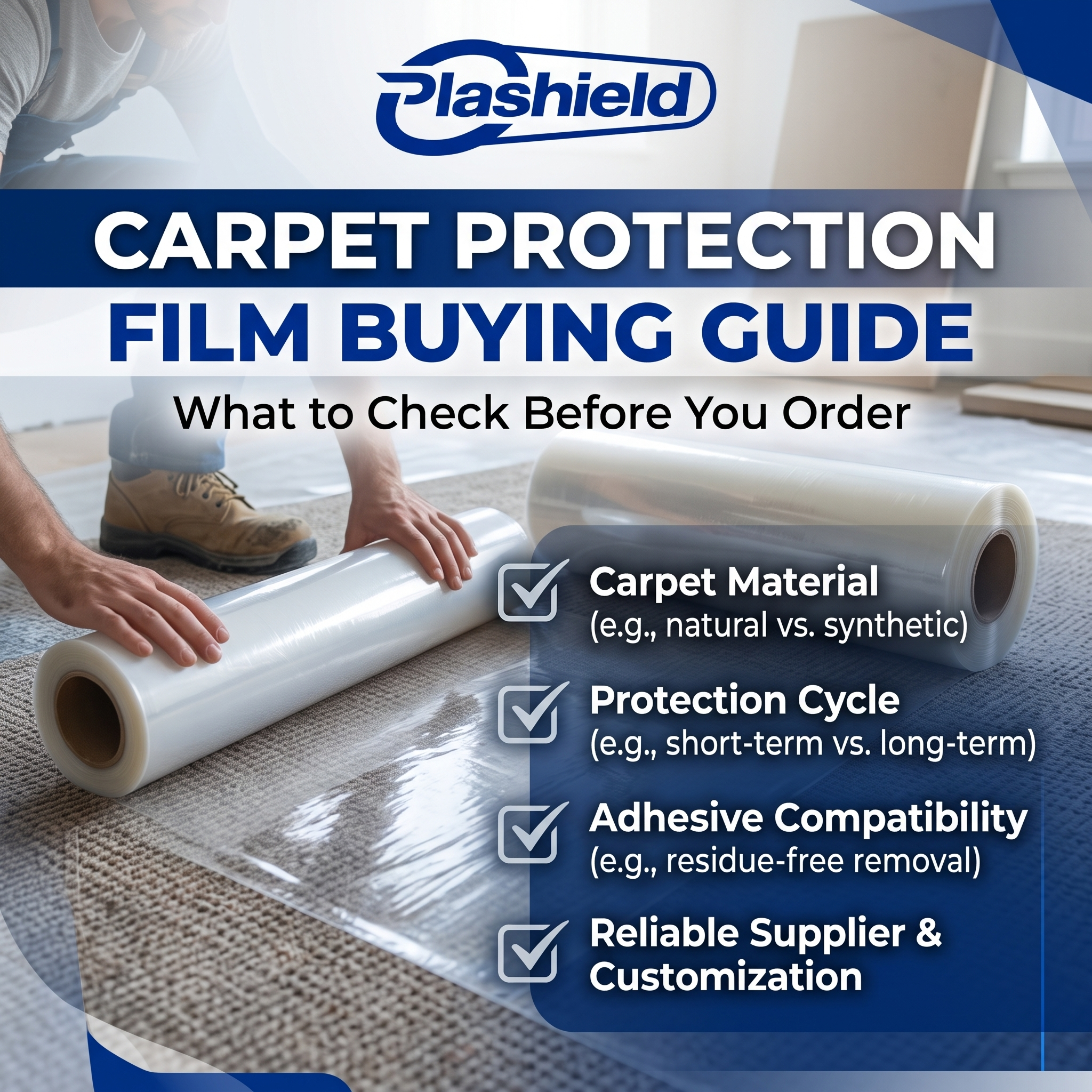




In commercial office buildings, hotels and large-scale residential renovation projects, carpets are often subjected to heavy foot traffic, furniture movement, transportation of construction materials, and dust and stains during construction. Temporary Commercial carpet protection film can provide temporary surface protection for carpets. When purchasing carpet protective film, buyers need to comprehensively consider the material of the carpet, the intensity of the construction activity, the adhesion performance of the protective film, the mechanical strength and the subsequent removal requirements.
This article will introduce how to choose the appropriate carpet protective film according to the project conditions, help contractors, distributors and project procurement personnel reduce the risk of carpet contamination and damage, and avoid problems such as adhesive residue, fiber pulling and removal difficulties caused by improper selection of protective film.
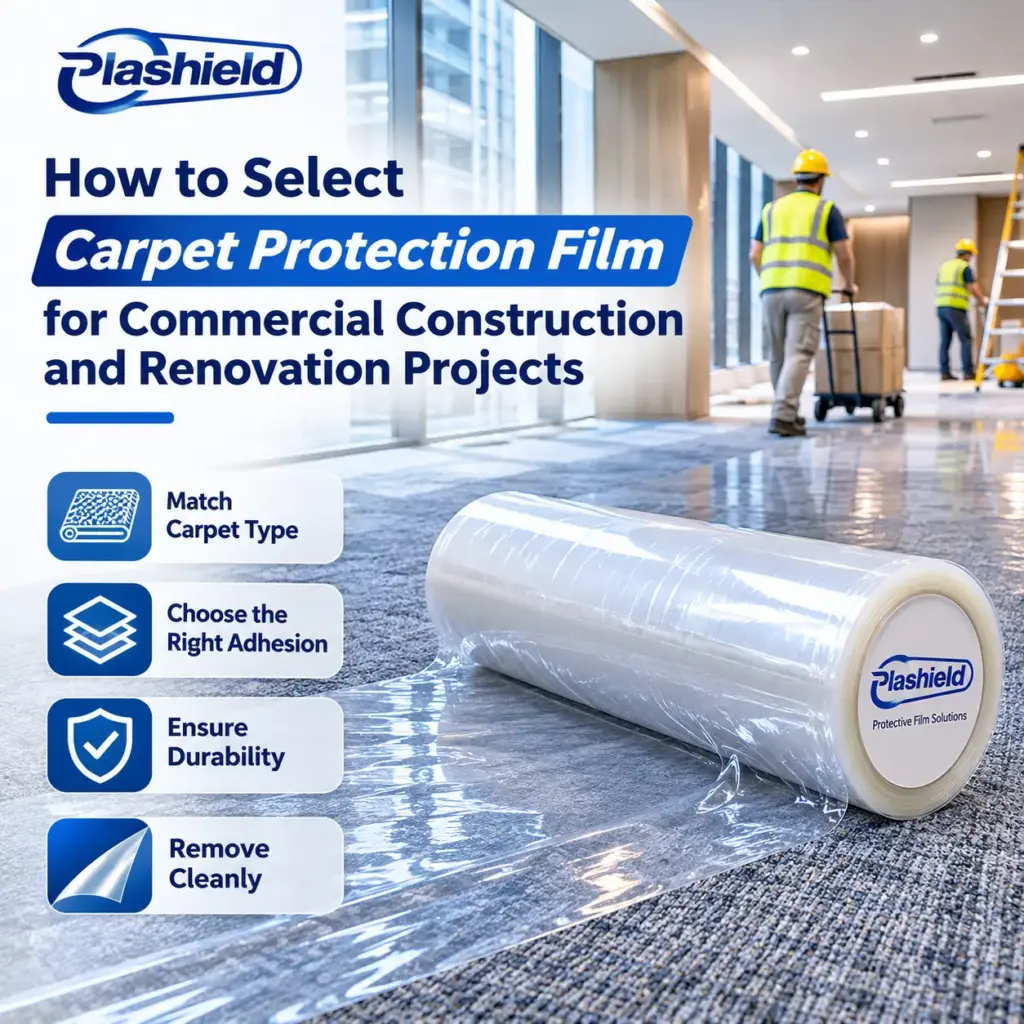
Where Is Temporary Carpet Protection Film Used in Commercial Projects?
There are differences in the construction activities, carpet areas and protection periods of different projects, and the requirements for protective films are not exactly the same. Below are several common commercial application scenarios.
Office Buildings and Commercial Spaces
During the renovation and refurbishment of the office building, the carpet needs to withstand activities such as frequent foot traffic, the movement of office furniture and interior construction. For open office areas and public hallways, the protective film must remain securely in place to prevent shifting, curling, or localized tearing caused by continuous foot traffic and daily construction activities.
Hotels and Hospitality Projects
The carpet materials used in different areas of the hotel project may be different, and the appropriate protective film should be selected according to the carpet type and installation schedule of different areas. For example, the hotel hallways needs to withstand heavy foot traffic and the movement of equipment, while the guest room area may pay more attention to the cleaning and protection of the carpet surface as well as ease of removal later on.
Retail Stores and Shopping Centers
Shelf installation and movement of equipment during the renovation of retail stores and shopping centers are prone to friction and tugging on carpet protective film, so special attention should be paid to the tear-resistant performance of the carpet protective film. For large-scale retail spaces, the proper planning of the laying direction and seam placement of the protective film also helps to reduce shifting and localized exposure during construction.
Residential Developments and Large-Scale Renovations
Large-scale residential development and renovation projects involve multiple rooms, various unit layouts, and extensive carpet installation, paying more attention to the consistent protective film specifications, installation efficiency and bulk supply reliability. Purchasers need to determine the appropriate roll width, length and adhesion performance according to the type of carpet, room layout and installation schedule.
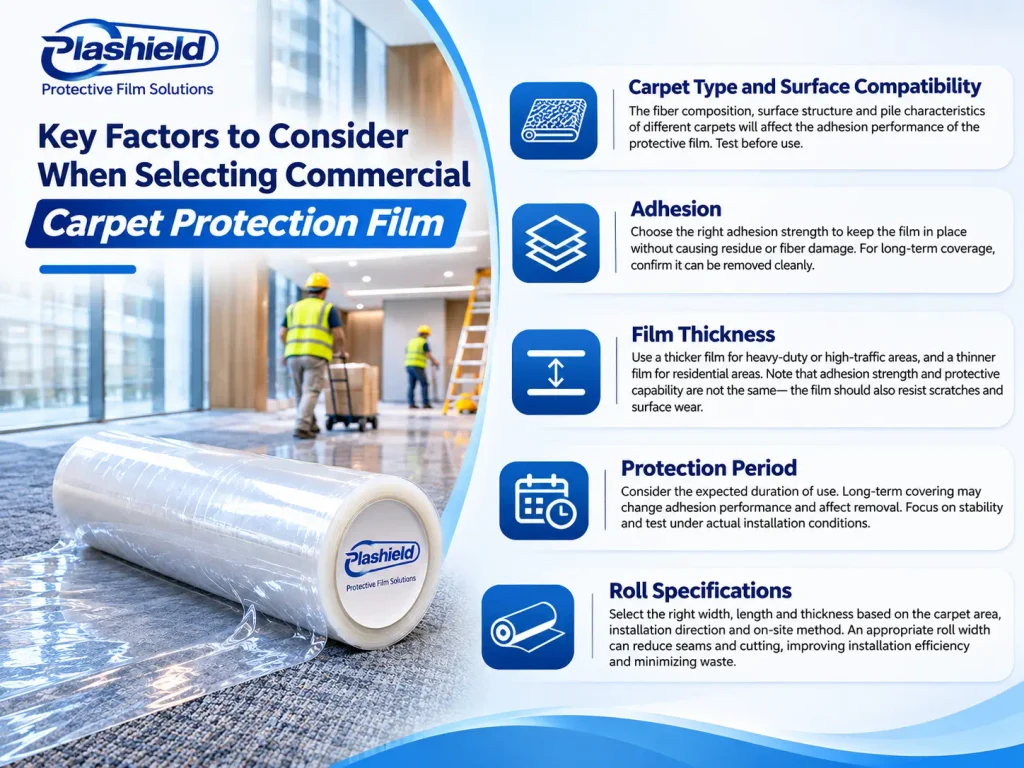
Key Factors to Consider When Selecting Commercial Carpet Protection Film
Carpet Type and Surface Compatibility
The fiber composition, surface structure and pile characteristics of different carpets will affect the adhesion performance of the protective film. Carpets such as nylon, polyester and wool are different in terms of surface properties and adhesive compatibility, loop-pile and long-pile carpets may also exhibit different adhesion and peel-off characteristics. Test before use.
Adhesion
The adhesion strength determines whether the protective film can adhere the carpet securely, and will also affect the condition of the carpet. Insufficient adhesion will cause the protective film to shift, curl the edge or lift in spots, while excessive adhesion increases the risk of adhesive residue and fiber damage. Especially for projects that require long-term coverage, it is necessary to confirm whether the protective film can be removed cleanly under the expected conditions of use.
Film Thickness
For commercial spaces, areas with heavy-duty tools, or high-traffic areas, a thicker protective film is recommended. For residential areas, a thinner protective film can be selected. It should be noted that adhesion strength and protective capability are not the same thing. Even if the protective film adheres firmly to the carpet, it cannot provide adequate surface protection if the film is easily scratched by objects.
Protection Period
The duration of application is another factor to consider. Long-term covering may change the adhesion performance of the protective film and increase the uncertainty of subsequent film removal. Emphasis should be placed on the stability of the carpet protective film rather than selecting products with higher tack. Additionally, it should be tested in combination with the actual installation environment.
Roll Specifications
For large-scale commercial projects, the specifications of the protective film rolls will also affect the installation efficiency and material waste. Purchasers should determine the appropriate width, length and thickness of the film based on the width of the carpet area, the direction of installation, and the on-site installation method. An appropriate roll width can minimize unnecessary seams and cutting.
How to Match Carpet Protection Film to Different Construction Stages
Purchasers should choose a carpet protective film with appropriate adhesion performance and mechanical strength according to the actual usage conditions in different areas. The table below provides some recommendations for selection.
| Project Activities | Typical Applications | Recommended Film Characteristics |
|---|---|---|
| Daily Foot Traffic | Office corridors, hotel hallways, shared commercial spaces | Stable adhesion, wear resistance, and clean removal |
| Furniture and Equipment Moving | Office fit-outs, hotel renovations, retail store installations | Good tear resistance, reliable adhesion, and stable coverage |
| Interior Finishing and Decorating | Commercial buildings, hotel rooms, retail renovations | Suitable adhesion, dust and stain protection, easy removal |
| Material Handling and Construction Work | Large-scale renovations, commercial flooring projects | Appropriate mechanical strength and resistance to tearing |
| Final Cleaning and Project Handover | Hotels, office buildings, residential developments | Adhesive stability during use and residue-free removal |
How to Apply and Remove Carpet Protection Film on Commercial Job Sites
Preparing the Carpet Before Application
First, the carpet must be thoroughly cleaned. Remove dust, sand, and debris from the surface of the carpet to prevent these particles being enclosed under the protective film. Any items trapped under the film will be subject to foot traffic, placed objects, and other impacts. Sharp objects may even scratch the carpet.
For carpets of different materials and constructions, it is recommended to conduct a small-scale test first, the adhesion performance of the protective film and the surface state after removal. Proceed with large-scale installation only after confirming compatibility.
Proper Film Application and Seam Management
When applying the film, first plan the coverage direction according to the layout of the carpeted area and the passage route of the construction personnel.
Align the adhesive edge at the front of the roll directly with the outer edge of the area to be covered. Press gently to ensure the edge is secure, then begin unrolling the protective film smoothly.
When unrolling the film, continue to apply moderate, consistent pressure to ensure the adhesive adhere firmly to the surface.
Maintain appropriate overlap between adjacent rolls or treat the seams as required to avoid gaps where dust can accumulate or the carpet may be exposed. If the overlap is loose or insufficient, liquids and dirt are easy to seep into the surface.
When approaching the opposite edge of the roll, prepare to cut the roll evenly.
During installation, check areas along walls, doorways, corners, and locations prone to friction to ensure the edges of the protective film are securely adhered.
Safe Removal and Post-Removal Inspection
Peel off the film at a steady speed and in a consistent direction. After removal, check the carpet surface for any adhesive residue or fiber damage.
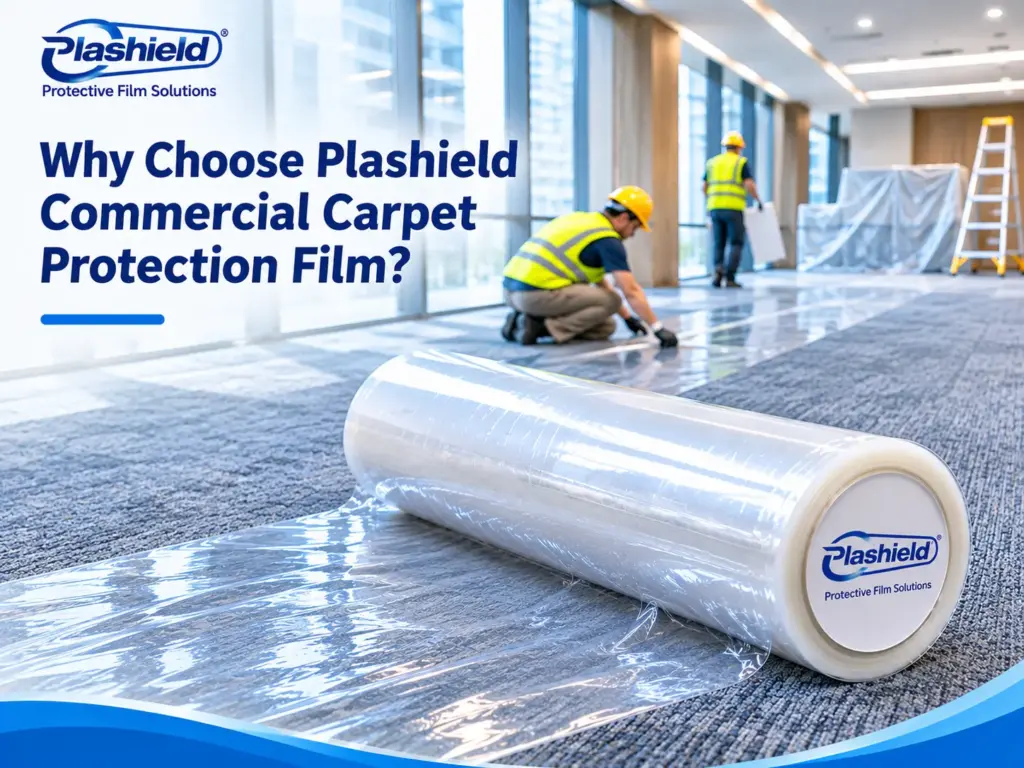
Why Choose Plashield Commercial Carpet Protection Film?
As an experienced PE protective film manufacturer, Plashield provide corresponding product specifications and technical selection support according to specific application conditions, helping contractors, floor protection material distributors, and project procurement personnel identify suitable protection solutions.
Different carpet surfaces have varying requirements for adhesive compatibility. Plashield can adjust the adhesive formula according to the carpet material, surface structure and expected use cycle. While meeting the requirements of stable adhesion during installation, it also takes into account the peeling performance and reduces the risk of adhesive residue. Commercial projects usually involves large-area installations and different spatial layouts. Plashield supports the flexible customization of the thickness, width and roll length to meet project requirements, helping customers match the installation methods and specifications of different carpet areas. At the same time, before determining the bulk purchase specifications, Plashield supports customers to obtain samples to conduct compatibility testing on actual carpet surfaces.
Are you planning a commercial construction or renovation project? Please provide Plashield with the type of carpet you are using, the application requirements, and the expected duration of protection. Our team can help you determine the appropriate film specifications and arrange for samples for testing.
FAQs
How do ambient temperature and humidity on the job site affect the application and performance of carpet protection film?
Temperature and humidity directly impact the curing and behavior of the pressure-sensitive adhesive. Extremely low temperatures can reduce initial tack, preventing proper bonding, while high heat and humidity can soften the adhesive, potentially increasing transfer risk upon removal. It is best applied within standard indoor climate-controlled conditions.
What are the proper storage conditions for unused rolls of carpet protection film, and what is their typical shelf life?
Rolls should be stored vertically or horizontally on flat surfaces in a clean, dry warehouse away from direct sunlight, extreme heat, and moisture. Avoid stacking heavy items on top to prevent edge deformation. Under proper conditions, the typical shelf life is 6 to 12 months before adhesive degradation begins.
How should carpet protection film be measured and installed on carpeted staircases or irregular architectural contours?
For stairs, it is recommended to use narrower rolls tailored to step width, applying film tread-by-tread with firm hand pressure down the riser angle to prevent bridging or air pockets. Avoid continuous long spans down multiple steps, as foot pressure can cause the film to shear and slip.
What happens if moisture gets trapped underneath the carpet protection film due to wet cleaning or concrete subfloor vapor?
Polyethylene films act as a vapor barrier. If moisture is trapped underneath from un-cured concrete subfloors or damp cleaning, it cannot evaporate naturally, potentially causing mold growth, mildew odor, or carpet backing degradation. Ensure subfloors are completely dry before application.
Can carpet protection film be safely used on carpets installed over active underfloor heating systems?
Active underfloor heating elevates the temperature at the carpet interface, which can accelerate adhesive migration or tack buildup. If underfloor heating must remain active, low-tack specialized films should be selected, and a small-scale thermal test is mandatory prior to full installation.